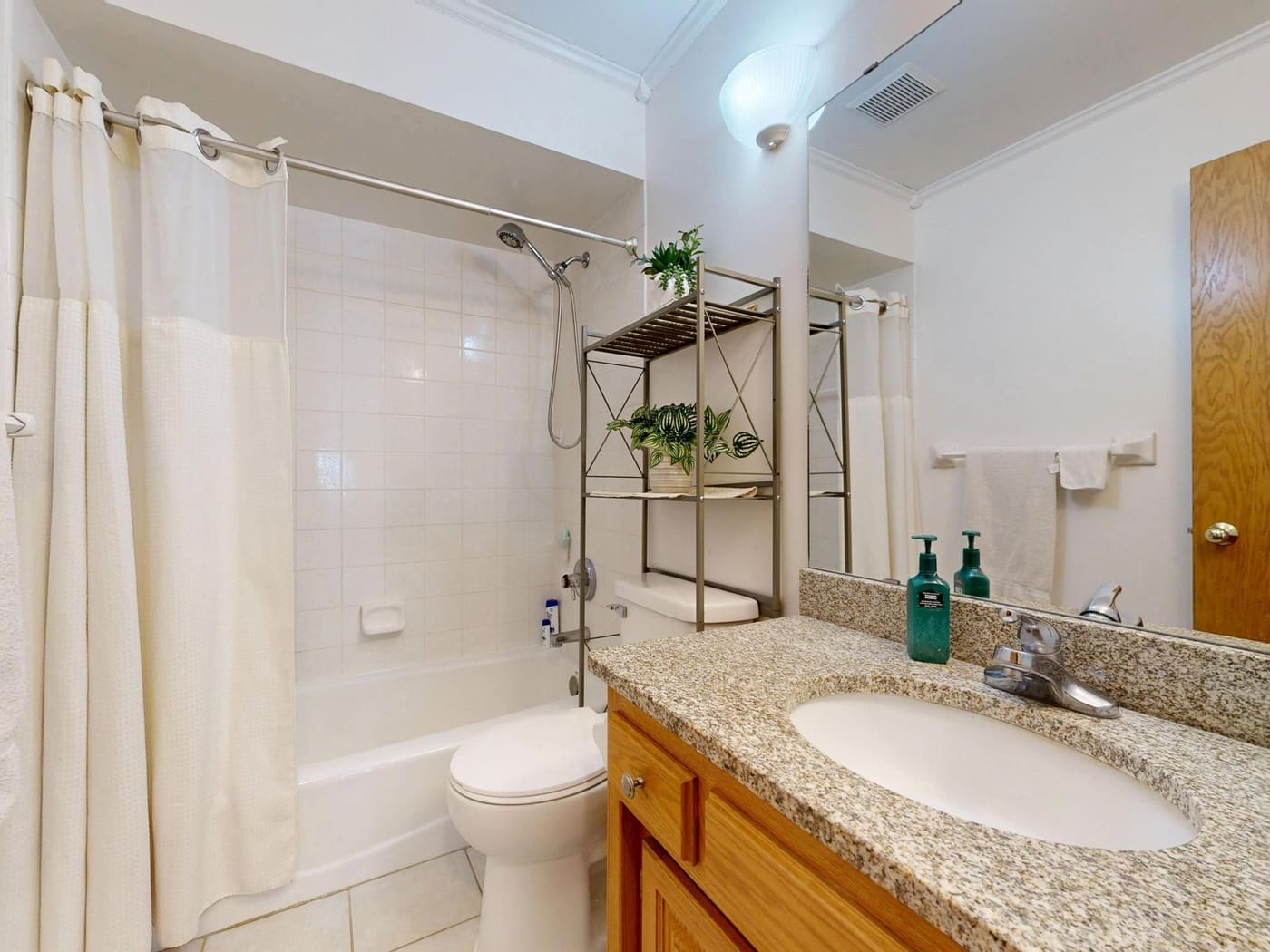
The renter-friendly bathroom storage worth adding depends on which bottleneck bothers you: an over-the-toilet unit for missing shelf space, a pole or door-hung caddy for the shower, a tiered rolling cart for narrow gaps, stackable bins under the sink, and adhesive or over-door hooks for towels. Pick one product for one problem rather than buying a set of organizers for the whole room.
Most renters buy too much storage and end up with a bathroom that is organized but full. The test is simple: after you install it, does the room have more clear space or less? Storage that adds bulk, blocks the doorway or makes cleaning harder is not worth keeping, even if it is removable.
Match the storage to the bottleneck
Before shopping, name the actual problem. Then pick the matching fix.
| Problem | Best renter fix | Typical cost |
|---|---|---|
| Nowhere to put things near the toilet | Freestanding over-toilet shelf | Often $50 to $150 |
| Shower bottles crowd the tub edge | Tension pole caddy or over-showerhead caddy | Often $15 to $40 |
| Towels on the floor or a single bar | Over-door hooks or adhesive hooks | $8 to $25 |
| Under-sink is a jumble | Stackable bins and a tension rod | $15 to $40 |
| Counter is crowded | Wall-hung organizer on adhesive, or a tray | $10 to $30 |
| Narrow gap beside the vanity | Slim rolling cart, 6 to 9 inches wide | $25 to $60 |
| Backup supplies take up space | Bin on a closet shelf outside the bathroom | $10 to $25 |
If two rows describe your problem, solve the one you notice every day first. Measure first, check the weight rating on anything that holds towels or bottles, and see the bathroom storage buying guide for sizes and materials. Over-toilet units have the widest price spread: sturdier, taller or better-finished ones often cost more than the low end shown, and the cheapest are usually particleboard that does not last in a damp room.
Over-the-toilet shelving
A freestanding shelf that straddles the toilet tank gives you vertical storage with no drilling. Choose one with a footprint that clears the tank and lid and does not crowd your knees. Heights vary by model, so check the listing against your ceiling and any window. Keep these points in mind.
- Stability: Most rental units are not anchored to the wall. Keep heavy items on the lowest shelf and light items, such as extra toilet paper, on the top.
- Material: Metal with a rust-resistant finish or sealed wood holds up better than particleboard, which swells with moisture.
- Clearance: Measure the space from the floor to the ceiling and from the tank to any window or towel bar. Check that the toilet lid can open fully.
- Look: Open shelves show everything, so use two or three baskets or bins to make the contents look deliberate.
A tall unit can tip, especially if a child climbs it. If your lease allows anchoring, use a tip restraint that states it meets the ASTM tip-restraint standard, and ask the landlord first, since it means a small hole in the wall.
Shower storage that does not need drilling
The options are tension poles, over-showerhead caddies, hanging shelves that hook over a rod, and adhesive shelves. Each has trade-offs.
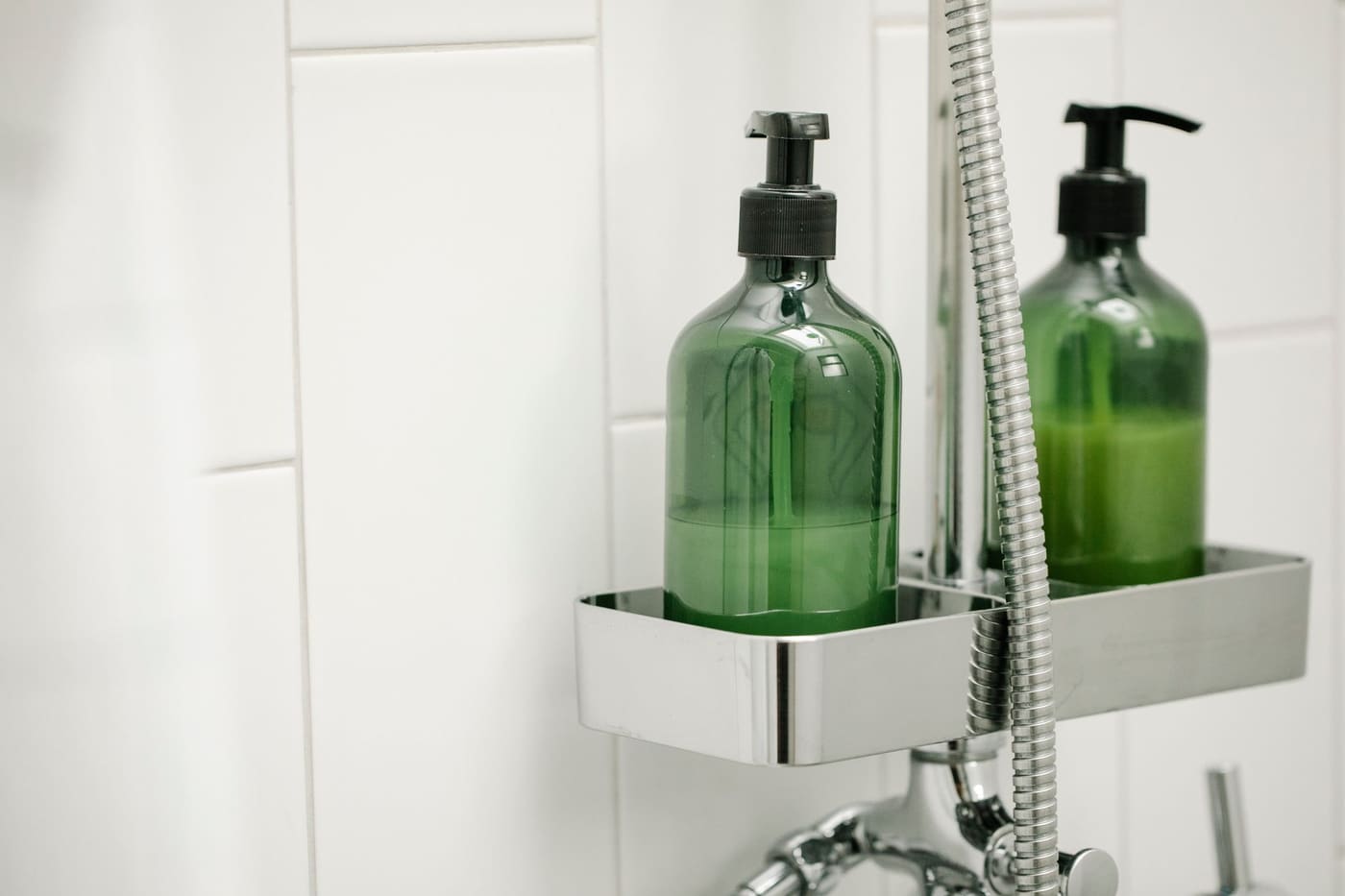
- Tension pole caddy. Presses between floor and ceiling. Check the pole’s height range against your ceiling; it needs a solid ceiling and a flat floor surface. Choose rust-proof metal, and check that it does not mark a textured ceiling.
- Over-showerhead caddy. Hangs from the shower arm. It is easy, but it can swing and does not hold heavy bottles. Keep it light.
- Hanging shelf or basket over the curtain rod. Fine for razors and a sponge.
- Adhesive shelves. Strong when new, but humidity and heat can weaken them. Use ones with weight ratings well above what you plan to hold and avoid putting full-size bottles on them.
Avoid suction cup shelves for anything heavy. They can lose grip as the surface gets wet or warm, and many only hold on smooth, non-porous surfaces. The article on shower storage that helps without looking messy covers layout and what to keep in the shower.
Hooks and bars for towels
Towels are a major source of visual clutter. You have three removable options.
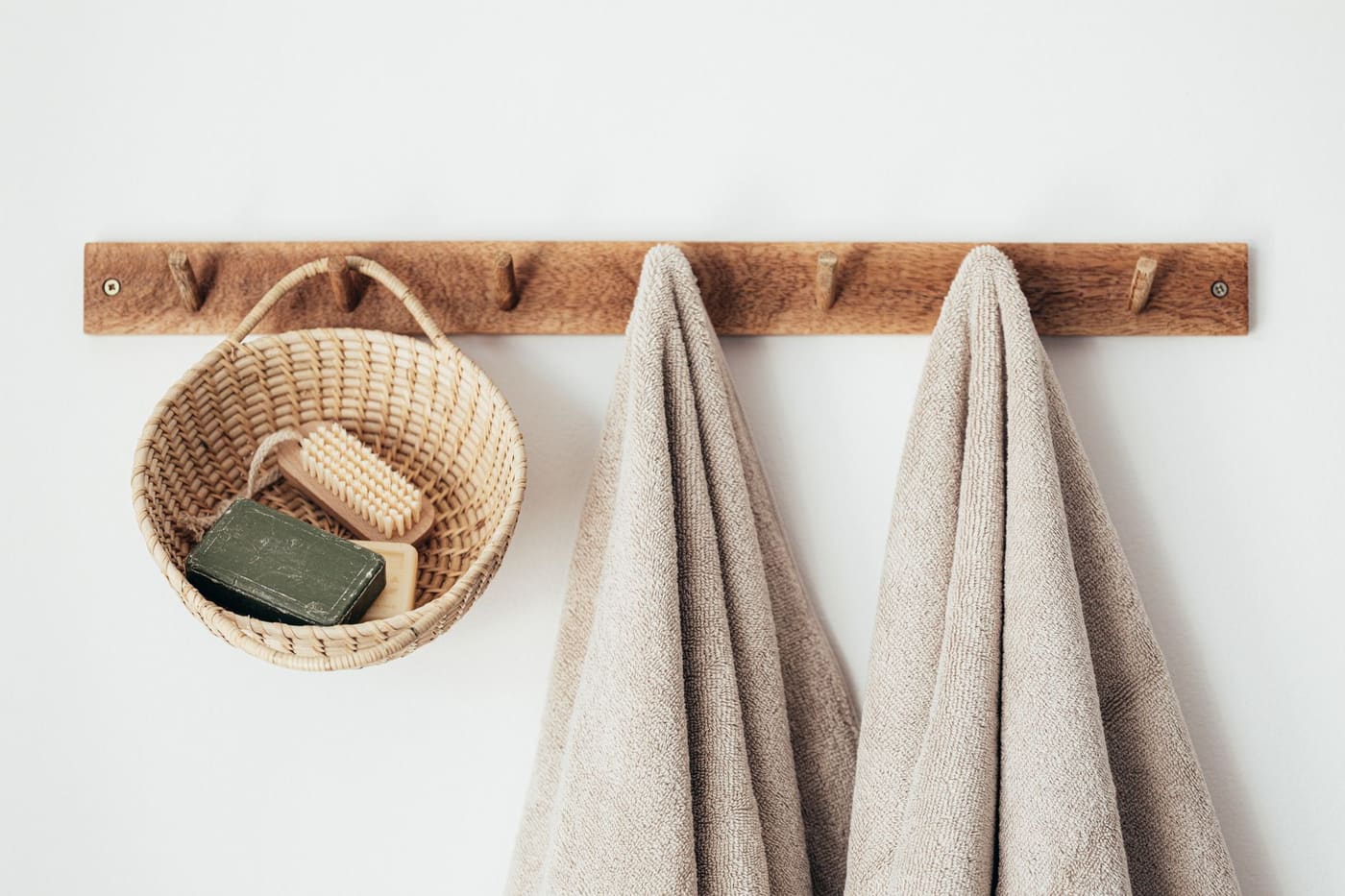
- Over-door hooks hang on the top of the door and need no adhesive. They work best on solid-core doors that are not too thin or too thick. Check the door’s width.
- Adhesive hooks are rated by weight, and the rating assumes a clean, smooth, dry surface. A damp towel weighs more than a dry one, so choose a hook rated well above the load and labeled for humid rooms. Clean the wall with rubbing alcohol, press for the time on the package, and wait before hanging.
- Freestanding racks or a tension-rod bar keep towels off the wall entirely.
Package instructions generally warn against textured walls and wallpaper, and steam and heat can weaken adhesive. To remove a strip, follow the package: usually you pull the tab slowly straight down along the wall, stretching the strip, rather than out toward you. Pulling outward can peel paint.
Under-the-sink storage
The space under a vanity or pedestal sink is awkward because of the pipes. Rental-friendly fixes that need no drilling:
- Stackable bins or clear drawers that surround the drain pipe. Look for a U-shaped organizer that wraps around plumbing.
- A tension rod across the cabinet for hanging spray bottles by their triggers.
- Over-door or inside-door organizers that hang from the cabinet door, if the door is solid.
- A small turntable for the back corners.
If you have a pedestal sink with no cabinet, a sink skirt or a freestanding shelf beside it gives hidden storage. For layouts that work around the trap and supply lines, see organizing under a sink when plumbing gets in the way. If you notice moisture under the sink, report it to your landlord promptly. Water damage behind or under cabinets is for a professional to assess.
Rolling carts and slim towers
A slim rolling cart, around 6 to 9 inches wide, slides into the gap beside a toilet or washer and holds a lot. Three tiers can hold toilet paper, extra towels and a few small bins. Make sure the wheels lock, since a cart on a wet tile floor can slide. Choose a model that is easy to wipe down, because it will pick up splashes at floor level. A cart can also move out of the way when you clean.
Counter and wall organizers
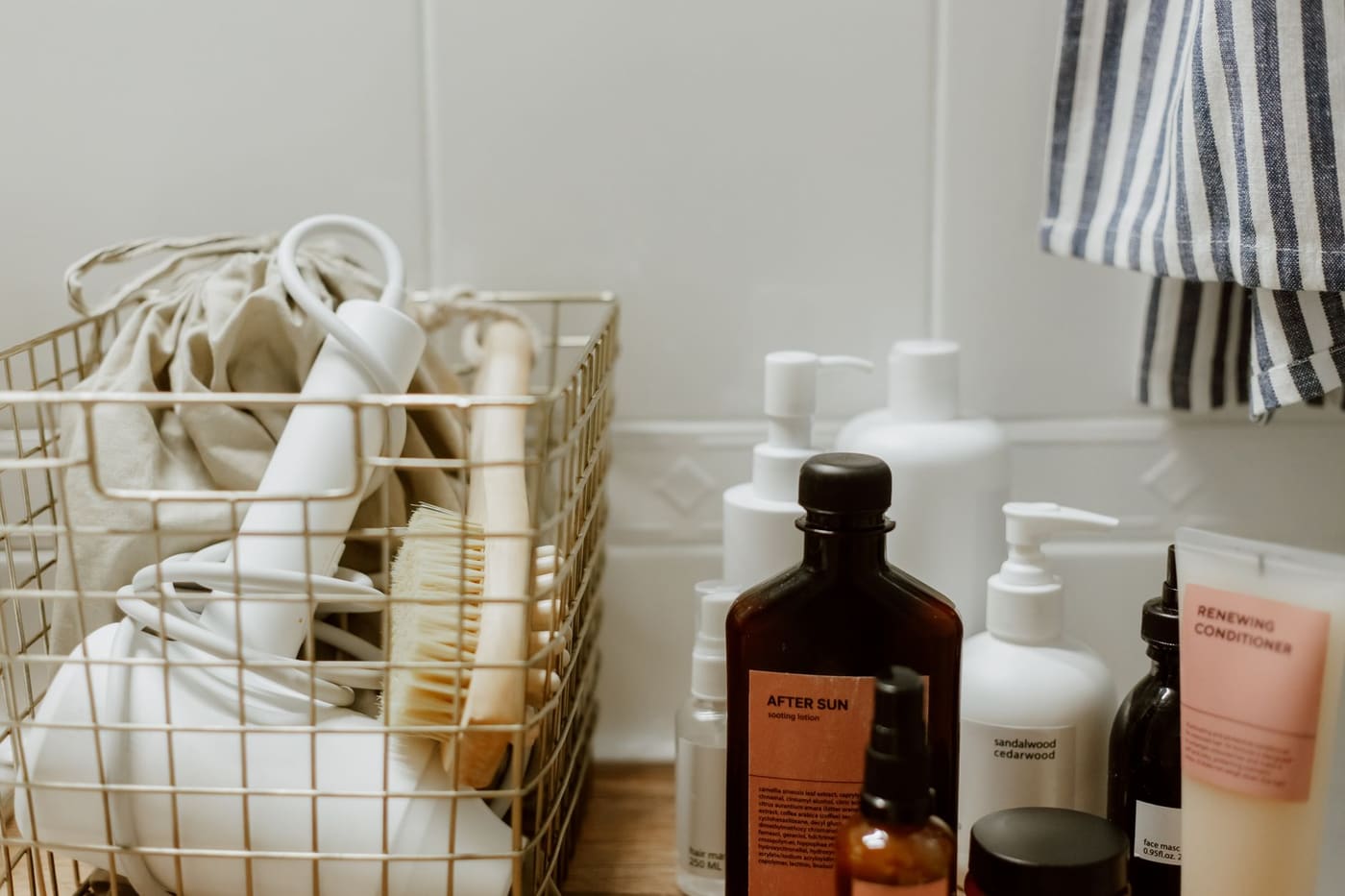
For the counter, a single tray, a pump bottle set and a toothbrush cup are enough. On the wall, magnetic strips can hold metal tools like tweezers and nail clippers, and a few adhesive hooks can hold a hair tool holder. Keep everything out of reach of water. The guide to what to keep on a counter helps decide what stays out.
If the room is tiny, the priorities change, so see tiny rental bathroom upgrades before you buy a unit that could block the door.
What is not worth it
- Large units you cannot easily move or that need two people to remove.
- Cheap particleboard shelves in a damp room.
- Anything that blocks the door swing, the tub or the toilet.
- Drilled-in shelves, cabinets or towel bars without the landlord’s written permission, and with the original fixtures kept.
- Storage for stockpiles. Keep only a week or two of backup in the bathroom.
If you need a larger fix, ask the landlord first. Many prefer a request in writing. The ranked list in renter-friendly upgrades worth doing shows where storage fits among the other changes.
If you remove anything later, photograph the wall afterward. That record is worth a minute if a deposit is ever questioned.
Where this comes from
This guide is based on manufacturer instructions for adhesive hooks and shelves (surface, weight and removal guidance), the ASTM tip-restraint standard for furniture anchoring as referenced by the US Consumer Product Safety Commission, and general material guidance for humid rooms. Lease points are described generally, so check your own lease. Prices are typical US ranges that vary by store and region.