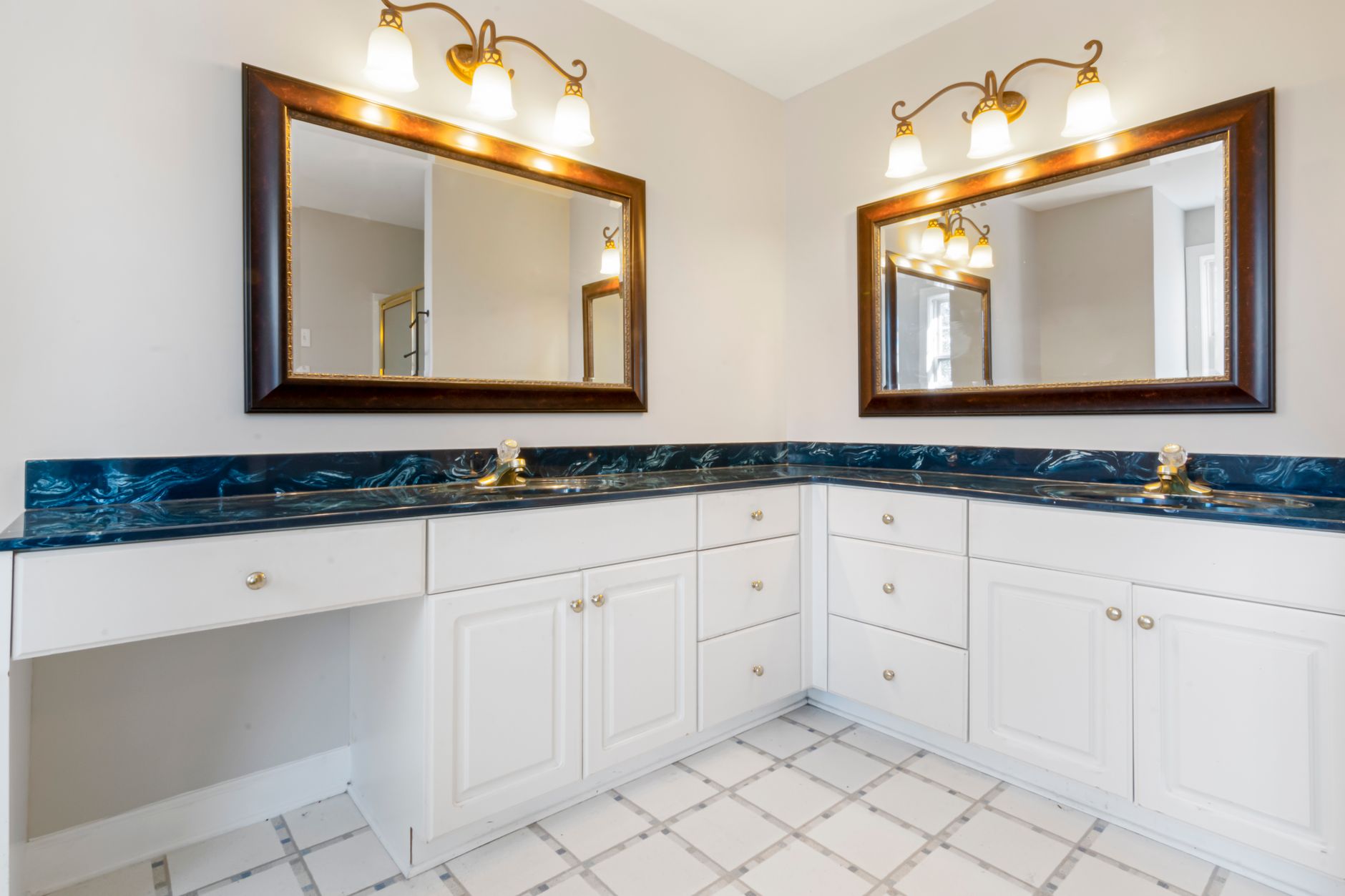
Keep on the bathroom counter only what you use every day and would otherwise carry in and out: hand soap, a toothbrush holder, and perhaps one daily skincare product. Everything else, including appliances, backups, duplicates and decor, belongs in a drawer, cabinet or another room. A counter is for using, not storing.
Every object on the counter adds a wipe-around step and a place for dust and water spots, and the counter is the most visible surface in the room. The lists below tell you what to keep, what to put away and what to remove entirely, and the bathroom countertop reset checklist turns it into tick boxes you can print.
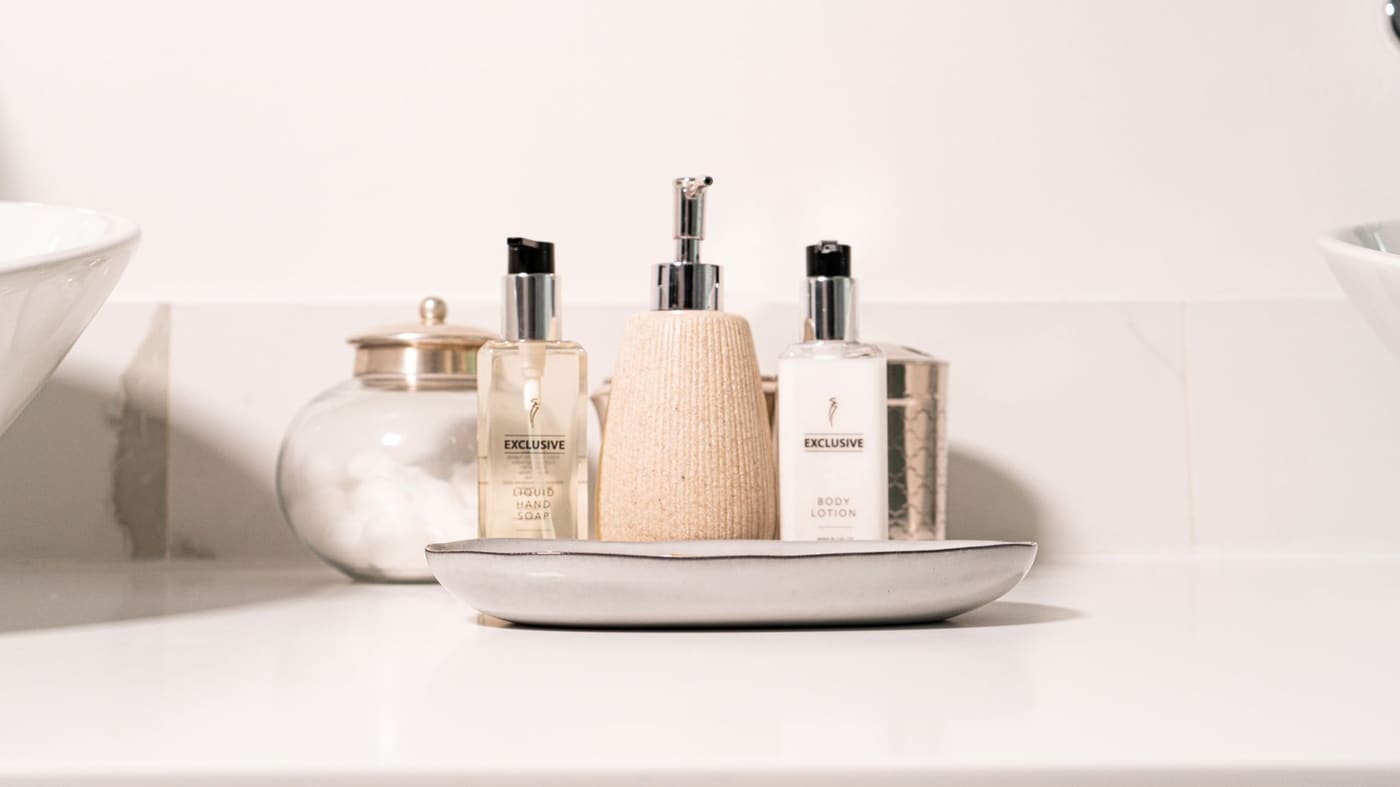
Keep, put away, remove: the quick sort
| Keep out | Put away (drawer or cabinet) | Remove from the room |
|---|---|---|
| Hand soap (pump or bar in a dish) | Makeup and cosmetics | Backup bottles and refill packs |
| Toothbrush holder or cup | Nail polish, tools and remover | Expired or unlabelled products |
| One daily skincare product | Razors and shaving cream | Duplicates beyond one open item |
| A small tray grouping two or three items | Hair tools, unplugged and dry | Anything you have not used in a month |
| Ring or watch dish, if you use it at the sink | Cleaning spray (under the sink) | Medicines left in the open |
Medicines are the one item to move out of sight for safety. Keep them in their original containers in a locked box or cabinet out of children’s reach, ideally outside the bathroom, because the heat and humidity of a bathroom are not ideal for most medicines. Cleaning sprays belong under the sink or in a closet, out of reach of children and pets.
Apply a three-question test to each item
When an item is not in the table, hold it and ask three questions in order:
- Do I use it every day? If not, it goes into a drawer or cabinet.
- Does it need to be out to be used? A toothbrush needs to be reachable, but a bottle of nail polish remover does not.
- Is there a practical reason it cannot be in a drawer? If it takes longer to get out of the drawer than the task itself takes, it may earn a counter spot.
Items that pass all three stay. Most counters end up with three to six items, which suits most rooms. If an item is hard to decide on, put it in the drawer for a week. If you do not miss it, it has your answer. If you reach for it daily and it is a bother, it can come back.
Items that usually earn a spot
- Hand soap: a pump is easier to keep clean and dry than a bar.
- Toothbrush holder or cup: one per person, or a single stand with slots. Keep brushes upright so they dry between uses.
- Hand towel or a hook next to the sink: within reach, but not on the counter itself.
- One daily skincare product, such as a moisturizer or sunscreen, if you use it at the sink and a drawer is not practical.
Counter width changes the answer. A narrow counter of 18 to 24 inches might hold only a soap and a cup, while a double vanity can handle a tray per person. Keep at least a hand-width of empty space beside the sink.
Common counter questions
Does toothpaste stay out? It can, but it keeps the counter cleaner in the cup or a drawer with the brush. If it stays out, put it in the tray so spills do not reach the counter.
What about an electric toothbrush? It earns a spot only if it must sit on its charging base. Keep the base away from the faucet and any splash zone, and move it into a drawer or cabinet if you can charge it elsewhere.
Can perfume or cologne stay out? Heat, light and humidity can change fragrances over time, so a drawer or cabinet is usually better. If you want one bottle out, choose the one you use daily.
Where does lotion go? A pump bottle you use after every hand wash can sit in the tray. Anything used once or twice a week goes in the drawer.
What if the counter is tiny? Move everything that does not need water to a drawer or the medicine cabinet, and let the counter hold only soap. A small wall shelf above the sink can take the toothbrush cup.
Pick the right tray
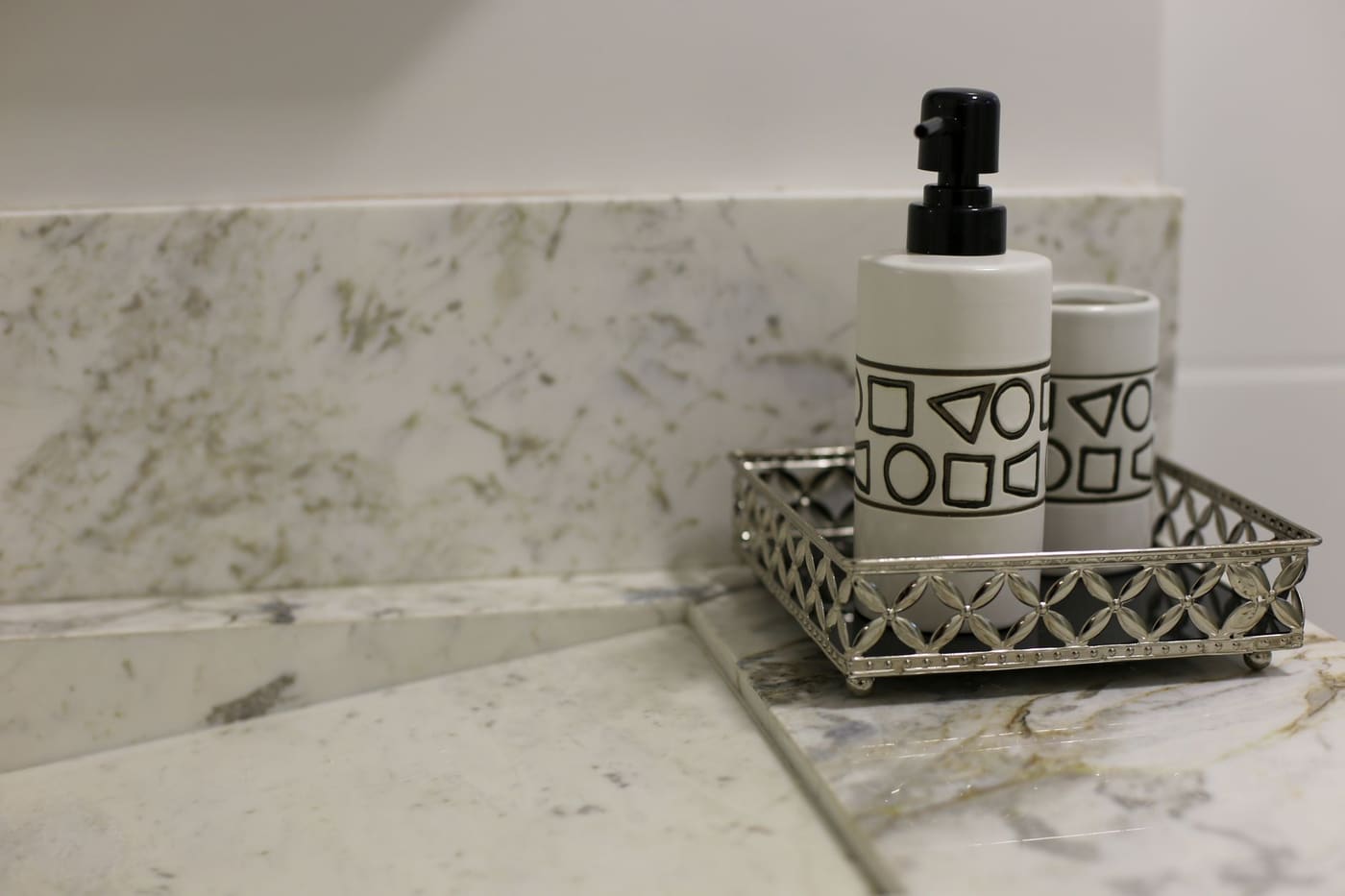
A tray makes two or three items read as one object, which is the cheapest visual edit you can make. The tray has to survive water, so choose by material:
| Tray type | Good for | Watch out for | Typical price |
|---|---|---|---|
| Glazed ceramic or stone | Soap and a cup beside the sink | Heavy, and can chip | Often $10 to $35 |
| Metal with a coating | Skincare and a ring dish | Raw or untreated metal can rust | $10 to $30 |
| Plastic or silicone | Wet areas, easy wiping | Can look cheap if the color is loud | $5 to $20 |
| Wood or bamboo, sealed | Dry corners away from the sink | Unsealed wood swells and stains | $10 to $35 |
Pick a tray an inch or two wider than the items on it so nothing hangs over the edge. Leave gaps between items, and lift the tray to wipe the counter underneath.
Put the toothbrush in the right place
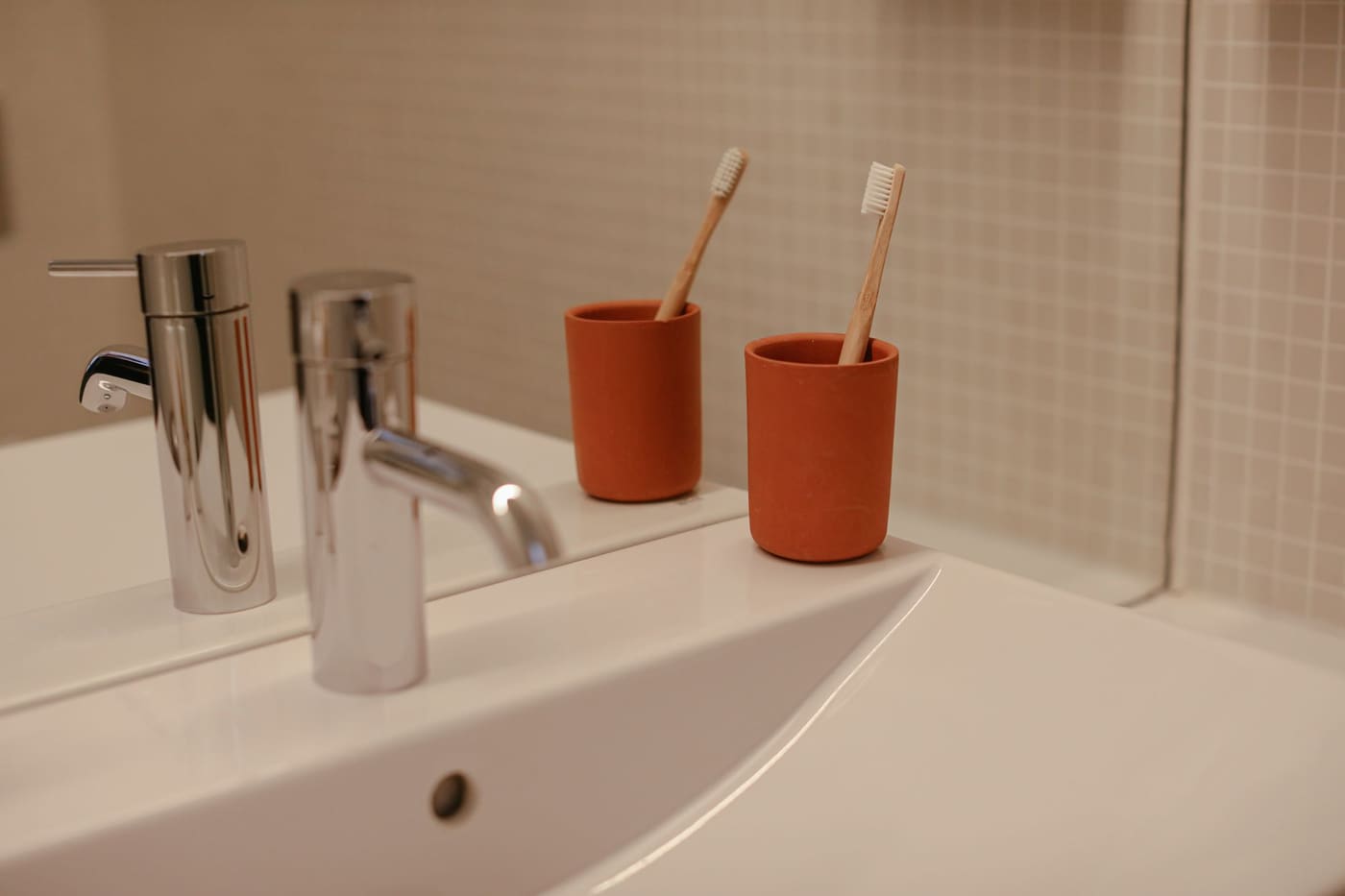
A toothbrush cup on the counter is one of the few things most people keep out, but the position matters. Toilet flushing can spread fine droplets, so keep toothbrushes as far from the toilet as the room allows, and close the lid before you flush if you can. The American Dental Association advises storing a toothbrush upright and letting it air dry, not covering it or keeping it in a closed container, where moisture lets bacteria grow. It also advises replacing a brush about every three to four months, or sooner when the bristles fray. If the counter is small, a wall-mounted holder or a cup in the medicine cabinet keeps brushes off the surface entirely.
Use drawers to hold the rest
A counter can stay clear only if the rest has a convenient home.
- Top drawer: daily-use items not worth a counter spot, such as a comb, deodorant and a few skincare products. Use a shallow divider tray.
- Second drawer: weekly and occasional items, such as nail tools, masks and hair accessories.
- Cabinet: bulky items, such as a hair dryer in a bin, extra towels and cleaning supplies.
If there are no drawers, use a small lidded basket or stacked bins on a shelf. For ideas on adding capacity, see bathroom storage ideas by height zone. Keep the drawer system realistic: a drawer is only convenient if it takes one motion to open and one to put things back, and too many tiny compartments make that harder.
Appliances such as hair dryers and electric razors should never sit where they can fall into a sink or tub. The US Consumer Product Safety Commission advises unplugging a hair dryer when it is not in use and never using one in the bath or near a sink full of water. Many newer dryers have a large plug with test and reset buttons (an immersion protection device), which is worth looking for when you replace one. If you are adding outlets or moving things near them, a licensed electrician should handle the wiring.
One small decor item, at most
A counter with only functional items can look clinical, and one small object that is not functional can make it feel finished. The limit is about one decor item, placed at one end with the working items at the other so the middle stays free for use. If the item needs dusting more than once a week, it is too fussy for a bathroom. If you choose a plant, check that it is safe for any pets or children in the home, and that it gets enough light in a humid room. More decor ideas live in making a bathroom feel warmer.
Reset the counter in 30 minutes
- Remove everything from the counter and wipe it clean (5 minutes).
- Sort items into keep, drawer, other room and toss (10 minutes).
- Put the keep items back on a tray, leaving gaps between them (3 minutes).
- Put the drawer items into dividers, and the other-room items into a basket to carry out (7 minutes).
- Take a photo for reference (1 minute).
Check the counter against the photo once a week. If something has sat there for a week without being used, move it. The daily wipe that keeps it clear is in the five-minute bathroom reset, and the reason a bare counter pays off at cleaning time is in what makes a bathroom easier to clean. An empty surface also invites others to leave it that way, which matters most in a shared room, where you can divide the space by person.
Where this comes from
This guide is mostly practical organizing advice. The specific facts come from American Dental Association guidance on toothbrush storage and replacement, US Consumer Product Safety Commission guidance on hair dryer safety, and published household poison-prevention and medicine-storage guidance from poison control and children’s health organizations. The counter limits and timings are rules of thumb. Prices are typical US ranges that vary by store and region.