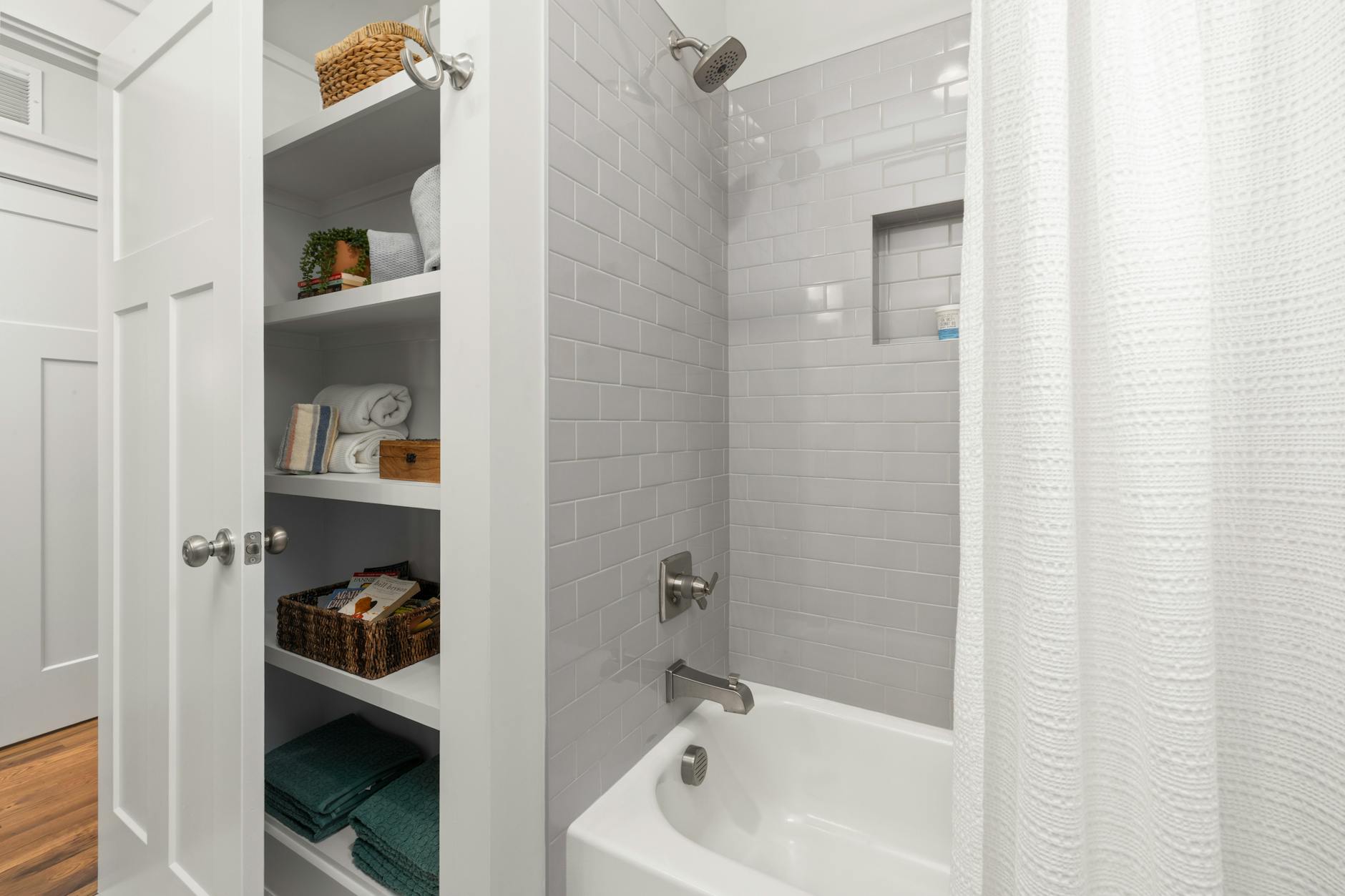
Add bathroom storage by height, not by floor space. Put heavy and bulky things low, daily items at easy reach, and occasional items high in closed containers. Most bathrooms already have unused wall volume. This guide is about capacity: where more storage can go and what to buy. If the room has enough storage and just looks busy, use how to make a small bathroom look less cluttered instead.
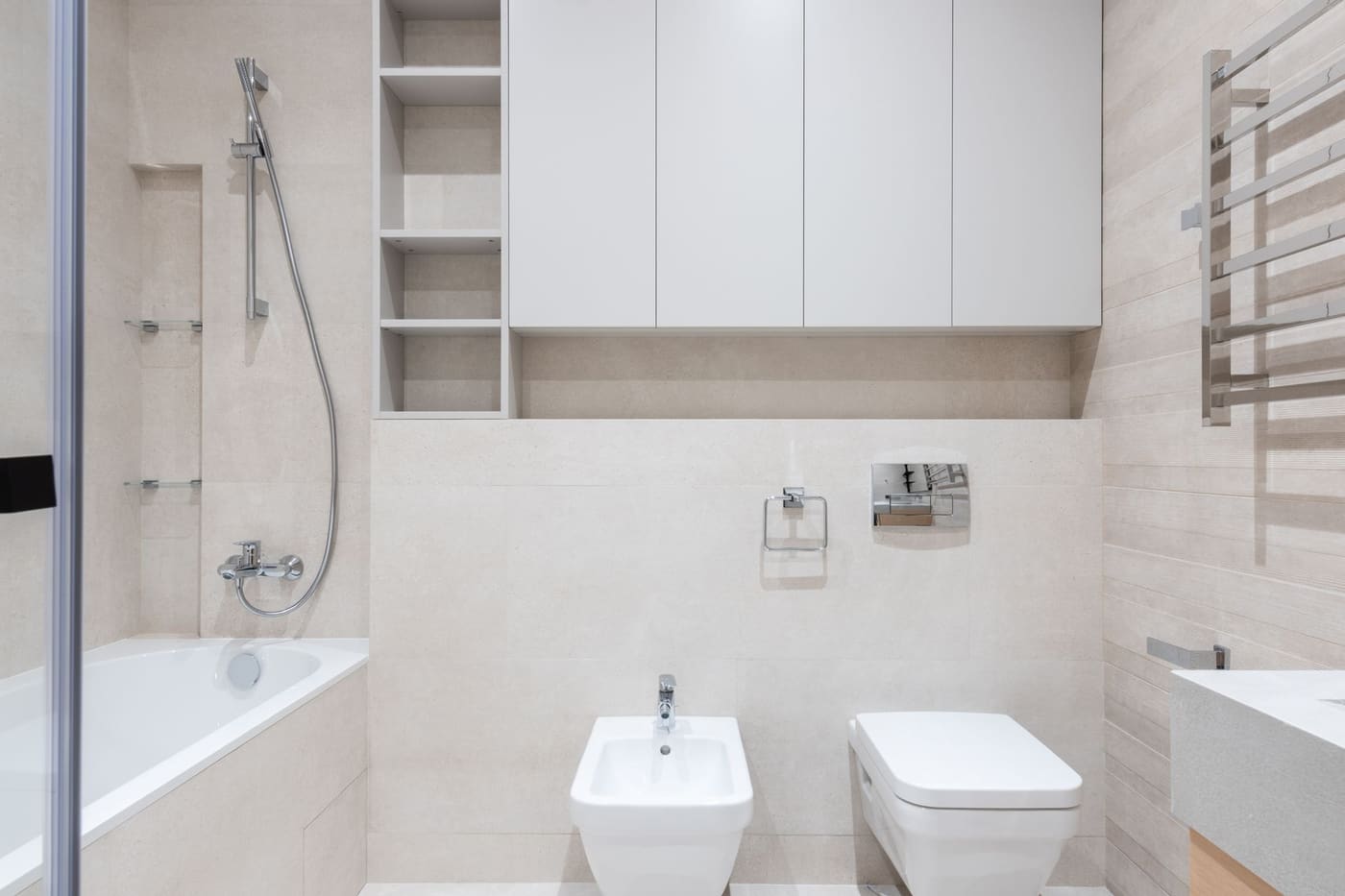
The height zones that decide where things go
| Zone | Height from floor | Best for |
|---|---|---|
| Low | 0 to about 15 in | Heavy or bulky items: extra toilet paper, a basket of towels, a small bin of cleaning supplies |
| Reach | about 15 to 48 in | Daily products, hand towel, toothbrush holder |
| High | above about 48 in | Occasional items in lidded containers, folded spare towels |
The 15 to 48 inch band is the unobstructed reach range used in US accessibility standards (the ADA Standards for Accessible Design), and it also suits children and shorter adults. It is the most valuable band and the easiest to ruin, so keep it for the daily group. Everything else goes low or high, where a slightly harder reach costs you nothing because you only visit those items weekly. A vanity top sits inside the reach band, so treat it as a working surface and not a shelf.
Audit what is overflowing before you buy anything
Spend ten minutes sorting what currently lives on the counter, tank, tub edge and floor into three groups:
- Daily use: used at least once a day, needs to be within arm’s reach.
- Weekly or occasional: hair masks, face masks, nail tools, styling products, first aid.
- Overflow: backups, travel sizes, samples, and anything you could not name a use for this month.
The size of each group tells you what to buy. A large overflow group means you need a place outside the bathroom, not a bigger shelf inside it; the guide to linen closet organization and backup toiletry storage shows how, and that fix costs nothing. A large occasional group usually needs a closed bin on a high shelf. Only the daily group deserves easy-reach spots. Skip this step and you tend to buy storage for what you own now, fill it, and end up with the same clutter plus a new piece of furniture.
Above-the-toilet space is the best unused volume
The wall above a toilet is usually bare, with often 20 to 30 inches of clear width and a lot of height. Three common ways to use it:
- Floating shelves: two shelves, about 8 inches deep, spaced 12 to 14 inches apart. Often $15 to $60 for a pair. They need to go into studs or use rated wall anchors, and they are not a good fit for rentals unless the lease allows drilling.
- Freestanding over-toilet unit: a frame that straddles the tank with shelves or a cabinet on top. Often $40 to $150, more for solid-wood or cabinet styles. No drilling needed, but check that the legs clear the tank and any floor pipes.
- Wall cabinet with doors: the cleanest look because everything is hidden. Often $50 to $200 for a surface-mount model, and it needs wall fixings.
Keep heavy items off the top and avoid anything breakable at head height. A closed cabinet beats open shelves in a bathroom with several people, because the open version needs constant tidying. If you rent, the guide to renter-friendly bathroom storage covers the no-drill versions.
Go narrow and tall instead of wide and deep
Depth is what makes a bathroom feel tight. A shelf that sticks out 12 inches in a 5-foot-wide room catches hips and elbows. These dimensions keep the room walkable:
- Wall shelves: 5 to 8 inches deep is plenty for bottles, jars and a rolled towel.
- Freestanding towers: 8 to 12 inches deep, and no wider than about 15 inches in a tight room.
- Behind-the-door racks: a slim rack or a set of hooks adds capacity at almost no depth, but check that the door still opens fully.
A tall, narrow unit in a corner gives the same volume as a wide one while leaving more floor free.
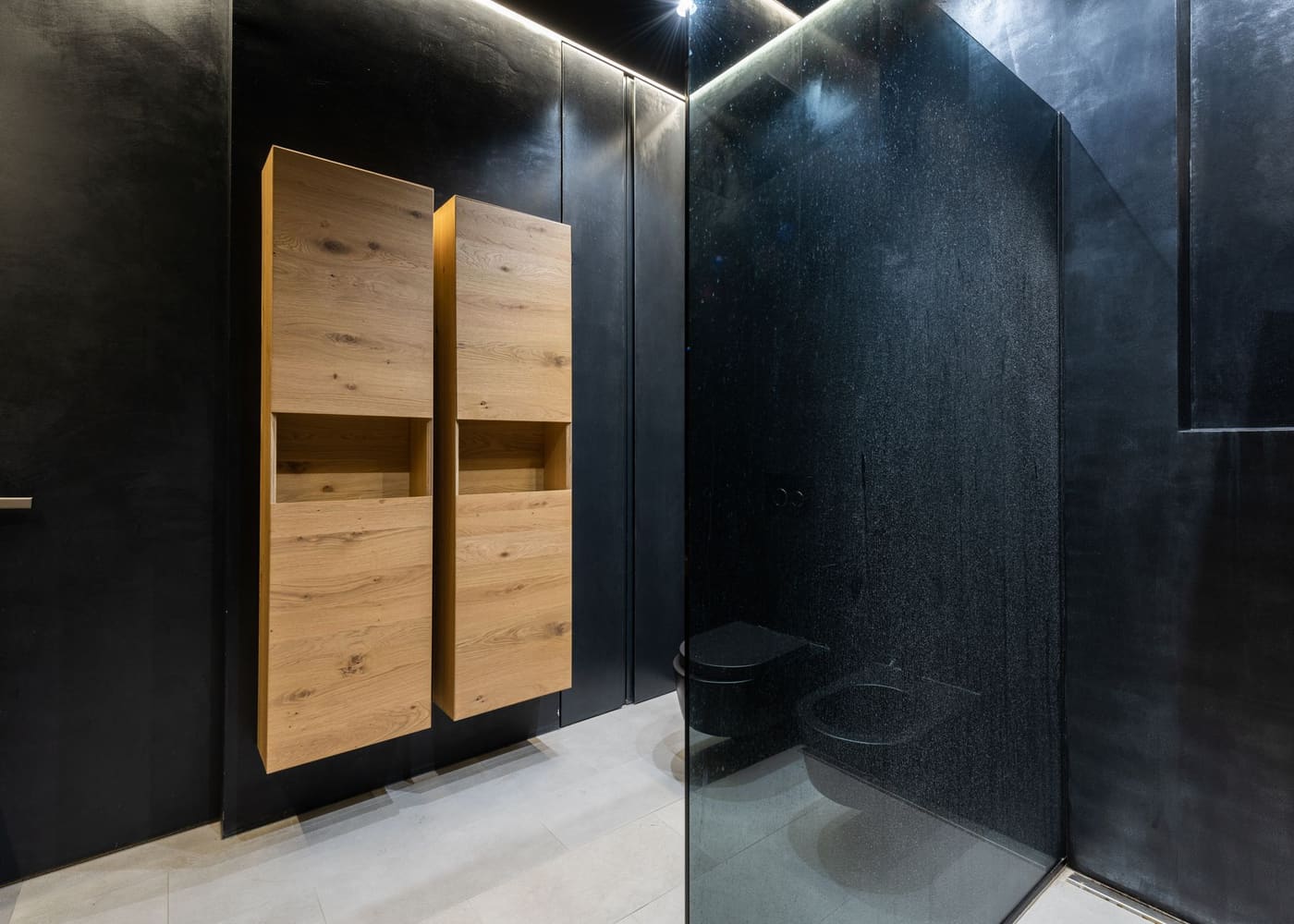
Pick closed storage for anything you do not want to see
Open shelves look good only when they hold a small, edited group of items. A good test: if the shelf contents cannot be arranged so they look intentional from the doorway, put them in a box.
- Lidded bins or baskets with liners: good for the occasional group. Woven baskets are fine as long as they do not sit where they get splashed.
- Clear containers: useful for cotton rounds, swabs and small items you want to see at a glance.
- Matching pump bottles: refilling one bottle style from bulk shampoo and soap saves shelf space. Label them, because identical bottles cause mix-ups. Keep medicines and cleaners in their original labelled containers, never decanted, and out of children’s reach.
Avoid fabric bins directly above a tub or shower, where they hold damp and can pick up a musty smell.
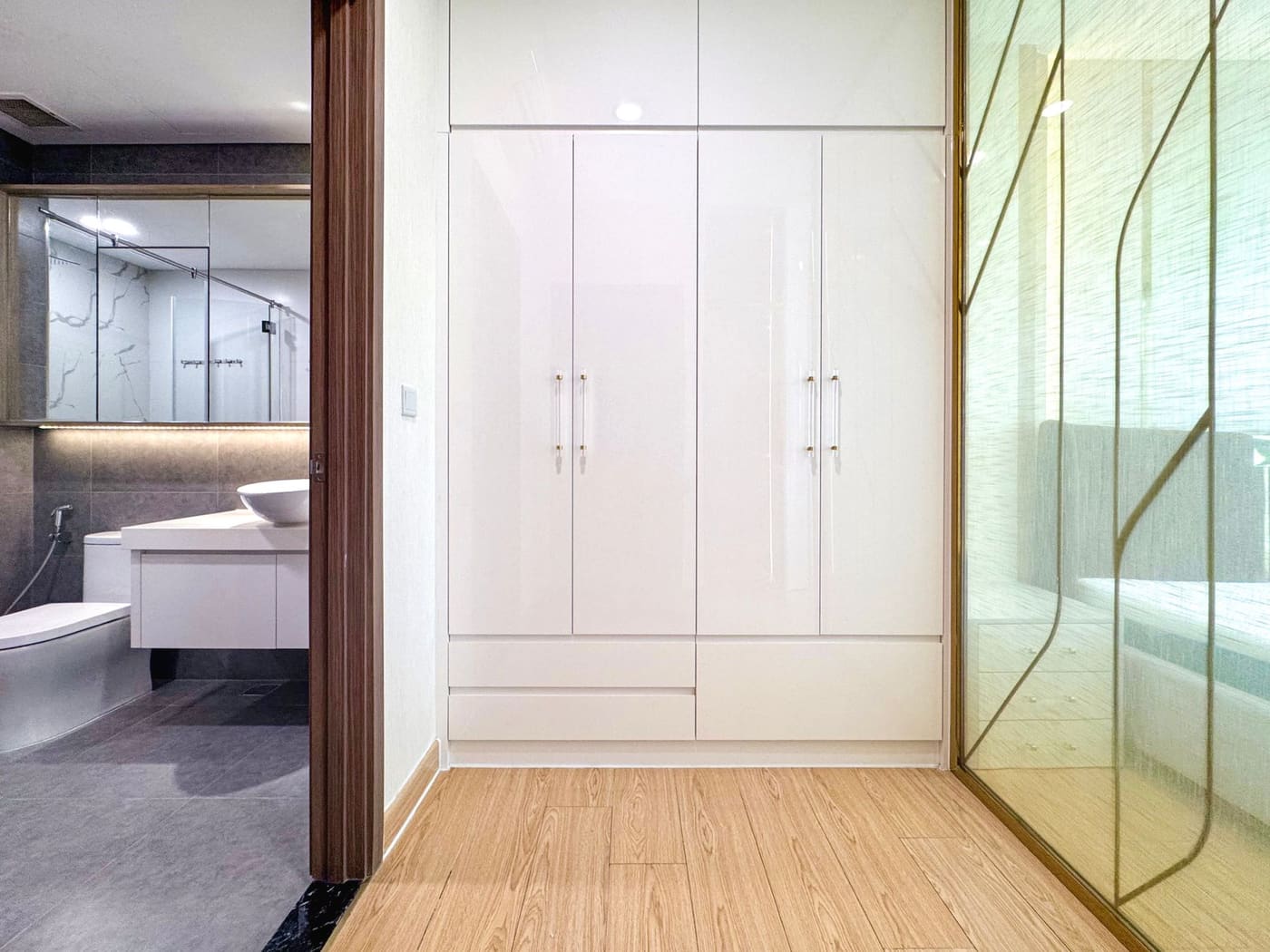
Where each storage problem is solved in more detail
Drawer dividers (often $10 to $25 for a set) can add usable space to a vanity drawer, and a door-back organizer adds a vertical zone. Closed vanity storage also keeps razors, hair tools and makeup out of open humid air better than open shelves. For specific spots:
- Pipes and a cramped cabinet: organizing under a bathroom sink.
- Bottles in the tub: shower storage ideas.
- A counter that fills up daily: what to keep on a bathroom counter.
- Several people, one room: organizing a shared bathroom by person.
- Small children: kids bathroom organization.
Choose materials for a damp room
Solid wood and laminated particleboard can swell if water gets into an edge, so look for sealed edges, or choose coated metal, glazed ceramic or plastic for shelves close to the tub. Raw metal can rust where it holds wet bottles. Glass shelves let light through but show every water spot, so they suit a dry area better than a spot near the shower.
Add storage in a clear order
When you do add pieces, go in this order so you do not overbuy:
- Use existing drawers and cabinets better.
- Add vertical space (a shelf or an over-toilet unit).
- Add behind-door hooks or a rack for towels and robes.
- Add one lidded bin for the occasional group.
- Stop and live with the result for two weeks.
The last step matters. Most people add three or four pieces over a weekend and then find the room crowded again, because they never tested whether the first piece was enough. The bathroom storage checklist walks through the same sequence with tick boxes.
Leave some space free
Aim to keep every shelf, drawer and bin around 70 percent full, a rule of thumb and not a standard. The spare room lets you put things back without rearranging. If a shelf is full the day you install it, it is already too small for your habits. A one-in, one-out rule helps: a new shampoo comes in once the old bottle is finished. If the room still feels cramped after this, the number of products you own is the likely problem, not the number of shelves.
Where this comes from
This guide draws on the ADA Standards for Accessible Design (unobstructed reach range) and on published household poison-prevention guidance about keeping medicines and cleaners in original containers and out of children’s reach. Shelf depths, spacing and the 70 percent rule are practical rules of thumb, not standards. Prices are typical US ranges that vary by store and region.