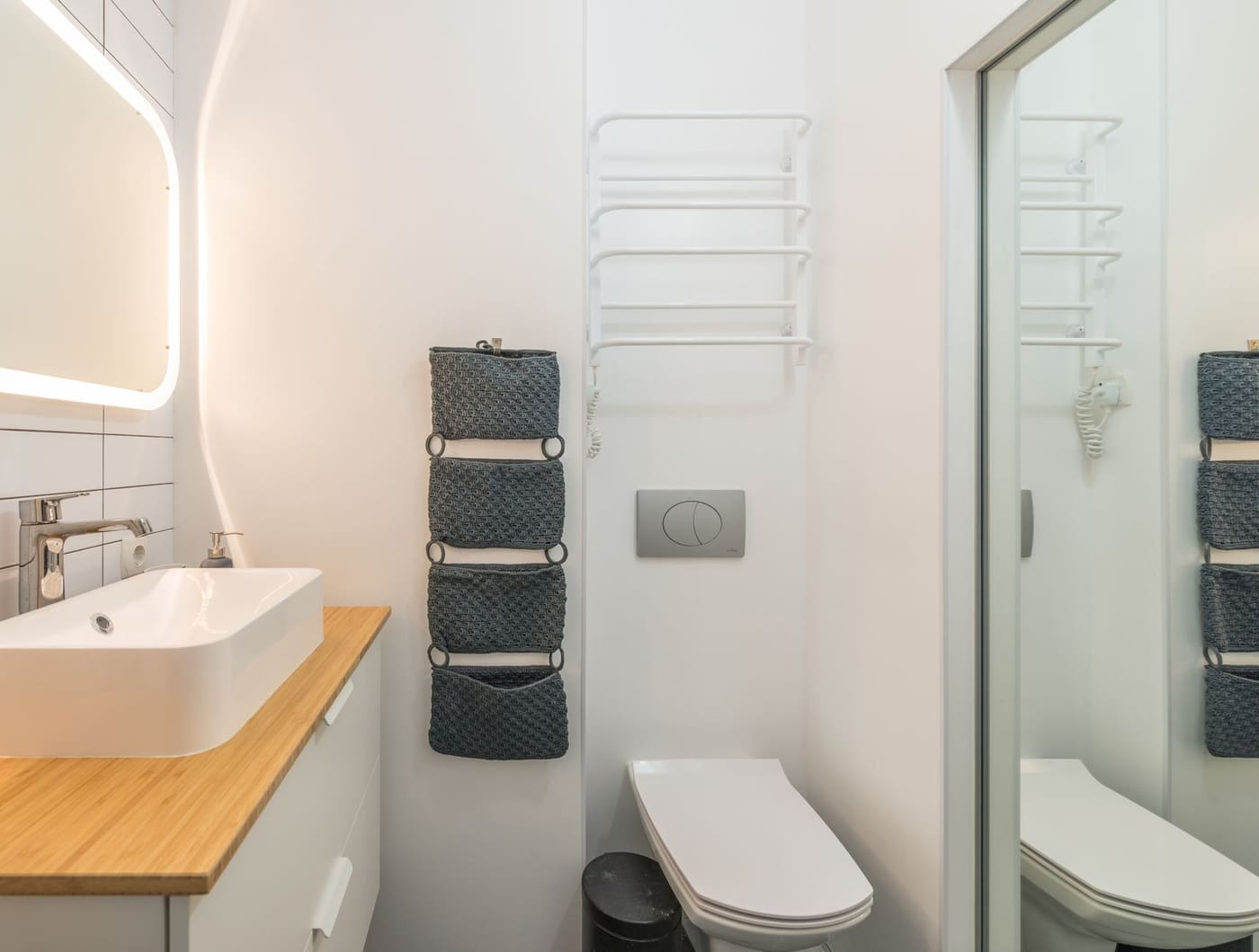
In a tiny rental bathroom, the upgrades that help most are the ones that use vertical space and free up the floor: over-door hooks, a slim over-toilet shelf, a tension-pole shower caddy, a larger or lighter mirror, and a pale, simple palette. Every item you add should save more space than it takes, and anything bulky is a net loss, even if it comes off the wall easily.
A very small bathroom, such as a 5 by 8 foot room with 40 square feet of floor, or a half bath smaller than that, has almost no slack. A single oversized organizer can crowd the door swing. This guide treats space as the budget: measure first, then spend.
Measure before you buy
Tiny bathrooms punish guesses. Take five measurements and write them down.
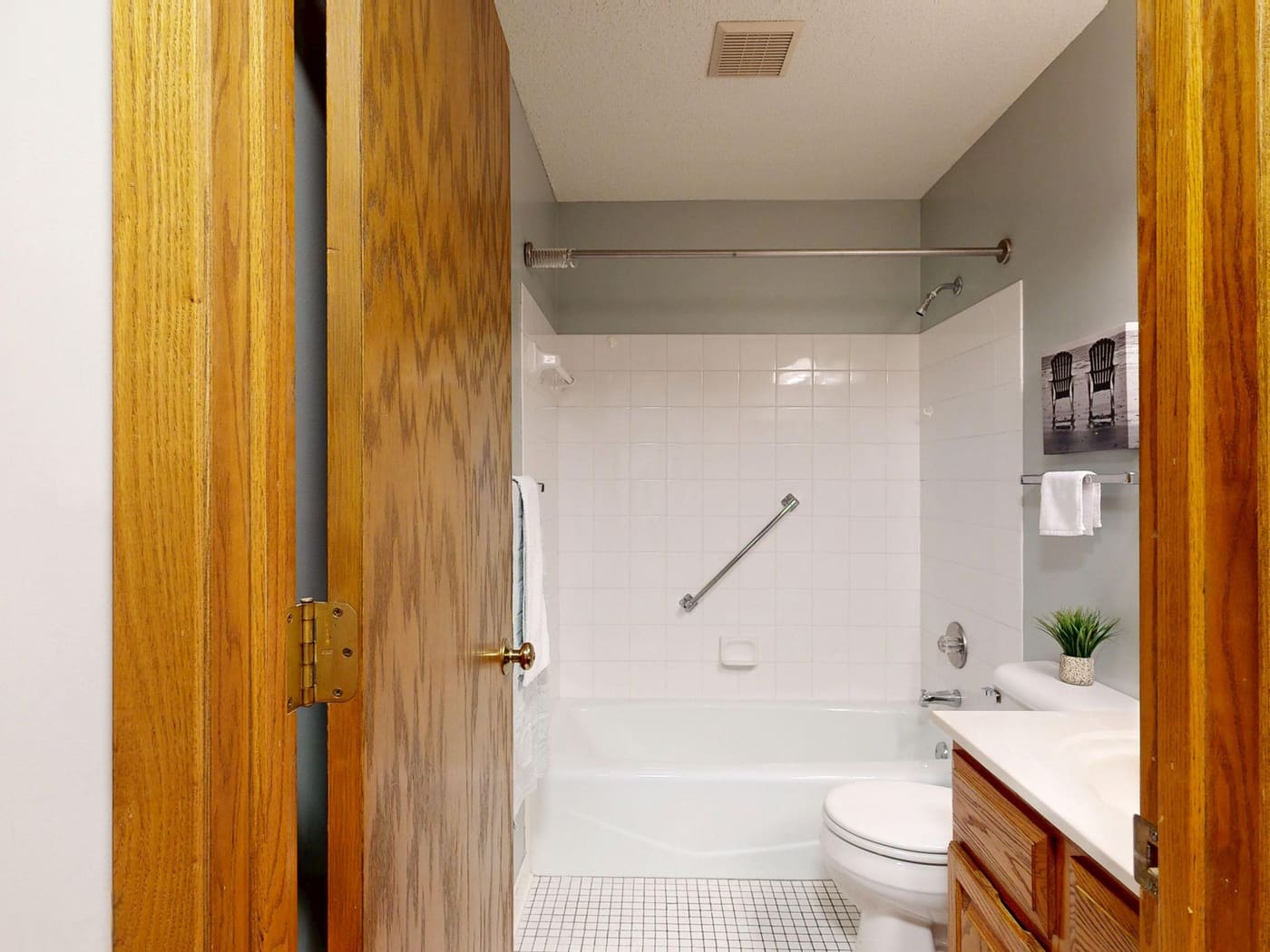
- Door swing: How far does the door open, and what does it hit?
- Toilet clearance: The distance from the toilet front to the wall or tub. Building codes commonly call for at least 21 inches of clear space in front of a toilet, so treat that as a floor, not a target. Older rentals may differ.
- Gap beside the toilet or vanity: The width of any narrow gap, since a slim cart may fit there.
- Ceiling height and tank depth: For an over-toilet shelf or tension pole.
- Back of the door: Thickness and whether it is solid or hollow, for over-door hooks.
Photograph the room from the doorway. The picture often shows dead space that you stopped noticing, such as the wall above the door.
Go vertical first
The floor is the scarcest resource, so use the wall and the air above it. In a tiny room the question is footprint, not style. Product details, weight limits and prices for each item are in the guide to renter-friendly bathroom storage worth adding. The tiny-room rules are these:
- Back of the door: An over-door hook rail or a narrow organizer is free storage. Choose a thin profile so the door still closes fully, and check that it does not scratch the paint.
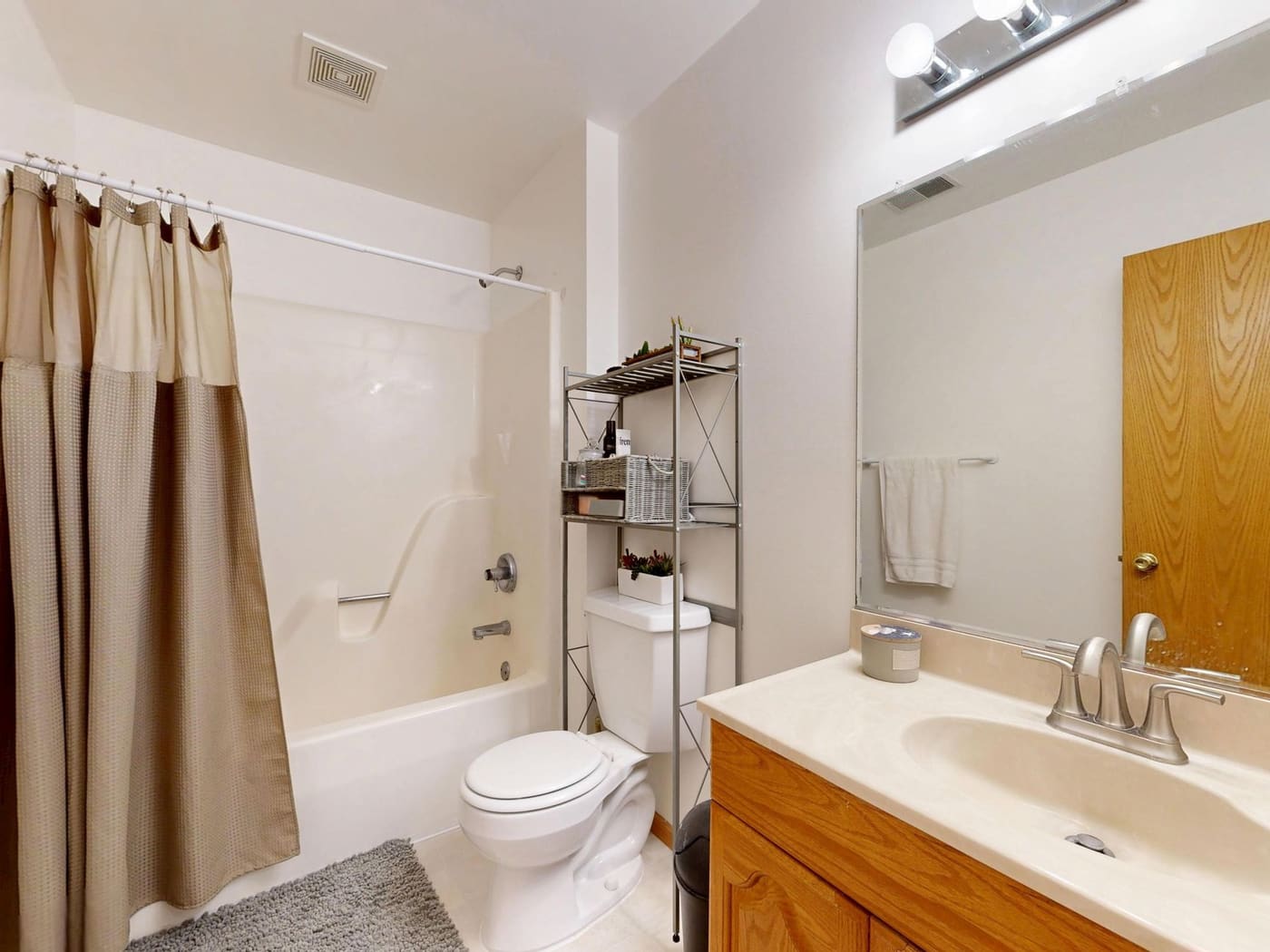
- Over the toilet: A freestanding unit with a depth of around 8 to 10 inches adds tiers in space you were not using. Keep heavy items low, and make sure the lid still opens fully.
- Shower corner: A floor-to-ceiling tension pole holds bottles without taking wall space. Check the pole’s height range against your ceiling, and put it in the corner farthest from the water stream. See shower storage that helps without looking messy for what to keep on it.
- Vanity side panel: If there is one, an adhesive hook or small bar can hold a hand towel within reach of the sink and away from the door swing.
Let light and mirror do the work
A small room looks larger when the walls are light and the mirror is generous. Within a rental, you can often change two things.
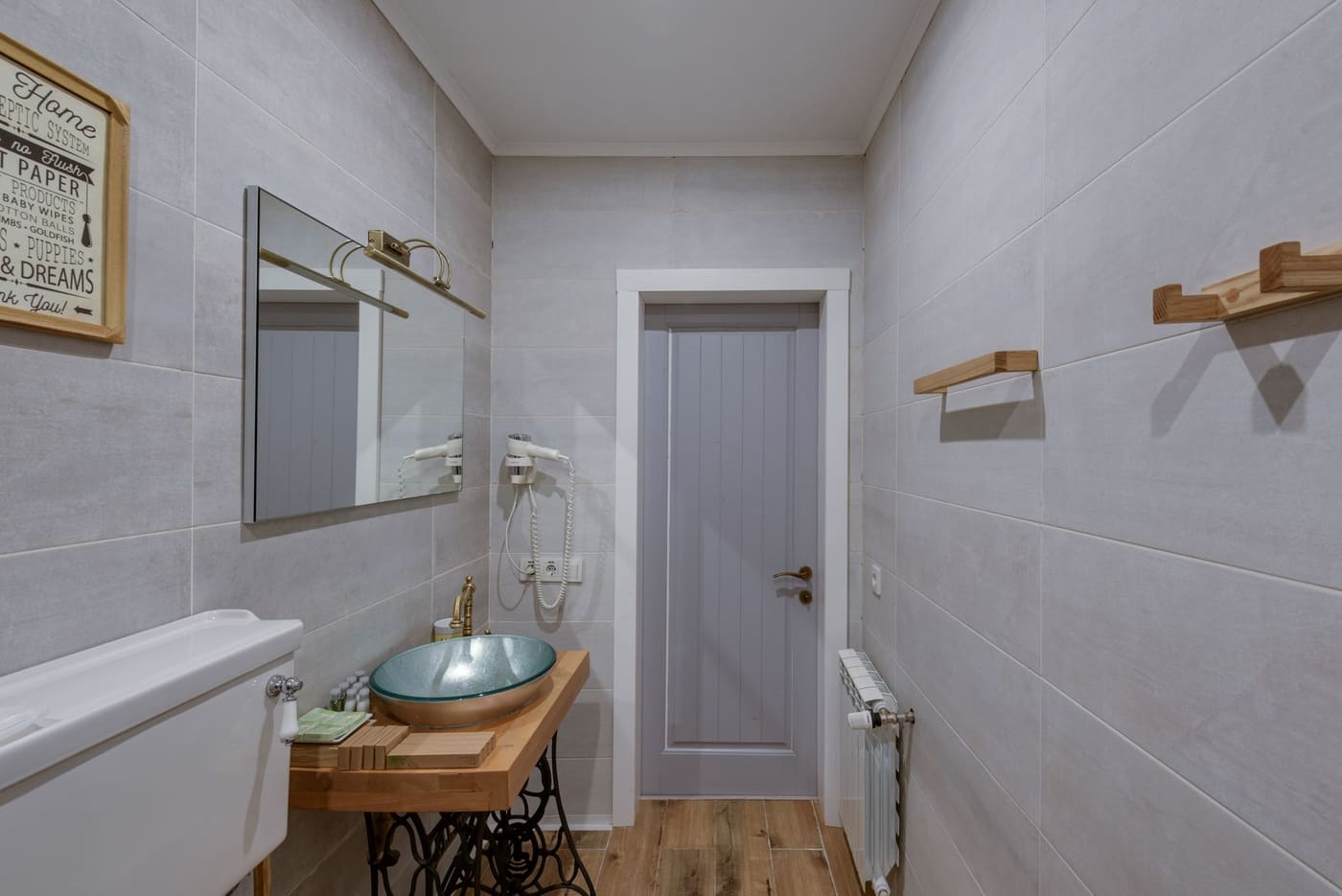
- Mirror: If the existing mirror is small and you may replace it, a larger one reflects more light and makes the room seem wider. Hanging a mirror needs the right wall anchors and usually needs permission. If you cannot replace it, a leaning full-length mirror on the back of the door works.
- Lighting: Swap to warm LEDs and add a rechargeable light at the mirror. The article on renter-friendly bathroom lighting covers choices that do not touch the wiring. Keep cords away from water and plug only into outlets with test and reset buttons (ground-fault protection). The vanity lighting calculator can help size light for a small mirror.
- Color: Pale towels, a light shower curtain, and a light mat make the room feel larger. Dark colors work too if you commit to them, but mixing many colors makes a small room look busy.
Choose the right shower curtain
In a tiny bathroom the shower curtain is a large share of what you see. A clear or lightly frosted liner with a plain light curtain lets light pass and feels more open than a dark, heavy one. A curved rod that installs by tension, where your tub allows it, adds elbow room inside the shower. Anything that mounts to the ceiling or wall needs permission.
Limit what lives in the room
Storage cannot fix an overstuffed room. In a tiny bathroom, set a ceiling on what you keep.
- Daily items only on the counter, which is usually a soap pump, a toothbrush cup, and nothing else.
- One week of supplies, with backups kept in a hallway closet or bedroom. See where to store extra toiletries and linens.
- One bottle of each product in the shower, decanted into matching containers.
- One hamper or none. A small hamper can live in a bedroom if the bathroom has no space.
The guide to making a small bathroom feel less cluttered goes deeper on editing, while this one focuses on which removable upgrades earn space.
A layout example for a 5 by 8 foot bathroom
Picture a standard tub, toilet and a single sink in a 5 by 8 foot room. The diagram shows where each upgrade goes and what stays clear.
In words, the plan looks like this:
- Back of the door: a two-hook rail for towels and a robe.
- Above the toilet: a slim freestanding shelf with two baskets, one for toilet paper and one for guest items.
- Shower: a tension pole in the far corner with one shelf for shampoo and soap, plus a single hook on the pole for a razor and sponge.
- Sink: a small tray with soap and a toothbrush cup, and everything else in a drawer or cabinet.
- Floor: one low mat, with a lidded bin tucked beside the toilet.
That is five small purchases, often roughly $80 to $200 together depending on quality, and nothing is drilled. The room still has clear floor space, which is what makes it feel bigger than it is.
What helps and what hurts
| Upgrade | Space effect | Verdict for a tiny bathroom |
|---|---|---|
| Over-door hooks | Uses unused space | Strong yes |
| Slim over-toilet shelf (8 to 10 in deep) | Uses vertical space | Yes, if the lid opens fully |
| Tension pole caddy | Uses shower corner | Yes |
| Rolling cart 6 to 9 in wide | Uses a gap | Yes, if a gap exists |
| Wide floor cabinet | Takes floor area | No |
| Bulky laundry hamper | Takes floor area | Move it out |
| Large decorative items | Takes counter space | Skip |
| Wall-hung shelves with drilling | Saves space | Only with permission |
Floors, rugs, and the small details
Floors in a bathroom like this are around 40 square feet, so a rug is a large share of the visible floor. A single small mat in front of the sink or tub is enough, and one that is slightly smaller than the clear floor area keeps the room tidy. Choose a low-pile mat that dries quickly. Avoid layering several mats, which makes the room look smaller and gets damp.
Small details also matter. A toilet brush that hides behind the toilet, a trash bin with a lid, and a soap dispenser instead of bars that leave a puddle all reduce visual noise. A wall-mounted or slim trash can saves floor space. For a longer treatment, see keeping a bathroom trash area from becoming the messiest spot.
Safety and lease notes
Tiny rooms magnify mistakes, so before you finish, open and close the door fully, sit on the toilet to check knee clearance, and step into the shower to make sure nothing pokes you.
Check your lease before drilling, painting or replacing fixtures, and keep any original parts you remove. Do not run new wiring, use extension cords, or place electrical items near water. If you notice a leak, a soft floor, or mold that is large or keeps returning, report it to the landlord rather than covering it with decor, and leave water damage behind walls to a professional.
Where this comes from
This guide uses the International Residential Code’s toilet clearance figures as a reference point, manufacturer guidance on adhesive hook use, and Electrical Safety Foundation International guidance on ground-fault outlets. The layout is a worked example, not a measured room, so use your own measurements. Prices are typical US ranges that vary by store and region.