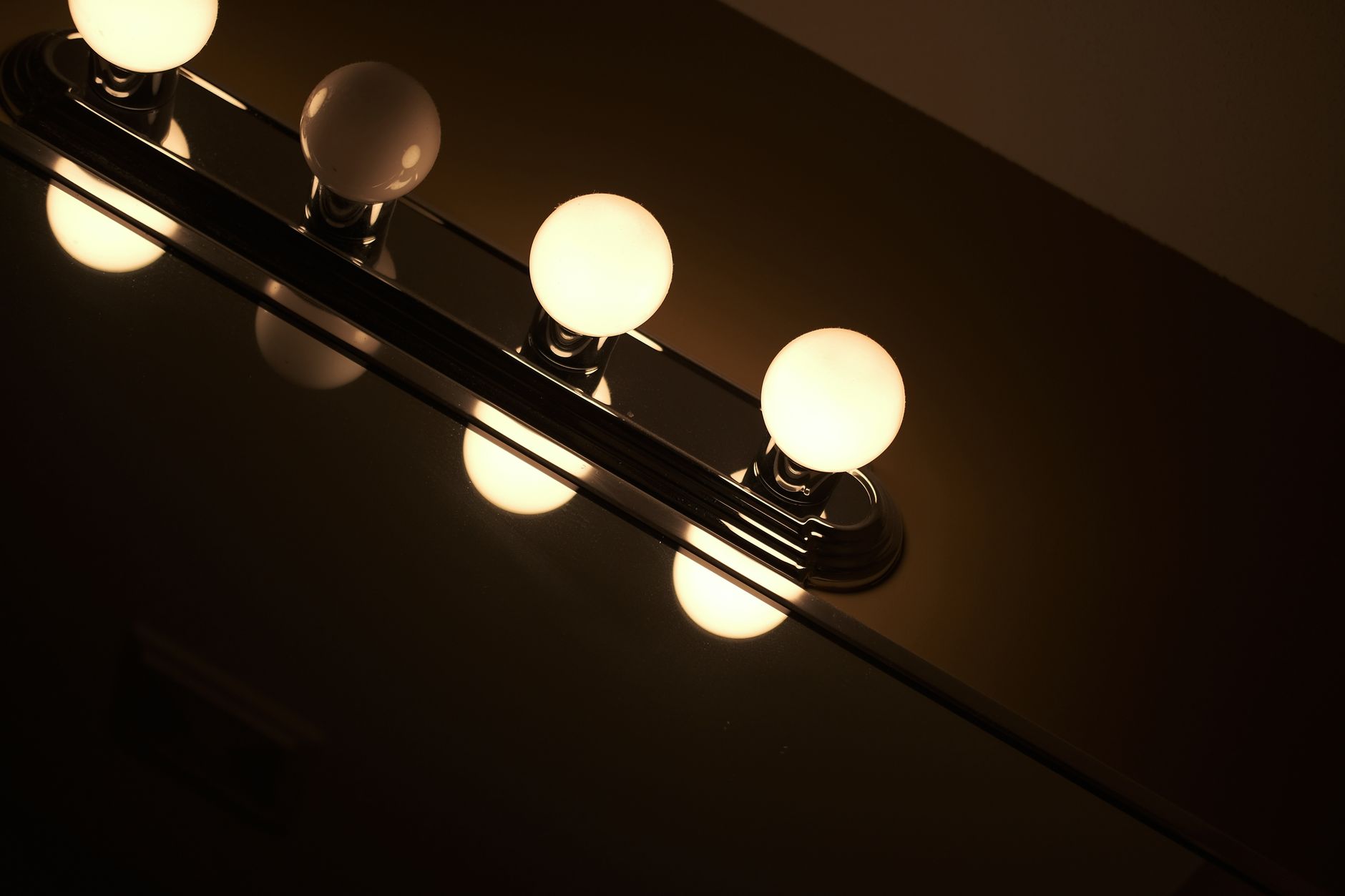
The renter-friendly bathroom lighting worth trying is the kind you can put back exactly as you found it: warmer LED bulbs in the existing fixture, a shade or globe swap where the fixture allows it, a battery or rechargeable light at the mirror, a motion-sensing night light, and a small plug-in lamp kept away from water. None of these touch the wiring, and all of them come off in minutes when you move out.
The hard line for renters is the fixture and the wall. Replacing a vanity light, hardwiring a sconce or drilling for a mounted light can violate a lease, and in a bathroom the wiring work is a licensed electrician’s job in any case. This guide sticks to what you can do safely on your own. For the broader question of how to light a bathroom well, start with what bathroom lighting actually helps.
Before anything beyond a bulb
Check your lease for rules on alterations, drilling and adhesives, and photograph the existing lighting. The general lease routine is in renter-friendly upgrades worth doing. If you want to swap a fixture, ask in writing. Many landlords say no, and some say yes if you pay an electrician and keep the original.
Never open a fixture to rework the wiring, and never work on a live circuit. Bulb changes and plug-in devices are the safe tier.
Start with the bulbs in your existing fixture
This is the best renter move because it changes the whole room, and bulbs are not usually the kind of alteration leases restrict (check yours).
- Switch the light off and let the bulbs cool.
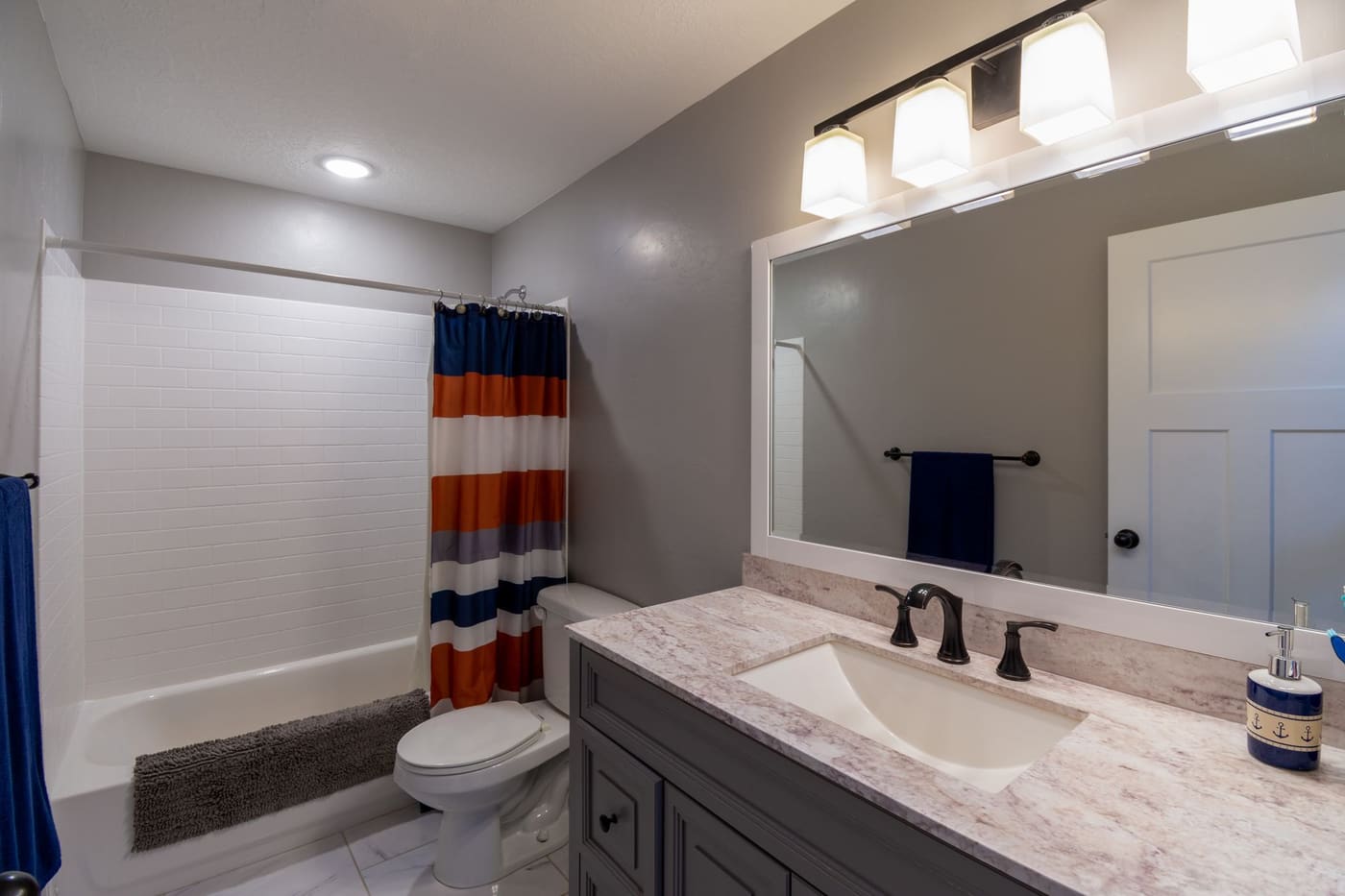
- Read the maximum wattage on the fixture label. It refers to the bulb’s actual watts, so an LED drawing a few watts sits far below the limit.
- Buy LED replacements with the same base type, at 2700K to 3000K, frosted. If the bulb sits behind glass, the package should say it is suitable for enclosed fixtures, because trapped heat can shorten LED life. Packaging also states whether a bulb is rated for damp locations.
- If there is a dimmer, buy bulbs labeled dimmable. Even then, compatibility varies by dimmer, and flicker or buzzing means a mismatch. Return the bulbs rather than swapping the dimmer.
- Keep the old bulbs, and put them back at move-out if the lease asks.
LED bulbs often cost a few dollars each. A warm frosted bulb softens glare and flattens harsh shadows without any new hardware. The guide to fixing harsh bathroom lighting without rewiring covers the choices in more detail.
Shade or globe swaps
If your fixture has a removable glass shade or globe, a frosted or opal replacement can do more than a bulb change. Many shades unscrew or release with a small clip or a few screws; do it with the switch off and the bulbs cool. Take the old shade to match the size and fitting, and keep it in a labeled bag. If the fixture needs a tool to open beyond the shade, or you see any wiring, stop and ask the landlord. Check that the shade suits the bulb type, since a shade that traps heat is a problem for older incandescent bulbs.
Battery and rechargeable lights
Battery-powered lights are the safest way to add task light near water because they have no cord to splash.
| Type | Typical cost | Mounting | Best use |
|---|---|---|---|
| Rechargeable LED puck lights | $10 to $30 | Adhesive pad or magnet | Inside a cabinet or under a shelf |
| Stick-on LED strips, USB or battery | $12 to $35 | Adhesive backing | Along mirror sides or under a vanity lip |
| Toe-kick strip under the vanity | $12 to $35 | Adhesive backing | A soft floor-level glow at night |
| Battery-powered wall sconces | $20 to $60 | Adhesive plate or hook | Side light at the mirror |
| Rechargeable lighted mirror | $25 to $100 | Freestanding or suction | Makeup and shaving |
The toe-kick strip is the quiet favorite: run a battery or USB strip along the bottom edge of the vanity so a night trip needs no overhead light. Look for ones labeled water-resistant or rated for damp spaces, especially if they will sit near a shower. Check what the adhesive is made for: smooth, clean, dry surfaces work best, and humid bathrooms weaken some adhesives over time. Test a spot, press firmly, and let it cure for the time stated on the package before adding weight.
Plug-in lights and cord safety
Plug-in options give steadier power than batteries, but cords and water do not mix. Use these rules.
- Plug only into outlets with ground-fault protection (GFCI), which have test and reset buttons. Press test and the outlet should cut power, then reset it. If it does not behave that way, stop using it near the sink and tell your landlord, because that is an electrician’s repair. If a bathroom outlet has no test and reset buttons, do not rely on it near the sink.
- Keep cords short, out of splash zones, and away from tubs and sinks.
- Do not run an extension cord across the floor of a wet room.
- Choose lamps designed for damp conditions if they will sit within splash range, and place others on a shelf or counter well away from the sink.
- Never use a hair dryer or space heater as a “light” substitute. Keep appliances away from water.
A small plug-in wall lamp or plug-in sconce with a fabric or frosted shade gives soft side light.
Motion-sensing night lights
For a renter, a plug-in night light with a motion sensor is the best value in the category. It lights the way for 2 a.m. trips with a low glow, and the overhead stays off. Typical cost is under about $20. Look for warm color, an adjustable brightness setting, and a sensor that turns off after a set delay. If the outlet by the sink is the only one, use a battery-powered version on the wall instead.
Lighted mirrors and magnifiers
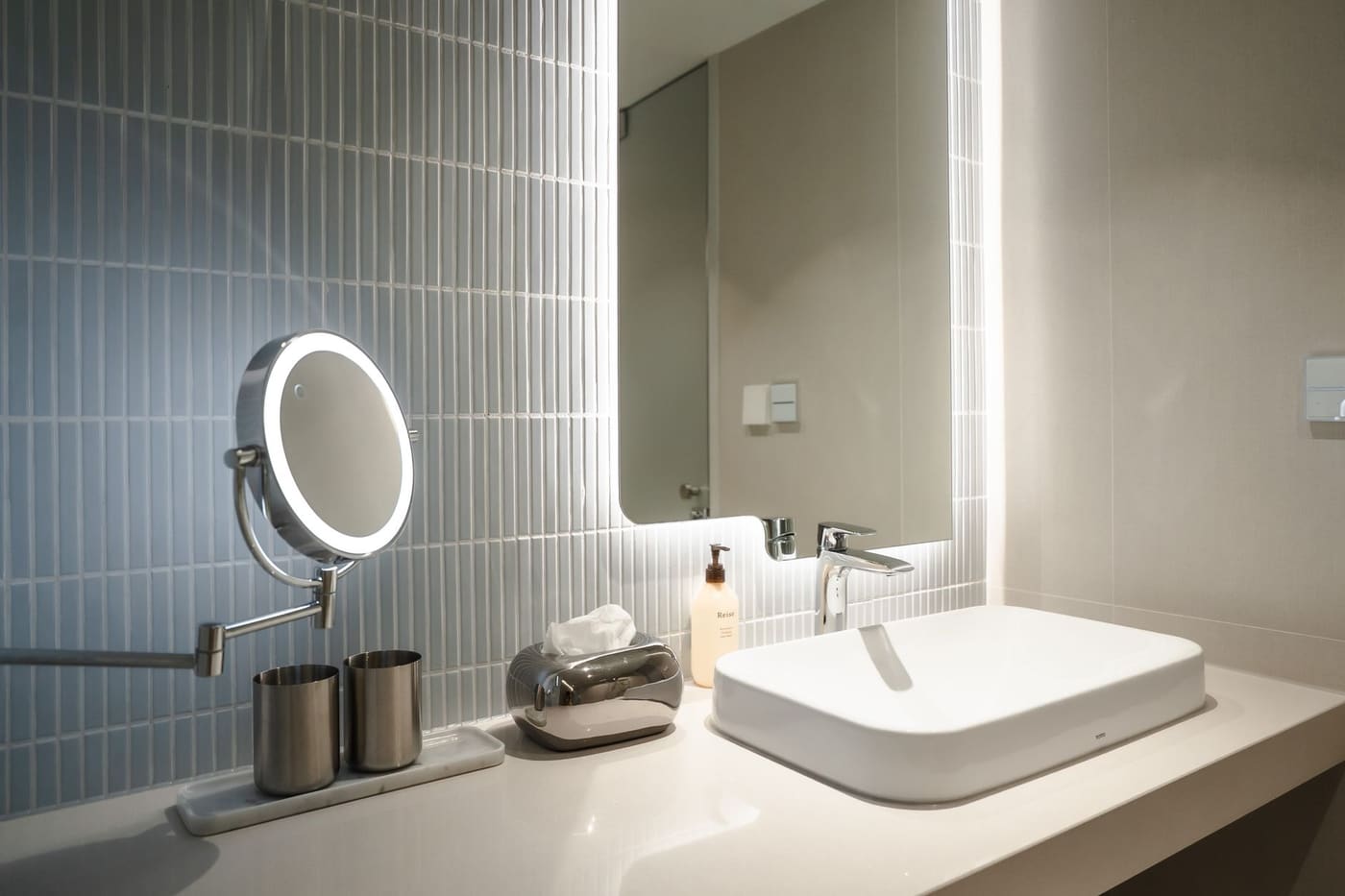
If your mirror lighting is poor, you may not have to replace anything. A rechargeable lighted makeup mirror, a freestanding one with an LED ring or edge, gives shadow-free light on your face. For where to place the light, the vanity lighting calculator helps, and for what makes makeup light good, see what bathroom lighting helps most for makeup or shaving.
A sample budget plan
If you want a clear path, here is a typical sequence with rough US costs.
| Step | What | Rough cost |
|---|---|---|
| 1 | Warm frosted LED bulbs in the existing fixture | $10 to $30 |
| 2 | Motion-sensing night light or toe-kick strip | $8 to $35 |
| 3 | Rechargeable lighted mirror or stick-on side lights | $25 to $60 |
| 4 | Small plug-in lamp for a shelf, if you have an outlet | $15 to $40 |
| Total | About $60 to $150 |
Do step 1 first and live with it for a week. Many renters find bulbs alone solve the harsh look, and they can skip the rest. If the problem is shadow at the mirror rather than harshness overall, move to step 3 next. If you only ever use the bathroom at night, step 2 may be the only one you need. Keep receipts and packaging for anything with a return window, and test the adhesive on a spot that will not show before you commit to a full run of strip lights.
What not to try in a rental
- Hardwired fixture swaps without written permission and a licensed electrician.
- Anything that requires cutting, splicing or opening the wiring, even low-voltage systems.
- Adhesive lights on peeling paint or porous surfaces, which pull paint off when removed.
- Cord clutter, meaning a power strip or extension cord in a wet room.
- Uncertified cheap lights with no clear damp rating near the shower.
If the landlord’s fixture is broken or flickering, that is a repair request, not a DIY project. Report it in writing.
Move-out checklist
- Remove battery lights and strips. If a strip resists, warm it briefly with a hair dryer on low heat and peel slowly to protect the paint.
- Clean any adhesive residue with a damp cloth and a little mild dish soap.
- Put the original bulbs and any swapped shade back if the lease asks.
- Take photos of the finished bathroom for your records.
For where lighting sits among other no-regret changes, see renter-friendly upgrades worth doing, and for how the fixed lights affect product choices, the bathroom lighting buying guide covers bulb labels and color temperature.
Where this comes from
This guide draws on ENERGY STAR lamp requirements (package labeling for enclosed fixtures, damp locations and dimming), Electrical Safety Foundation International guidance on testing ground-fault outlets, and manufacturer adhesive instructions. Fixture and wiring work is left to licensed electricians and your landlord. Prices are typical US ranges that vary by store and region.