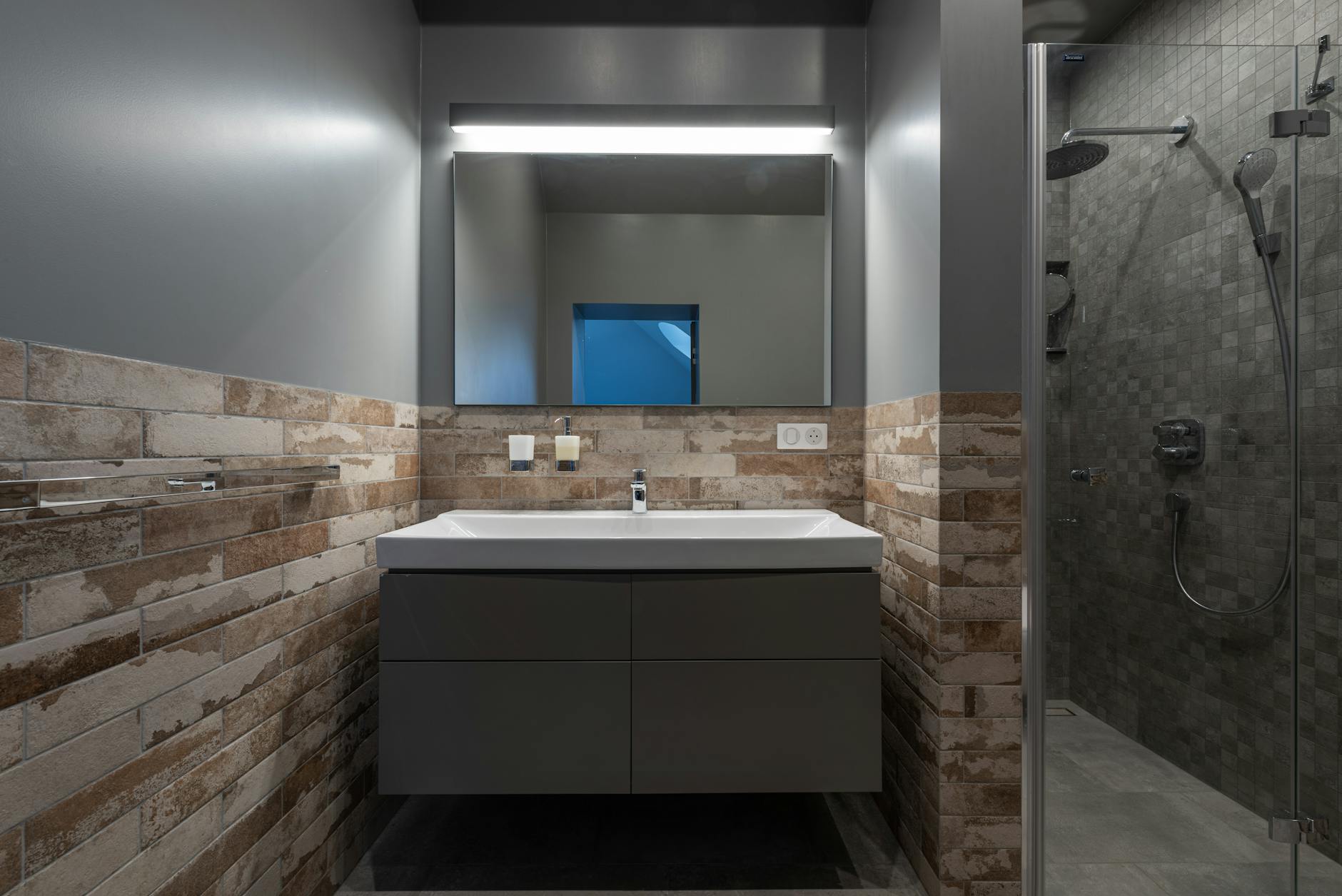
To light a bathroom well, use three layers: even ambient light for the whole room, shadow-free task light at the mirror, and a small warm light for nights. A single ceiling fixture cannot do all three jobs, which is why many bathrooms with “enough” light still feel harsh in the morning and gloomy at night. The diagram shows where each layer sits.
| Layer | Job | Typical sources | Typical cost by product type |
|---|---|---|---|
| Ambient | Even light across the room | Ceiling fixture, flush mount, recessed lights | Bulb swap often $10 to $30 for a room; a new fixture varies widely, plus an electrician |
| Task | Light on your face and hands | Sconces beside the mirror, lit mirror, vanity bar | Plug-in or battery light often $15 to $50; lit mirror often $30 to $150; hardwired sconces vary, plus an electrician |
| Accent or night | Low, soft glow | Motion night light, toe-kick strip, small lamp | Plug-in night light often $8 to $20; rechargeable strip often $10 to $30 |
Most bathrooms have only the first layer, and the ceiling fixture is doing the second job too. Adding the other two is what changes how the room feels. For a buying checklist by fixture type, see the bathroom lighting buying guide, and to check your own room step by step use the bathroom lighting checklist.
Ambient light: make it even, not just bright
A rule of thumb often quoted by lighting retailers and designers is about 70 to 80 lumens per square foot of floor area, with more at the vanity. It is a planning shortcut, not a code requirement. A 5 by 8 foot bathroom is 40 square feet, so roughly 2,800 to 3,200 total lumens across all sources. It shifts with wall color and ceiling height. Dark tile or a dark vanity needs more light than pale walls.
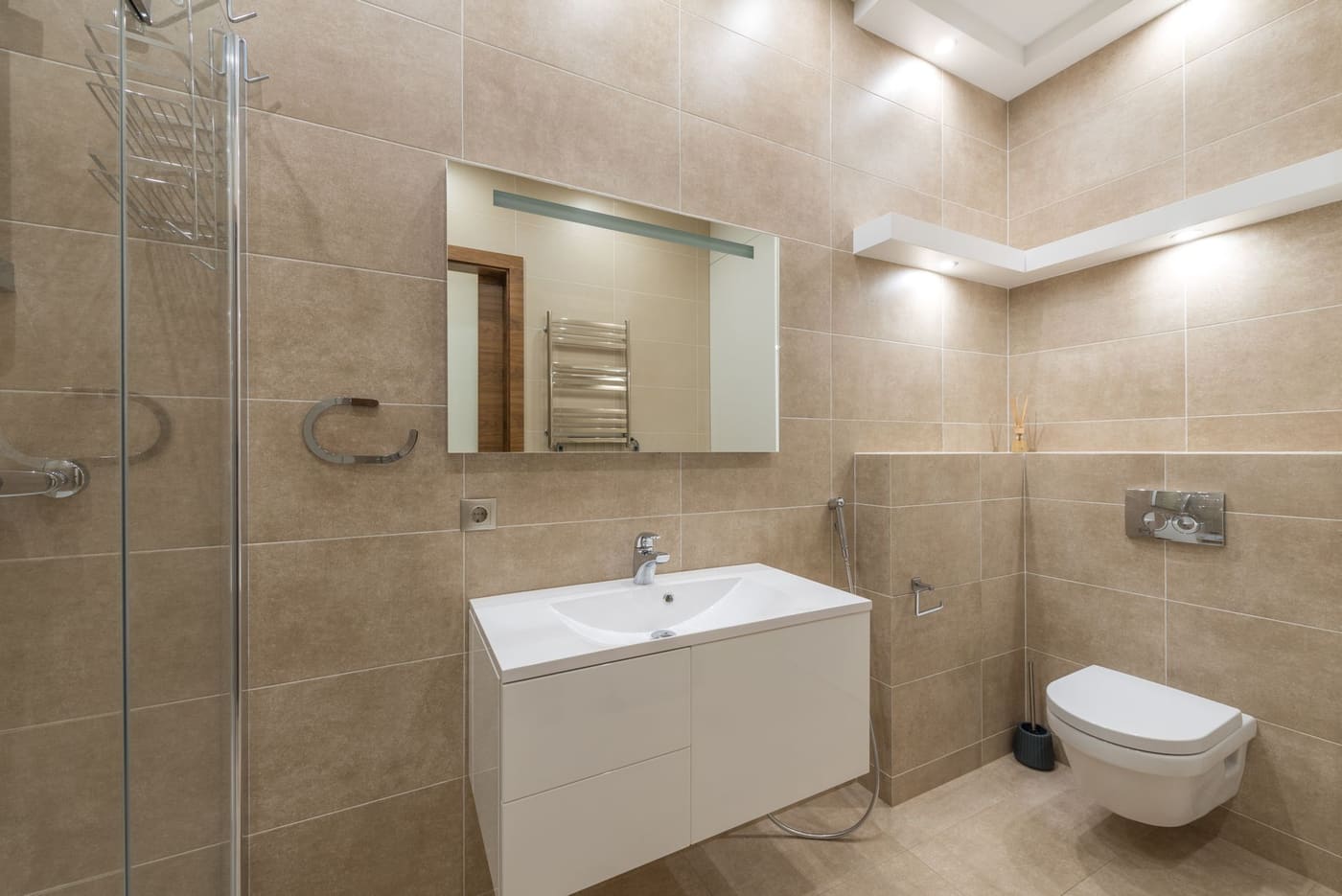
To check your room, add up the lumens printed on the boxes of the bulbs you use, or enter the room size in the vanity lighting calculator. A typical LED bulb sold as a 60-watt replacement is around 800 lumens (ENERGY STAR uses 800 lumens as the minimum for that label), so four of them gives about 3,200, which suits a small room if the light is also well placed.
- Flush-mount or semi-flush fixtures with frosted covers spread light well under standard 8-foot ceilings.
- Several smaller sources beat one big one, because multiple points reduce shadows.
- A clean white ceiling reflects light back down, a free brightness boost.
Replacing a ceiling fixture is wiring work for a licensed electrician, and the new fixture must carry the right rating for the location (see below).
Task light: the layer that changes daily life
Put task light at face height, on both sides of the mirror if possible. Sconces centered roughly 60 to 66 inches from the floor and about 28 to 36 inches apart are a common layout (some manufacturers suggest wider spacing, up to about 40 inches, for wider mirrors), and a lit mirror gives a similar effect with no fixture to hang. If neither fits, a single wide frosted bar above the mirror beats a bare bulb, with a plug-in or battery light added at the side.
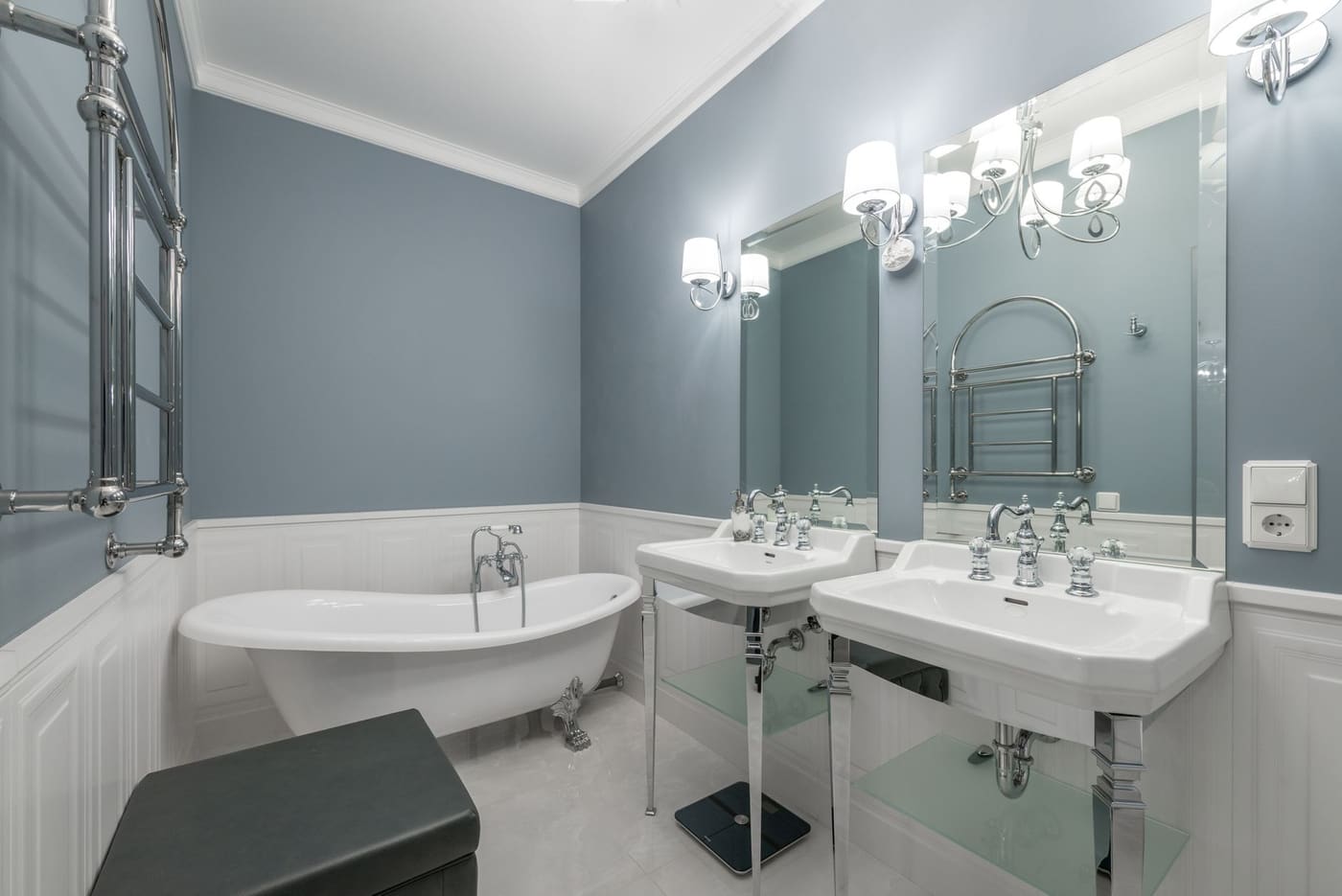
Mirror size, hanging height and frames are covered in the mirror guide, so this page sticks to the principle: light goes where your face is. For makeup and shaving, color accuracy and magnification matter too, and that article owns those details.
Accent and night light: the cheapest big improvement
A bright overhead at 2 a.m. wakes you fully and makes it harder to fall asleep again. A low light fixes that:
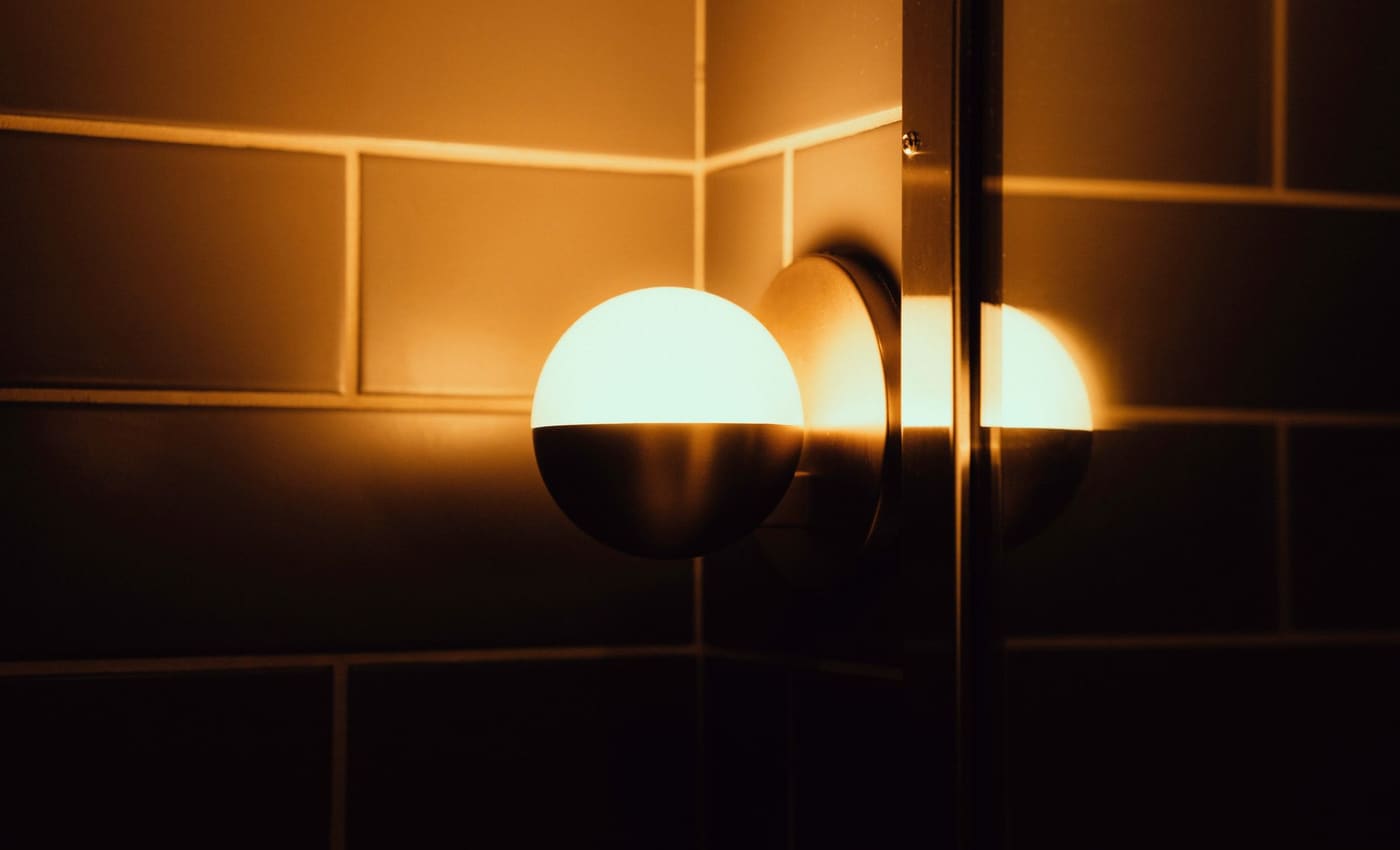
- A plug-in motion-sensing night light in a ground-fault-protected outlet, typically $8 to $20.
- A rechargeable LED strip under the vanity lip or along the toe-kick for a floor glow.
- A dimmable fixture with a low setting, if you already have a dimmer.
Choose warm tones, 2200K to 2700K, for night. Cooler light at night is more alerting.
Know your fixture ratings
Bathrooms combine water and electricity, so the rating printed on a fixture matters.
- Dry location: Not suitable for steamy or splash areas. Fine in a hallway, not in a bathroom.
- Damp location: Rated for moisture in the air, such as steam. Typical for ceiling fixtures and sconces away from direct water.
- Wet location: Rated for direct water exposure, such as spray from a shower head.
In the US, the National Electrical Code generally requires a fixture located within the footprint of a tub or shower, up to about 8 feet above the rim or threshold, to be marked for damp locations, or for wet locations where it is subject to shower spray. It also keeps cord-hung, chain-hung and pendant fixtures and hanging ceiling fans out of a zone extending about 3 feet horizontally and 8 feet vertically around the tub rim or shower threshold. Local codes and the code edition in force vary, so confirm with an electrician or your local building department. Installing or replacing any of these is an electrician’s job.
Outlets near sinks should have ground-fault protection, with test and reset buttons you can press. If yours lack it, ask a licensed electrician about adding it.
Fan lights and bulb color
Many bathrooms have a ceiling fan with a built-in light. It is convenient, but the light is often small and cool-toned. You can often swap the bulb or cover, but replacing the unit is electrical work. A fan that runs well also reduces mirror fog, which helps the light work; see reducing bathroom moisture.
Keep color temperature consistent. A 2700K bulb next to a 5000K one looks patchy. Pick one range, usually 2700K to 3500K, and use bulbs labeled dimmable on a dimmer circuit, since a non-dimmable LED on a dimmer can flicker or buzz. Standard LED bulbs commonly have a CRI of around 80, which the US Department of Energy treats as acceptable for most indoor use. Look for 90 or higher at the mirror if skin tone matters to you.
Upgrade order if the budget is small
- Swap every bulb for matching, frosted, 2700K to 3000K LEDs, typically $10 to $30 for a whole room.
- Add a motion night light, about $10.
- Add a plug-in or battery light at the mirror if you lack side light, $15 to $50.
- Replace the vanity fixture with a better one. Cost varies, and an electrician adds to it.
- Add dimming with a new switch, installed by an electrician.
Renters can do the first three, and renter-friendly lighting shows how without damaging anything. If the light you already have is glare rather than too little light, go to fixing harsh bathroom lighting without rewiring.
Lighting by bathroom type
The three layers apply everywhere, but the weighting changes:
- Powder room: One good ambient source and a sconce or two. A room with a sink still needs the right rating.
- Small full bath with a tub-shower: Prioritize an even ceiling light and a lit vanity, and use a wet-rated fixture if one must sit inside the shower enclosure.
- Shared family bathroom: Add dimming and a night light so a child or guest can find the toilet without a full blast of overhead light.
- Windowless bathroom: Use a higher lumen total and a neutral 3000K to 3500K to avoid a cave feel.
- Primary bath with a separate tub: A low accent light near the tub makes a soak more comfortable than the overhead fixture.
If the room has a window, treat daylight as a layer: keep the sill clear and use a sheer or frosted film, if your lease allows, so light comes in without losing privacy.
Where to start
Start with the bulbs and a night light this weekend, then add side light at the mirror. The most common mistake is buying brighter bulbs instead of better placement: more lumens from above does not fix shadows. Leave any wiring changes to a licensed electrician.
Where this comes from
This article draws on ENERGY STAR and US Department of Energy lighting guidance on lumens, color temperature and color rendering, trade publication summaries of National Electrical Code rules for luminaires near tubs and showers, and mounting-height guidance published by lighting manufacturers. The lumens-per-square-foot figure is an industry rule of thumb rather than a standard. Prices are typical US ranges that vary by store and region.