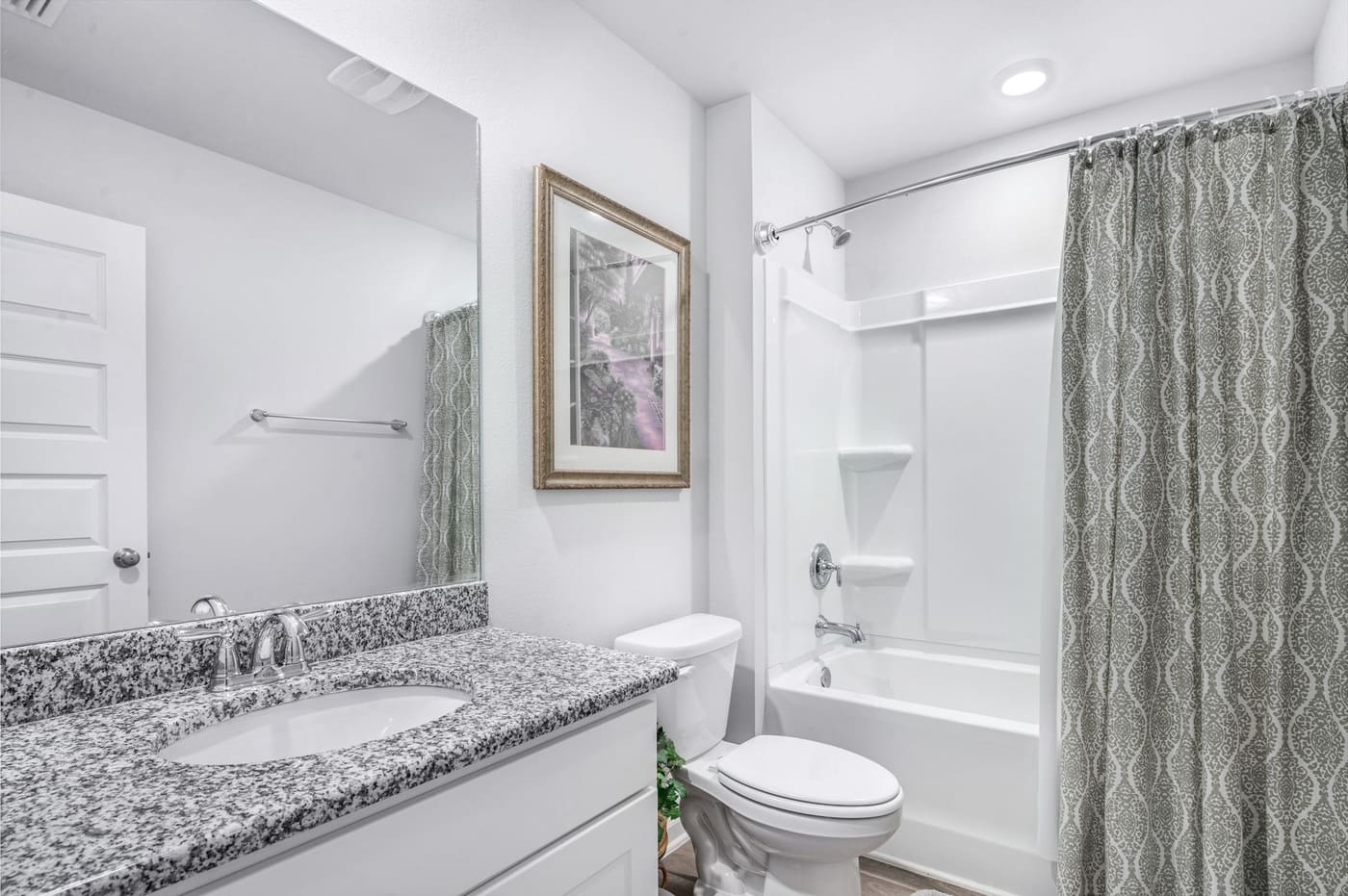
The renter bathroom upgrades worth doing are the ones that fully reverse at move-out and change something you notice every day. In rough order of payoff: warm LED bulbs, a fabric shower curtain with a liner, a showerhead swap (keep the original), hooks for towels, a quick-drying mat, and a new toilet seat. Skip anything that needs paint, grout, drilling or wiring unless your landlord agrees in writing. This page is the overview and the lease routine; storage, lighting, tiny rooms and decor each have their own guide linked below.
The ranked list
| Rank | Upgrade | Typical cost | Daily payoff | Undo at move-out |
|---|---|---|---|---|
| 1 | Warm frosted LED bulbs | $10 to $30 | High | Swap the old bulbs back |
| 2 | Fabric curtain and water-resistant liner | $30 to $80 | High | Rehang the old curtain |
| 3 | Showerhead swap | $20 to $60 | High | Reinstall the original |
| 4 | Hooks (over-door or adhesive) | $8 to $25 | High | Easy, peel slowly |
| 5 | Quick-dry mat and matching towels | $25 to $80 | Medium | Take them with you |
| 6 | Toilet seat, slow-close | $20 to $50 | Medium | Reinstall the original |
| 7 | Over-toilet shelf or slim cart | Often $50 to $150 | High | Freestanding, nothing to repair |
| 8 | Paint | $30 to $100 plus time | High | Needs permission, may need repaint |
Rows 1 to 6 together often run roughly $120 to $350 depending on quality, and many leases do not require permission for them, though you should check yours. Row 7 varies widely, and sturdier over-toilet units often cost more than the bottom of that range. Row 8 is only worth doing with approval.
Can you do it? A quick decision flow
Two questions sort almost every upgrade. Can it come off cleanly in under an hour? Does it need anyone’s permission? The answers point to the method.
Step one: read the lease and document the room
Do this before you buy anything. It costs nothing and helps if a deposit is ever disputed. Rules on deposits and repairs differ by state and city, so look up your local tenant rules or housing agency if you are unsure.
- Read the sections on alterations, painting and fixtures. Note what needs written permission.
- Photograph every surface with dates: tub, tile, grout, caulk, floor, vanity, toilet, fixtures, and any stains or damage.
- Test that things work: run the shower, flush the toilet, check the fan, and look under the sink for drips.
- Report problems in writing, such as a slow drain, a leak or a broken fan. Most leases treat these as the landlord’s repairs rather than your upgrades, so check your lease.
- Ask once about small items. A short email asking whether you can hang adhesive hooks, change the showerhead or paint gets a record either way.
Also find the shutoff valves behind the toilet and under the sink and the breaker panel, so you know where they are in an emergency. Check whether the outlets near the sink have test and reset buttons, which indicates ground-fault protection. If not, mention it to the landlord, because that is an electrician’s fix.
The ask-once email
A short, specific message works better than a vague one. Name the change, say it is reversible, and offer to restore it. For example: “I would like to replace the showerhead with a handheld model at my own cost. I will keep the original and reinstall it when I move out. Is that fine?” Save the reply. If the answer is no, you have lost nothing, and if it is yes, you have it in writing. Repair requests, such as a dripping faucet, a loose toilet or a fan that does not run, are separate, and most leases ask you to report them promptly.
The upgrades, in detail
Warm LED bulbs
Warm, frosted LEDs around 2700K to 3000K change the light quality at once for a few dollars per bulb. Check the fixture’s maximum wattage and base type before buying. The full routine, including enclosed fixtures, dimmers and shade swaps, is in the guide to renter-friendly bathroom lighting.

Shower curtain and liner
A plain vinyl curtain costs little and looks it. A fabric curtain with a separate water-resistant liner changes the whole room, for about $30 to $80 together. Hang it a few inches above the existing hook position and long enough to graze the floor, and the ceiling feels taller. Wash both regularly or replace the liner when it shows mildew.
Showerhead swap
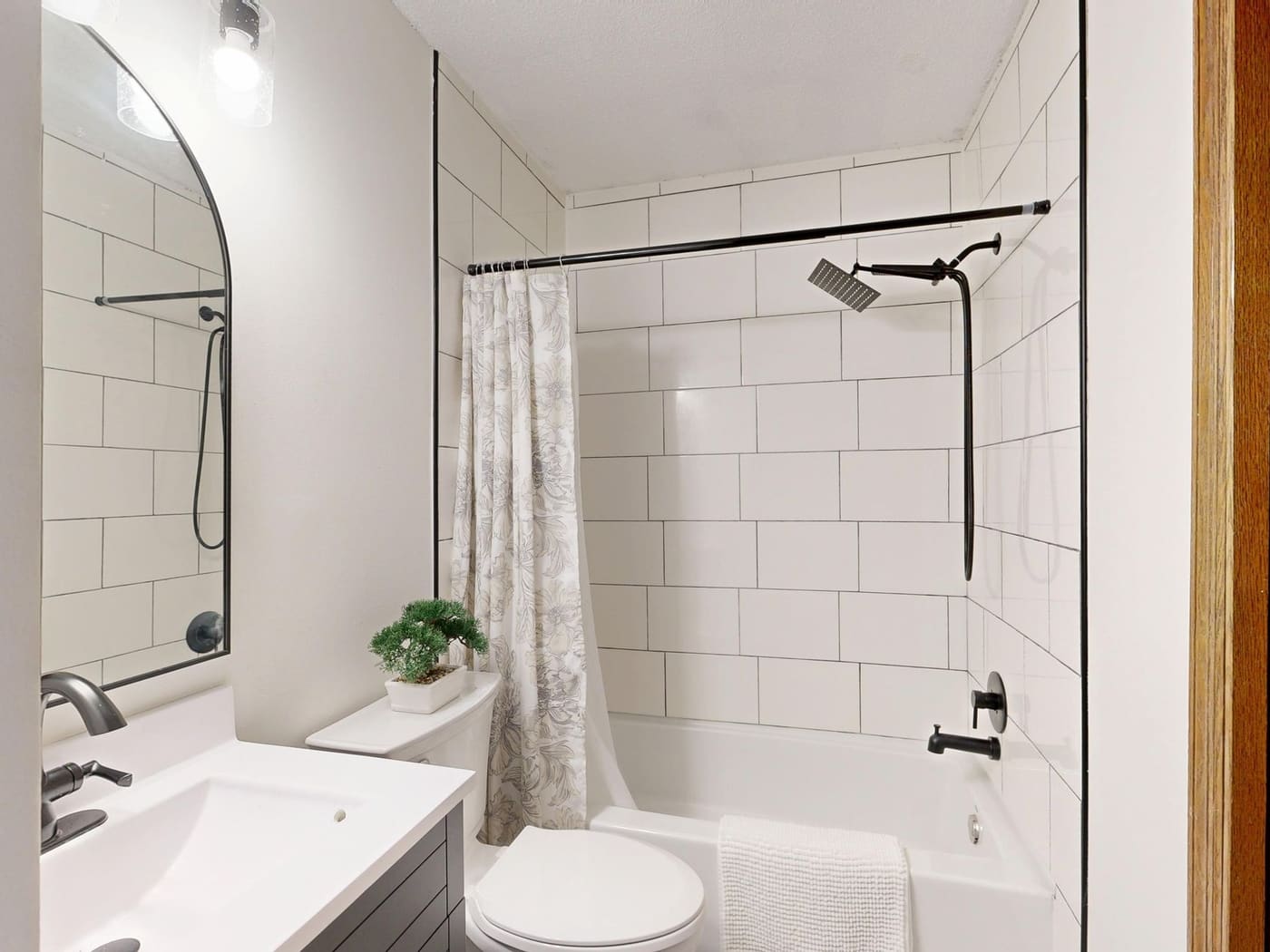
Most models thread onto the shower arm by hand or with a wrench. Wrap the threads with plumber’s tape before attaching, and put a cloth under the wrench to protect the finish. Keep the original in a labeled bag. A handheld model with a hose makes rinsing the tub much easier. If the arm leaks after the swap, tighten and re-tape it, and tell the landlord if the problem is inside the wall. A few leases spell out plumbing modifications, so check.
Hooks, mat and towels
Hooks give towels and robes a place to land, and a quick-drying mat with matching towels is cheap, portable and visible. Hook types, weight ratings and shelves are covered in the guide to renter-friendly bathroom storage worth adding. Spend more on the mat and towels than on small decor.
Toilet seat
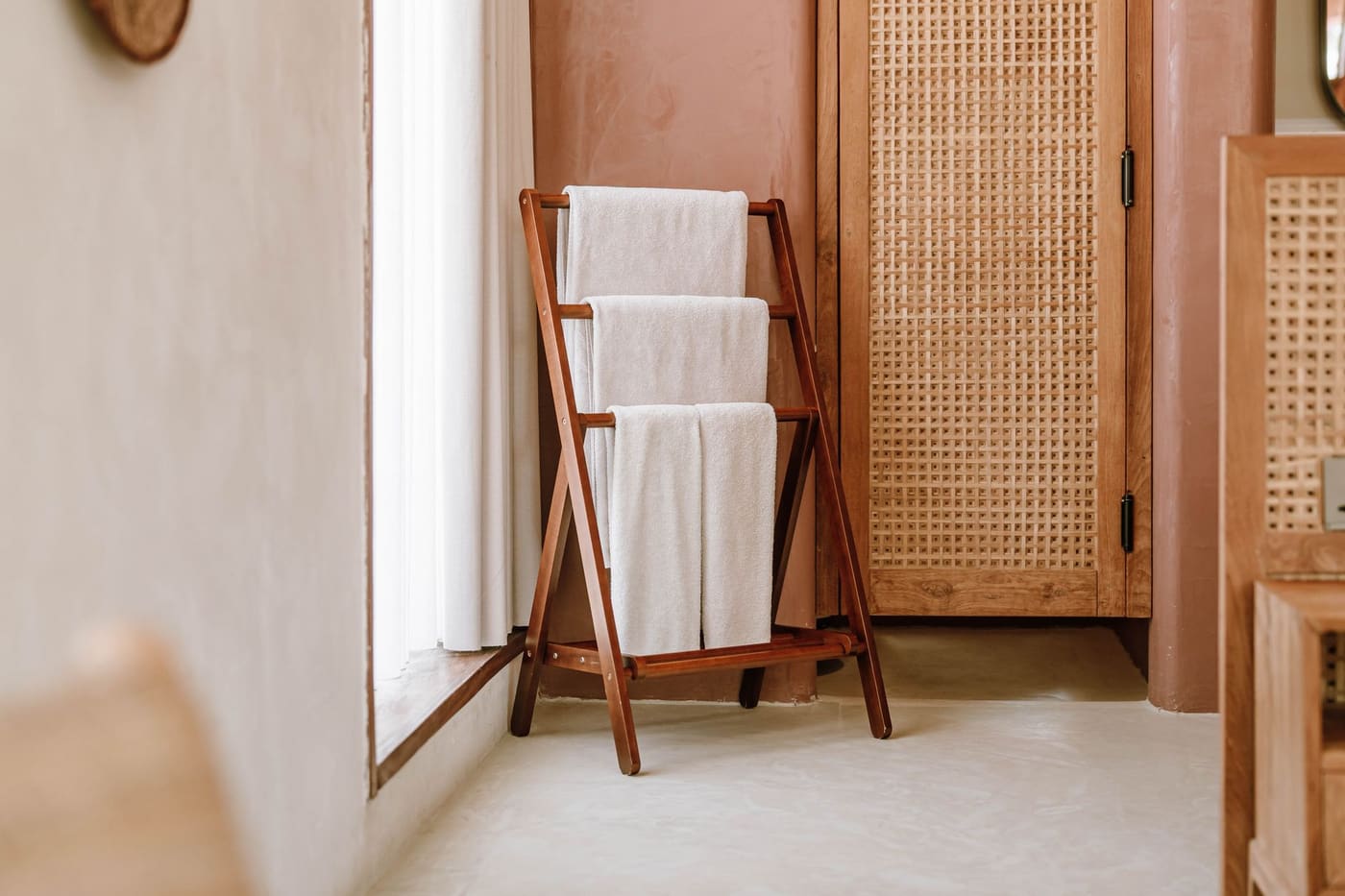
A slow-close seat is quiet and makes the whole toilet look cleaner. Measure the bolt spacing and the toilet shape (round or elongated) before buying. Seats usually come off by turning two bolts. Keep the original if the lease asks.
Upgrades that need permission first
Some upgrades are worth doing only with approval.
| Upgrade | Why ask | Typical outcome |
|---|---|---|
| Painting walls | Many leases require original color at move-out | Landlord may allow if you repaint |
| Replacing a vanity light | Wiring work, a licensed electrician’s job | Often refused, sometimes allowed at your cost |
| Swapping a faucet | Plumbing change | Sometimes allowed if you keep the original |
| Peel-and-stick tile or wallpaper | Adhesive can damage surfaces | Rarely welcome |
| Re-caulking the tub | Often the landlord’s maintenance item | Ask them to do it |
Do not touch wiring. Fixture replacement is for a licensed electrician, and in a bathroom the fixture must be rated for the location.
Upgrades that are not worth doing in a rental
- Anything with grout or tile work. It is permanent, messy and hard to match.
- Heavy drilled shelving without permission, plus a plan for the holes.
- Expensive decor in a bathroom with poor ventilation, because the humidity wears it out.
- Large items sized to one room, such as a custom shower caddy that will not fit anywhere else.
- A bidet attachment or similar plumbing add-on without permission, since it connects to the supply line.
A quick check before you buy anything
Read the weight rating and the removal instructions printed on the package. If the instructions say the product may damage paint, treat it as semi-permanent. Prefer coated metal, stainless steel, glass or ceramic in a humid room, and standard sizes (a 72-inch shower curtain, a common toilet seat shape) so the item fits your next bathroom too.
If you can only do three
If the budget is tight, choose in this order.
- Bulbs. Cheap and the biggest instant change.
- A shower curtain with a liner. It covers the largest visual area.
- A showerhead or toilet seat, depending on which one bothers you.
Then add hooks or a shelf as storage needs appear. For a broader view of low-cost changes, including ones for owners, see which updates make the biggest difference for the least money. If your room is very small, tiny-bathroom upgrades changes the priority order.
Protect your deposit
Good habits matter as much as the upgrade list.
- Store originals. Keep the showerhead, toilet seat and any removed bulbs in a labeled box.
- Remove adhesive hooks slowly, following the package: usually you stretch the tab straight down along the wall rather than out, then clean residue with mild dish soap and a damp cloth.
- Report problems in writing, especially leaks, mold or a running toilet. Large or recurring mold, or any water damage behind walls, is a job for a professional and the landlord.
- Keep receipts for upgrades, in case a landlord asks.
- Take final photos before you hand back the keys.
If you hit mold while cleaning, ventilate, wear gloves, and never mix bleach with ammonia or acidic cleaners. If it is more than a small patch, or if it comes back, tell your landlord rather than treating it yourself.
Where this comes from
This guide draws on manufacturer instructions for adhesive hook use and removal, ENERGY STAR lamp requirements for packaging labels, and Electrical Safety Foundation International guidance on ground-fault protection. Lease points are described generally, so read your own lease and your local tenant rules. Prices are typical US ranges that vary by store and region.