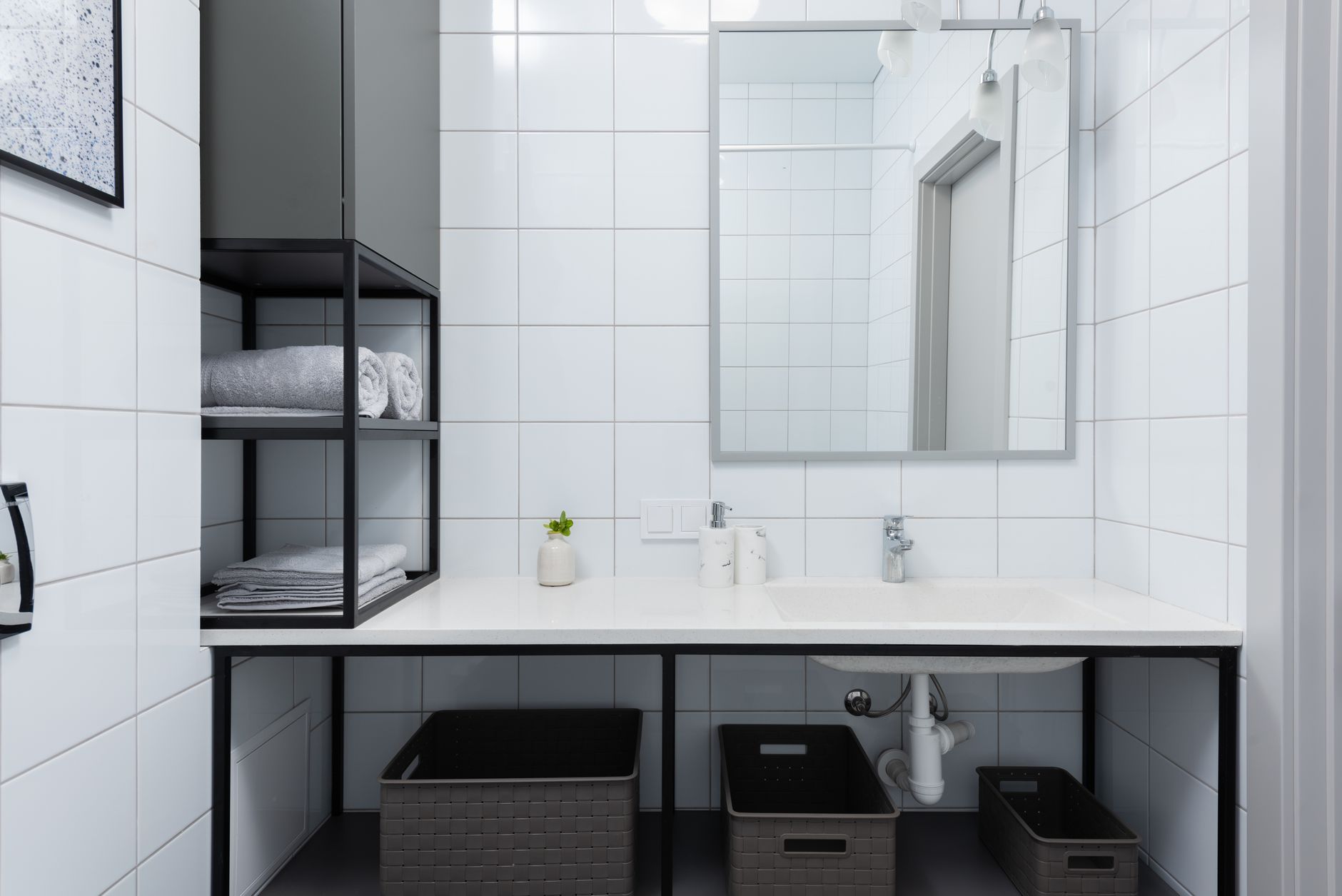
To organize under a bathroom sink with pipes in the way, measure the usable pockets on each side of the drain, fill them with narrow bins or a U-shaped organizer that wraps around the trap, and keep tall or heavy items out of the splash and drip zone. The pipes are fixed, so you organize around them, and you keep the shutoff valves and the drain clear at all times.
A typical vanity has a P-trap (the curved pipe under the drain), a vertical drain pipe, and two small supply lines running from wall valves up to the faucet. They take up the middle of the cabinet and leave awkward gaps on both sides and a shallow area at the front. A heap is the usual result, and a heap hides leaks. A plan that respects the pipes is faster to use and makes a drip easier to spot.
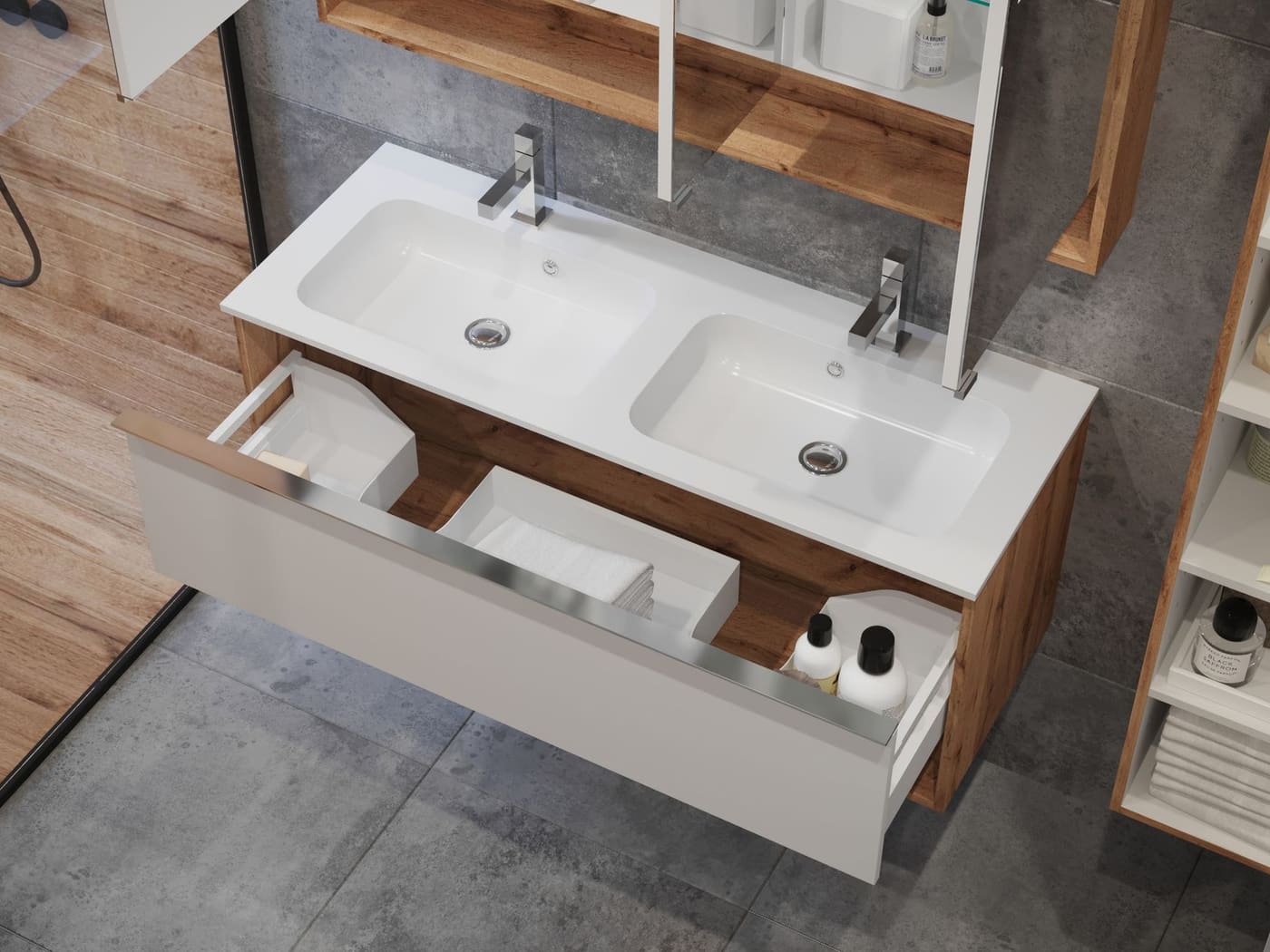
Empty it, inspect it, and measure it
Take everything out. This is the one time you can see the cabinet clearly, so use it.
- Check for leaks and damage. Look at the pipe joints, supply lines, and the cabinet floor for drips, stains, swelling, or soft spots in the wood. Run the faucet for a minute and look again. If you find a leak, shut off the water at the valves under the sink and call a licensed plumber. Do not keep using the sink until it is fixed. Swollen or soft cabinet bottoms mean water has been there a while.
- Check for mold or odor. A musty smell or dark growth is a moisture sign. Small surface spots on hard surfaces can be cleaned with detergent and water while wearing gloves and ventilating the room, then dried completely. The US EPA treats mold covering more than about 10 square feet as a professional job, and so is any recurring mold or water damage behind the wall.
- Clean and dry. Wipe the floor of the cabinet and let it dry completely.
- Measure. Write down the width, depth, and height of the cabinet, and the width of the open pockets on each side of the pipes. Measure the height from the cabinet floor up to the lowest pipe.
Measurements decide which organizers fit, which saves returns. Cabinet sizes vary widely, so do not assume a standard fit.
Know the four layouts you are likely to have
Most under-sink spaces fit one of four patterns, and each suggests a different setup.
| Layout | What it looks like | Best approach |
|---|---|---|
| Open pockets either side of the trap | Pipes run down the center, wide gaps each side | Two bins, one in each pocket |
| Shallow front, deep rear | Pipes close to the back wall, space in front | Pull-out bins or a drawer-style tray |
| Drawers cut around the plumbing | Vanity with a U-shaped top drawer | Divider trays inside each drawer |
| Pedestal or wall-hung sink | No cabinet at all | Use a nearby wall shelf or a slim cart instead |
If you have a pedestal sink, the “under sink” is just open air, and the fix is a different type of storage. Fabric skirts add a tidy look but should not hide a leak; leave access to the valves.
Choose organizers that work around pipes
A few product types handle pipes well.
- U-shaped or notched organizers: a two-tier unit with a cutout that fits around the drain pipe. These often cost $15 to $40 and are the most common fix for a single deep cabinet.
- Narrow stackable bins: short bins about 5 to 6 inches wide fit into the side pockets and let you stack two high if there is clearance.
- Pull-out drawers on rails: these slide forward so you can reach the back. They suit cabinets with a flat floor and enough width on one side of the pipes.
- Tension rod with a hook: a rod across the top of the cabinet (above the pipes if there is room) holds spray bottles by their triggers, which frees the floor.
- Door-back caddy or rack: adds a vertical zone for small items. Keep it light, and check that the door still closes without hitting the pipes.
Organizer types compared
| Organizer | Best for | Watch out for | Typical price |
|---|---|---|---|
| Two-tier shelf | Doubling bottle space in one pocket | Needs enough height below the lowest pipe | Often $10 to $30 |
| U-shaped or notched unit | A single deep cabinet with one drain pipe | Measure the drain position first | Often $15 to $40 |
| Pull-out drawer on rails | Reaching the back of a deep cabinet | Needs a flat floor and clearance past the pipes | Often $25 to $80 |
| Narrow stackable bins | Side pockets and awkward gaps | Width must clear the trap | Often $5 to $20 each |
Set aside about twenty minutes for the full job: roughly ten to empty and measure, and the rest to sort and place items.
Put things in zones by how often you use them
Once the organizers are in, assign contents by frequency and by size.
- Front and easy to reach: things used weekly, such as toilet paper, cleaning spray, and an extra hand soap.
- Sides: tall bottles, a plunger or toilet brush if you keep one there, and a cleaning caddy.
- Back or top: occasional items, such as extra razor refills and light bulbs.
Keep like with like, so cleaning products share a bin and personal items share another. Label bins with a small label on the front. That way anyone in the house can put things back without asking. For items that are really overflow and not routine, the guide to linen closet organization and backup toiletry storage explains where they can go outside the bathroom.
Fix the mistakes that make the cabinet fail
A few errors turn a tidy cabinet back into a heap within weeks.
- Buying before measuring. A bin that is half an inch too wide will not fit past the trap, and returns are a hassle.
- Going too deep. A deep bin at the back becomes a black hole. If you cannot see or reach it without pulling out everything in front, the depth is wrong. Use shallower bins or a pull-out.
- Blocking the pipes. Organizers should never press against supply lines or the trap, since vibration from drawers and doors can loosen connections over time, and any rubbing wears a pipe.
- Overfilling. Leave about a quarter of the volume empty, so a bottle can be removed without everything shifting.
- Storing the wrong things. Hair dryers and other plug-in tools should not live in a cabinet where water might drip on them. Keep them in a drawer or a dry closet instead.
If you are renting and have to leave pipes untouched, everything above works without any drilling, since most organizers sit on the floor of the cabinet. Check the lease before attaching anything to the cabinet walls or door with screws or adhesive, and keep any original hardware you remove.
Protect what lives down there from moisture
An under-sink cabinet is one of the damper places in a bathroom. Pipes sweat in humid weather, and leaks start small. These habits reduce damage:
- Keep paper goods off the floor of the cabinet. Toilet paper, tissues, and cotton products wick moisture. Put them in a lidded plastic bin or on a higher shelf.
- Put a waterproof liner or tray on the floor. A shallow plastic tray or a silicone liner catches drips and is easy to wipe. It also makes a leak visible faster.
- Skip cardboard boxes and open fabric bags.
- Keep the shutoff valves clear. You need to reach them fast in an emergency.
- Check once a month. Take a quick look and touch the pipes. If you find a drip, shut off the water at the valves, dry the area and call a licensed plumber.
For bathrooms with poor air flow, see the guide on reducing bathroom moisture when ventilation is not great.
Store cleaning products safely
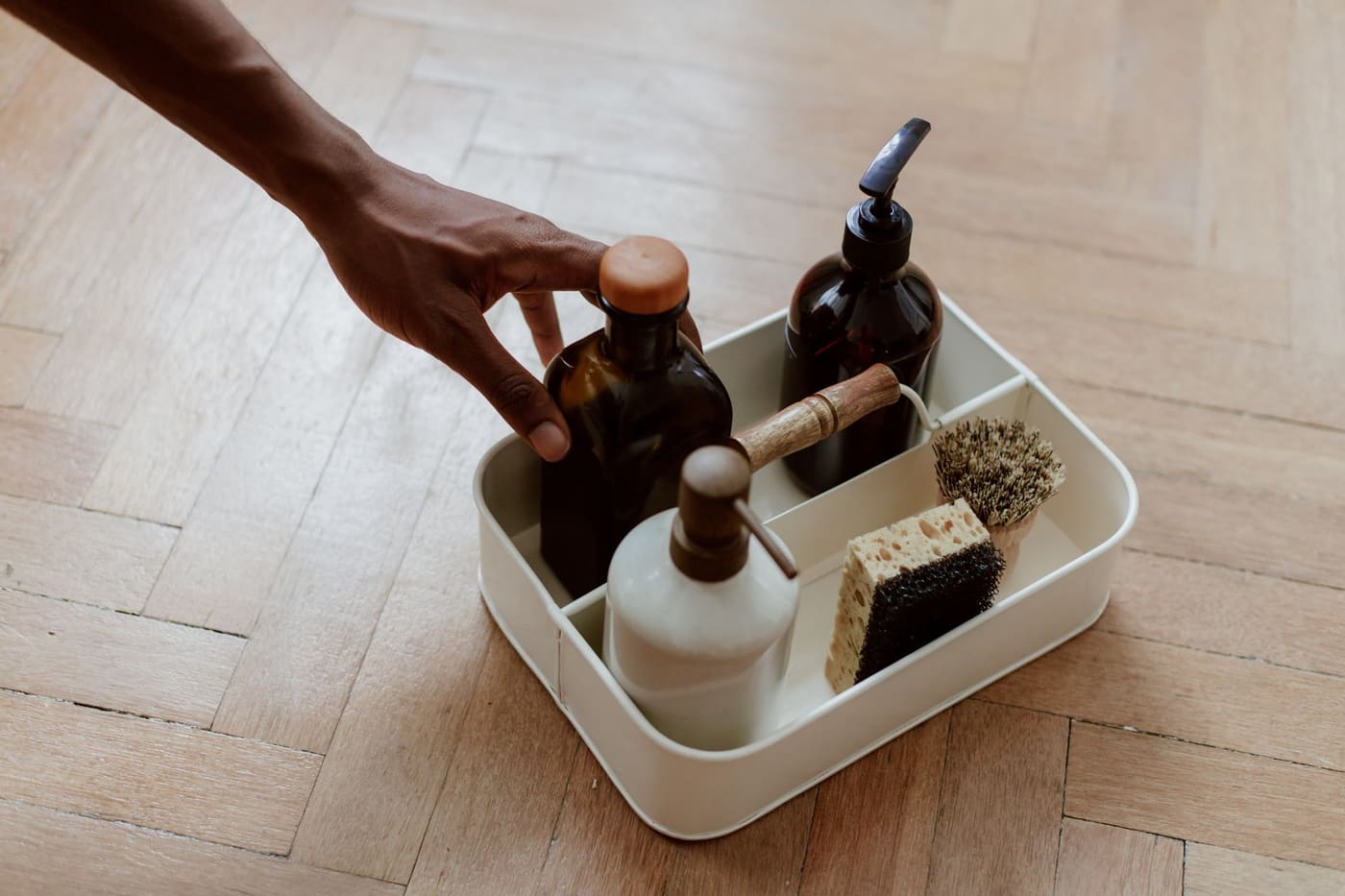
If you keep cleaners under the sink, keep them upright, in their original containers, and in a caddy so a leak does not spread. Never mix bleach with ammonia or acids: the CDC warns that doing so releases dangerous gases, so keep those products in separate spots or separate rooms. If there are children or pets in the house, poison control guidance is to use a child-resistant latch on every cabinet that holds cleaners (often $5 to $15) or to keep cleaners in a high locked cabinet elsewhere. Child-resistant latches slow a child down, they do not make a cabinet child-proof, so check them and keep the most hazardous products, such as drain cleaners, out of reach altogether. Leave the cabinet door open for a while after a spill so it can dry. For what to wipe and how often, see the weekly versus monthly cleaning list.
When to stop and call someone
Stop organizing and call a licensed plumber if you find any leak, and shut off the water at the valves first. Call a professional for soft or swollen cabinet wood, large or recurring mold, or water damage behind the wall. Once the cabinet is dry and sound, the rest is measuring, fitting and a monthly look. For storage elsewhere in the room, see bathroom storage ideas by height zone.
Where this comes from
The mold threshold comes from US EPA guidance on mold cleanup, and the cleaner-mixing warning from CDC guidance. The child-safety points follow poison control and children’s health organization guidance on latches and original containers. Pipe layouts, bin sizes and the leave-a-quarter-empty rule are practical rules of thumb, and the leak steps are standard homeowner advice: shut off the valves, then call a licensed plumber. Prices are typical US ranges that vary by store and region.