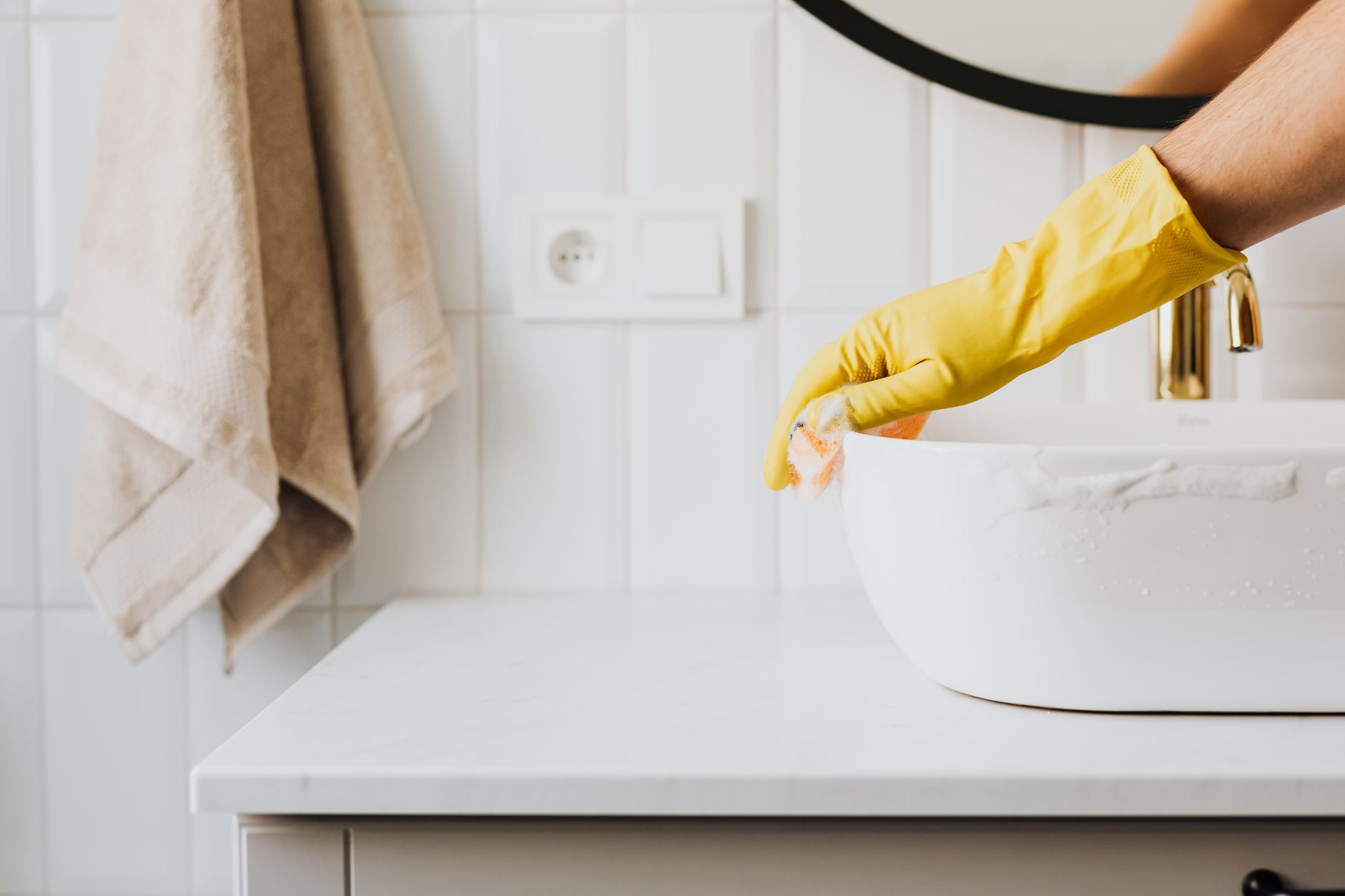
A bathroom that smells damp after cleaning almost always has a hidden moisture source that surface cleaning never touched. The usual suspects are a damp towel or bath mat, a drain or overflow hole with residue inside, grout and caulk holding water, a dry P-trap letting sewer air up, a slow leak, or air that never fully exits the room. Find which one by sniffing at each spot, then fix that source instead of spraying more freshener.
A damp smell is a smell of microbial growth, mostly mildew and bacteria feeding on moisture and soap or skin residue. Wiping the visible surfaces removes some of it, but the organisms sit in places a cloth does not reach, and the room stays humid enough that they regrow in days. The approach below is detective work first, cleaning second.
Find the source by smelling in sequence
Close the door for an hour so the smell builds, then go through the room at nose height. Smell is localized, and the strongest spot is usually the source.
| Where the smell is strongest | Likely cause | First thing to try |
|---|---|---|
| Towels, hamper, bath mat | Slow-drying fabric, detergent buildup | Hot wash with no detergent, then normal wash; dry fully |
| Sink or tub drain | Hair and soap film in the drain | Clean the stopper and the top of the drain; flush with hot water |
| Sink overflow hole | Residue inside the overflow channel | Flush with hot water and a bottle brush or pipe cleaner |
| Floor drain or tub drain, with a sewer smell | Dry trap | Run water for a minute or two to refill the trap |
| Under the sink cabinet | Slow leak, damp wood, stored items | Dry run test for drips, empty the cabinet and inspect |
| Around the toilet base | Failed seal, urine splash, wet floor | Clean thoroughly; check for movement or dampness around the base |
| Tub or shower corners and caulk | Mildew in or behind caulk | Clean with a cloth and cleaner; replace if black inside |
| Shower curtain or liner | Mildew in the folds | Machine wash or replace |
| Ceiling and walls | Condensation and mildew | Wipe, then reduce humidity |
If you cannot find the source, check the humidity with a small hygrometer. EPA guidance puts the upper limit for indoor humidity at 60 percent, so a reading consistently above that means the whole room is the problem. If the room has a fan, the bathroom fan size calculator shows whether it is big enough for the space. The guide on reducing bathroom moisture when ventilation is weak walks through the airflow side.
Wash and dry the soft goods properly
Fabric is the biggest damp-smell contributor because it holds water and organic residue. Even a clean-looking bath mat can smell if it never fully dries.
- Wash the bath mat weekly. Check the care label. Many cotton mats can go in the washing machine, but rubber-backed ones may need a gentle cycle and air drying.
- Wash bath towels about every three uses, or at least weekly, and dry them completely. A towel that goes into the hamper damp will smell by the time you wash it.
- Strip stubborn smells with a common home method: wash the towels alone on a hot cycle with about a cup of white vinegar and no detergent, then run a second cycle with detergent and no fabric softener. Check the care label first, and never add bleach to the same load as vinegar.
- Skip fabric softener on towels, which coats fibers and traps odors.
- Do not overload the machine, since towels need room to rinse.
Also check the shower curtain. A fabric one can go in the washer. A plastic one with black or pink spots in the folds is cheaper to replace than to rehabilitate, often $5 to $15 for a new liner.
Clean the drains, overflows, and stoppers
Hair, soap, and skin cells collect in drains and form a film that smells like old sponge. It lives just below the surface, which is why wiping the sink does nothing.
- Pull the pop-up stopper if your sink has one. Many lift straight out or unscrew with a quarter turn. Remove the hair wrapped around the bottom and wash it with soap and a brush.
- Scrub the visible drain walls with a bottle brush or old toothbrush.
- Flush the overflow hole. That small slot near the top of the basin leads to a channel that is almost never cleaned. Pour a mix of hot water and a small amount of dish soap in using a funnel, and scrub it with a bottle brush or pipe cleaner.
- Use enzyme-based drain cleaners for organic buildup. They work gradually and tend to be gentler on pipes than harsh chemical drain openers, which should not be mixed with other products. Follow the label.
- Pour a kettle of hot, not boiling, water down the drain afterward. Be careful with boiling water on older plastic pipes and porcelain.
Do not mix drain products, and never combine bleach with ammonia or acids. Wear gloves and run the fan or open a window.
Check the traps, seals, and fixtures
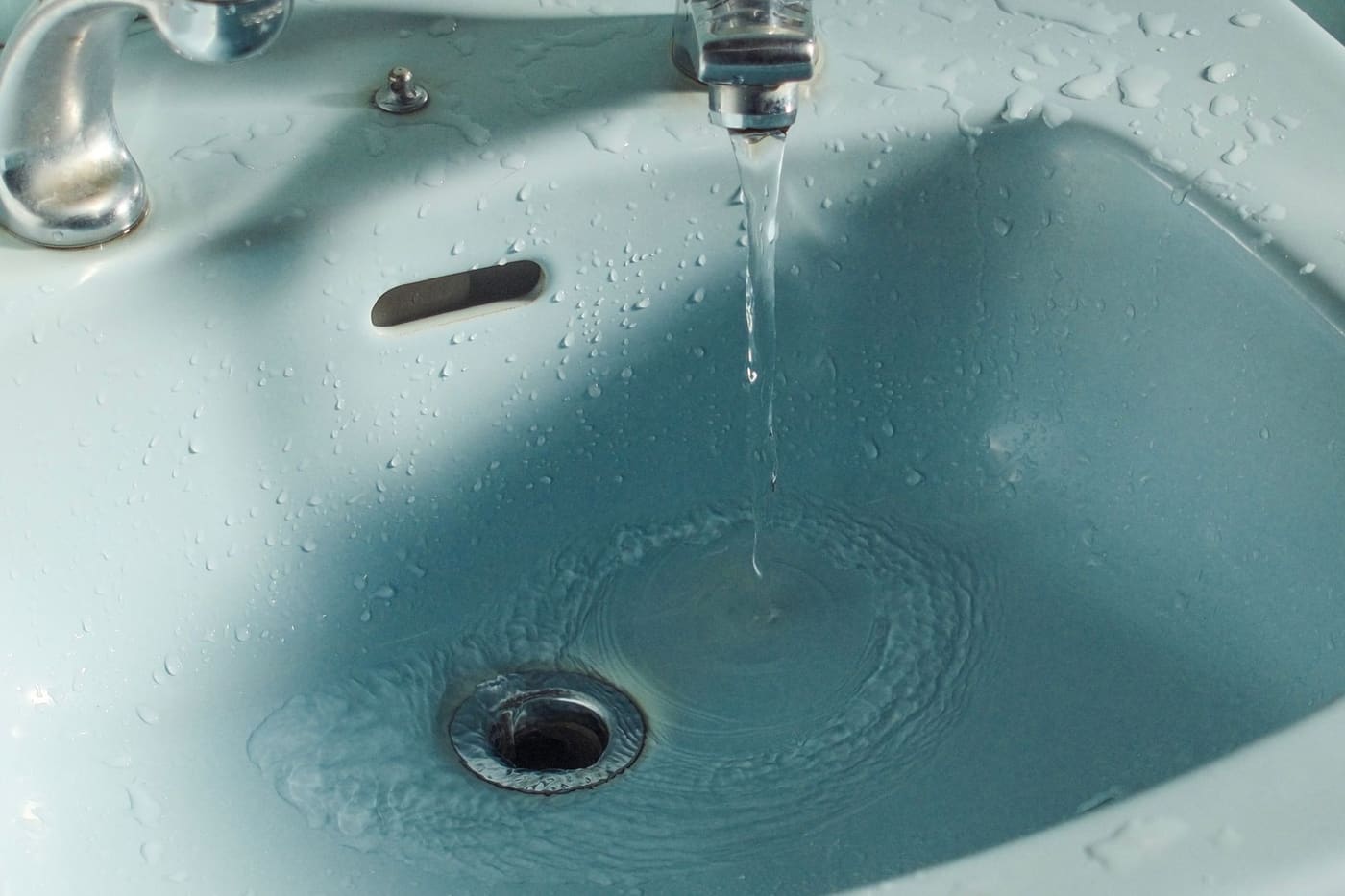
Some damp or sour smells are actually sewer gas. Each drain has a curved section of pipe called a trap that holds water to block gas from the sewer. If a drain is rarely used, the water evaporates and the barrier disappears.
- Run water into every drain that has not been used in a while, including a floor drain, a guest tub, and a basement bathroom. About a minute is enough.
- Pour a cup of water into the floor drain, then a small amount of mineral oil on top to slow evaporation, if you have a drain that rarely gets used. Plumbing guidance varies on the amount, and a few ounces is common. Mineral oil is preferred over cooking oil, which can go rancid.
- Check the toilet. A weak seal at the base or a loose bolt cap can let moisture and smell escape. If the toilet rocks, or the floor around it is damp or soft, call a plumber. A bad seal can lead to hidden floor damage.
- If a smell comes back after you refill a trap, there may be a venting or plumbing problem. That is a plumber’s job.
Look for hidden leaks and damp materials
If you have cleaned the fabrics and drains and the smell remains, test for water you cannot see.
- Empty the cabinet under the sink and feel the back wall, the pipes, and the cabinet floor. Wrap a dry paper towel around each connection and check it after an hour. Any dampness is a leak.
- Inspect the floor around the toilet and tub for soft spots, discoloration, lifting vinyl, or cracked grout.
- Check the ceiling below the bathroom, if it is an upper floor, for stains.
- Press gently on the wall near the tub or shower. Softness or crumbling means water is getting in.
Water damage behind walls or under flooring, and any mold that covers a large area or returns after cleaning, is a job for a qualified professional. The smell will not go away until the moisture source is repaired.
Treat grout, caulk, and corners
Tile surfaces themselves do not smell, but porous grout and aging caulk hold moisture and organic matter.
- Wet the grout and apply a cleaner designed for grout or a bathroom mildew remover. Let it sit per the label.
- Scrub with a stiff nylon brush and rinse.
- Inspect the caulk. If it is black all the way through, or peeling, mildew is under it and cleaning will not fix it. Removing and replacing the caulk is often under $15 in materials and an afternoon of work, and renters should ask the landlord first.
- Dry the area with a cloth. Leaving grout damp restarts the cycle.
Open a window or run the fan for any cleaner you use, wear gloves, and use one product at a time.
Stop the smell from returning
After you have fixed the source, the final step is to keep the room dry enough that nothing regrows.
- Squeegee the shower after use and wipe the faucet and counter.
- Open the door and window after showers, and use a fan if you have one.
- Hang towels spread out and give each person a fixed hook.
- Keep fewer absorbent items in the room, including extra towels and paper goods.
- Use a plug-in dehumidifier or moisture absorber in a small bathroom with no window if the humidity stays high.
Scents and sprays only mask odor for a few hours. If you like a fragrance, add it after the real fix. A simple routine, such as a five-minute reset with a drain check and towel swap, keeps the smell from coming back. In warm climates or wet months, the humid-weather section of the moisture guide matters more.
Product types worth having
You do not need a shelf of products. These types cover almost every cause above.
| Product type | What it is for | Typical price |
|---|---|---|
| Enzyme-based cleaner | Breaks down organic film in drains and on surfaces over time | Often $8 to $20 |
| Plastic drain hair tool | Pulls hair out of sink and tub drains | Often $3 to $10 |
| Bottle brush or pipe cleaner | Scrubbing the overflow channel and drain walls | Often $3 to $8 |
| Small hygrometer | Shows whether the air itself is the problem | Often under $20 |
| Grout cleaner or bathroom mildew remover | Grout and caulk lines | Often $5 to $12 |
| Silicone caulk for kitchens and baths | Replacing black or peeling caulk | Often under $15 a tube |
Enzyme cleaners work gradually, so give them time rather than expecting a result in minutes, and follow the label. For a broader look at which supplies are worth owning, see the bathroom cleaning supplies guide.
Common questions
Why does my bathroom smell worse in the morning? Overnight, a closed room keeps whatever the shower and damp fabrics gave off the evening before, and a trap in a rarely used drain can dry out. Check the towels and mat first, then run water in any drain you do not use daily.
Is a musty smell a sign of mold? It can be. A musty smell with no visible cause often points to hidden moisture in fabrics, drains, grout, or behind a surface. If you find large patches of mold, mold that returns after cleaning, or soft or stained walls or floors, call a qualified professional.
Can I just use bleach? Bleach does not fix a leak, a dry trap, or a damp towel, and it must never be mixed with ammonia or with acids such as vinegar. Find the source first. If you do use a bleach-based product, use it alone, rinse well, ventilate, and wear gloves.
Do air fresheners or baking soda help? They only cover or soak up a little odor for a short time. Use them after you fix the real cause, not instead of it.
How do I know if it is sewer gas? A sewer smell near a drain that is rarely used usually means the trap has dried out, and running water for a minute or two often fixes it. If the smell returns after you refill the trap, or you smell it near the toilet, call a licensed plumber.
Where this comes from
This guide draws on US EPA indoor moisture guidance for the humidity limit, plumbing guidance on dry traps and trap seals, dermatology advice from health systems on towel washing, and CDC and EPA guidance on not mixing bleach with ammonia or acids. The smell-mapping method is practical troubleshooting rather than a published standard. Prices are typical US ranges that vary by store and region.