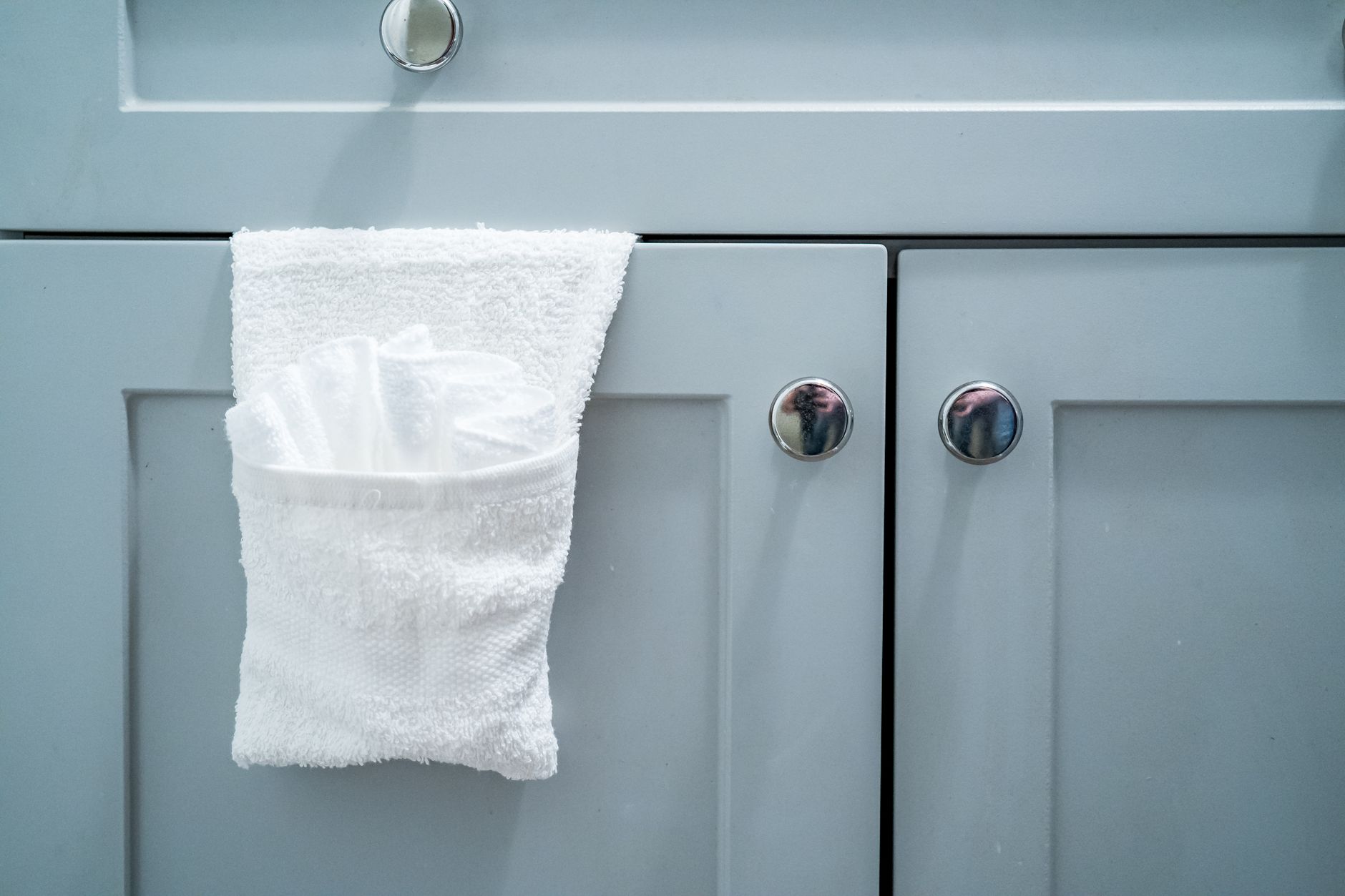
A kids bathroom stays organized when every item a child uses has one obvious, low-effort home they can reach on their own, and when everything a child should not handle (medicine, cleaners, razors) is out of reach or locked. If putting something away takes more than one motion, such as dropping it in an open bin or hanging it on a hook, it will end up on the floor.
A hook set at adult height, a lidded box that needs two hands, or a shelf of fifteen similar bottles all guarantee a daily pickup session. The fix is to design for the smallest user in the house, cut the number of categories, and build a reset that takes one minute. Safety comes first, so this guide covers it right after the layout, and the water and heat points at the end matter as much as the storage.
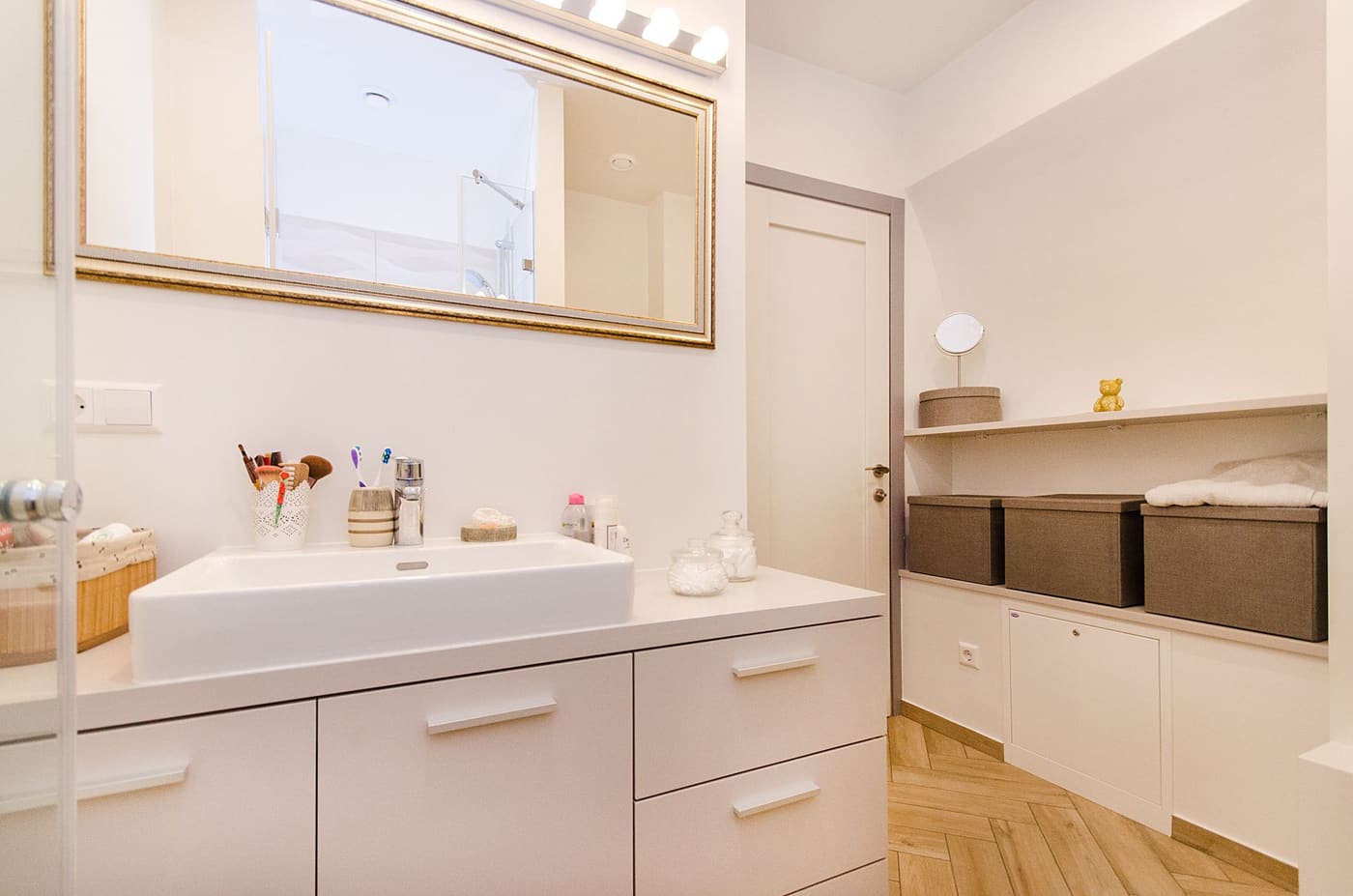
Design for the shortest user and the simplest motion
Walk into the bathroom at your child’s eye level and look at what they can actually reach. The goal is that anything they use daily can be taken and returned without help or a step stool when possible, and with a stable stool when not.
- Hooks: the hook height should match the child’s reach, so have the child stand with an arm raised and mount the hook at about the height of their hand, not at adult height. For a toddler to early elementary age that is often somewhere around 36 to 48 inches from the floor, depending on the child. Mount one hook per person for a towel, large enough to take a towel by its loop or just tossed over it. Move it up as the child grows.
- Open bins over lidded boxes: a basket or bucket with no lid means the “put away” motion is a drop. Lids are for the adult shelves.
- A stable stool: a step stool with a wide base and non-slip feet is part of the storage system. Keep it in a fixed spot so it does not become a floor obstacle. A stool also lets a child reach the sink and, if you are not careful, the cabinet above it, so anything unsafe stays locked regardless.
If a task needs two steps from a child, plan on doing it yourself, and move that item up to the adult zone.
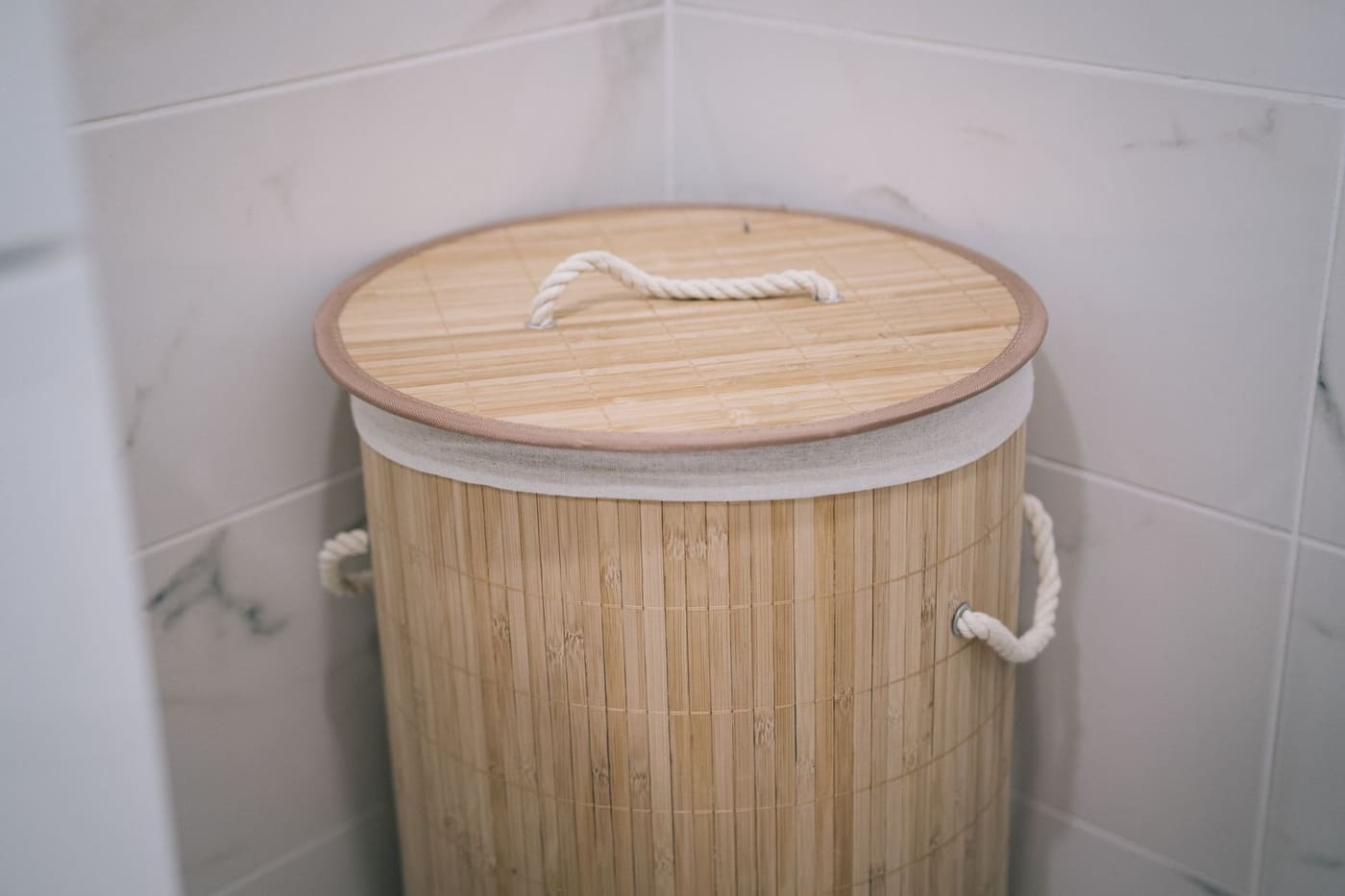
Limit it to four or five zones
The number of categories decides whether the system survives. A kid-friendly bathroom does well with these:
- Towel zone: one hook per child, labeled with a name or a picture.
- Toothbrush and rinse zone: a cup or small holder at counter height.
- Bath toy zone: one container that drains.
- Hair and grooming zone: brush, comb, and detangler in one small tray.
- Adult-only zone: high or locked shelf for medicine, razors, cleaning products, and anything sharp.
Pictures on labels help children who cannot yet read. A photo of a toothbrush on a cup or a drawing of a towel on a hook takes a minute to print and tape on, and it gives a child something to match instead of asking you.
If more than one child shares the room, assign each a color for toothbrush cups and towels. The color does the labeling, and fights over whose towel is whose mostly go away. For the broader problem of several people sharing space, see the guide on organizing a shared bathroom.
Treat bath toys as their own drying problem
Bath toys are the biggest source of both clutter and moisture in a kids bathroom, and the main reason they get moldy is that water stays inside them.
- Mesh bag or bin with holes: a hanging mesh bag or a bucket with drainage lets air get at the toys. A suction hook or a tension rod across the tub corner works for hanging; check the lease first if you are renting, as suction products are usually removable but adhesive ones may mark walls.
- Squeeze toys with holes: toys that squirt trap water in the hollow center. A study by Swiss and US researchers (Eawag, ETH Zurich and the University of Illinois) found dense, slimy biofilm on the inside of every bath toy it examined, and fungal growth in a large share of household toys. Squeeze them out after each bath, seal the hole with hot glue or replace them with solid toys, and throw away any toy with dark spots inside.
- Limit the count: keep about five to eight toys in the bathroom and rotate the rest from a closet. A child will play with a few anyway, and fewer toys dry faster.
Wipe the bin out weekly, and wash solid toys by hand with warm water and dish soap about once a month, then dry completely before returning. The US EPA says mold covering more than about 10 square feet, or any mold tied to major water damage, is a job for a professional. For smaller patches on hard surfaces, detergent and water and good drying are the usual first step.
Keep anything unsafe out of reach, not just out of sight
Storage for kids includes safety. Anything that could harm a child should be stored where they cannot reach it or open it by themselves.
- Medicine and vitamins belong in a locked box or locked cabinet, in their original containers, and ideally outside the bathroom, since heat and humidity are not good for most medicines. Poison control guidance says to store medicines up, away and out of sight, and a lock adds a margin because children climb. Keep the key or code away from them.
- Cleaners, drain products and toilet bowl cleaners belong in a locked cabinet or one with a child-resistant latch, or outside the bathroom entirely, in their original bottles. Child-resistant is not child-proof: it only slows a child down, so store them out of reach as well. Never move a product into a food or drink container.
- Razors, tweezers, nail scissors and hair tools go into a drawer with a latch or a locked high shelf.
- Never mix cleaning chemicals; the CDC warns that bleach combined with ammonia or acids releases dangerous gases.
- If a child may have swallowed something, call Poison Help at 1-800-222-1222 in the US.
Latches often cost $5 to $20 for a multipack. Store plug-in hair dryers and curling irons unplugged and out of reach, and keep any plugged-in appliance away from water; the US Consumer Product Safety Commission advises unplugging a hair dryer when it is not in use.
Match the setup to the age
What works at three years old does not work at nine.
| Age range | Main change | Typical pitfall |
|---|---|---|
| Toddler | Everything on adult shelves except a towel hook and a single toy bin | Open shelves with products in reach |
| Early elementary | Add a step stool and a toothbrush cup the child manages | Too many bottles at the sink |
| Older kids | Personal drawer or caddy for their own items | Products that migrate to every surface |
| Pre-teen | A lidded personal box for private items | Sharing one drawer with parents |
Revisit the layout once or twice a year. A basket that was perfect at age four can be an afterthought at age seven, and the hook can move up. Giving an older child a small caddy with their own items and letting them carry it to and from their room makes the bathroom itself tidier, since their products are not out.
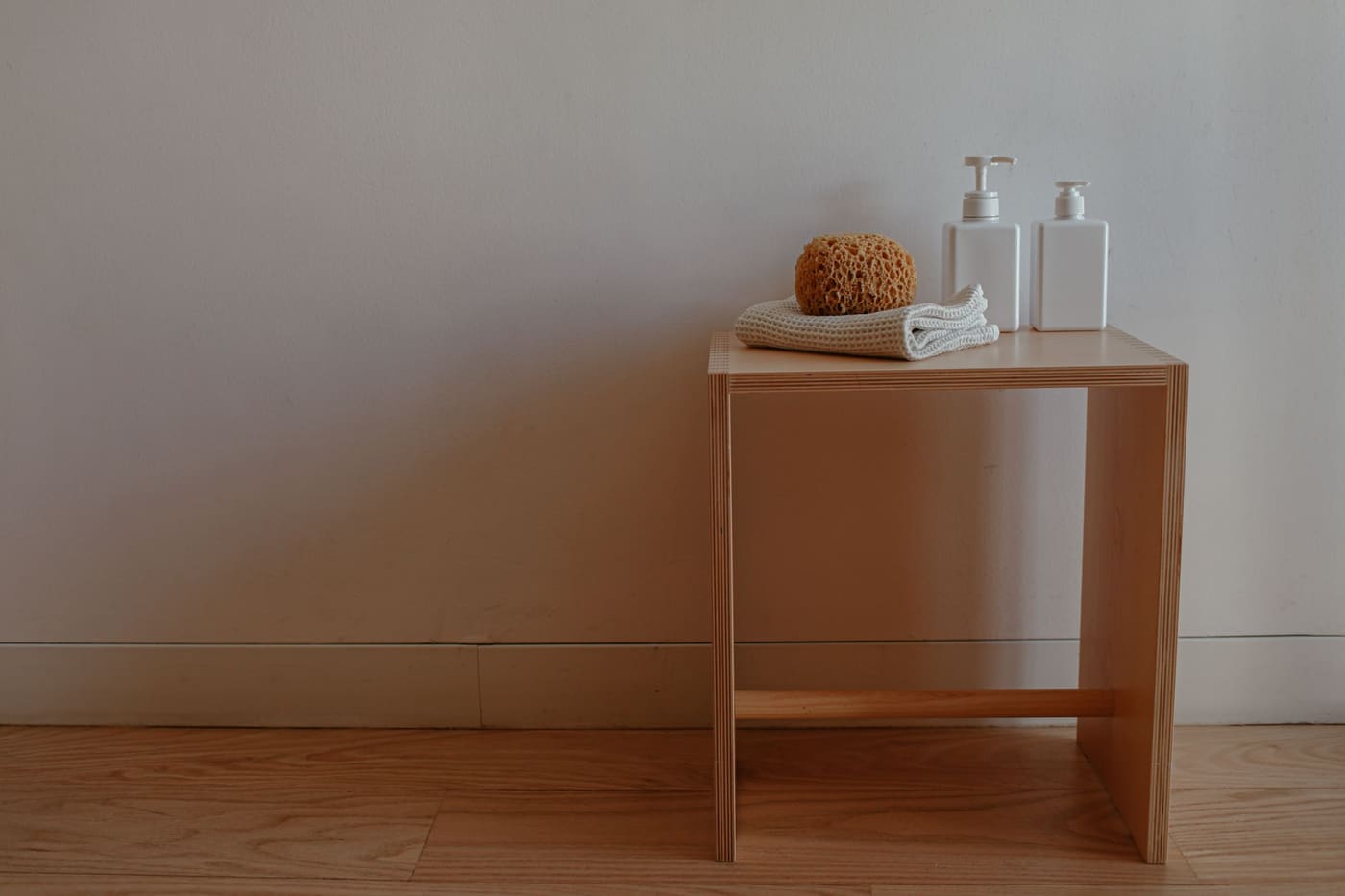
Give small grooming items a contained home
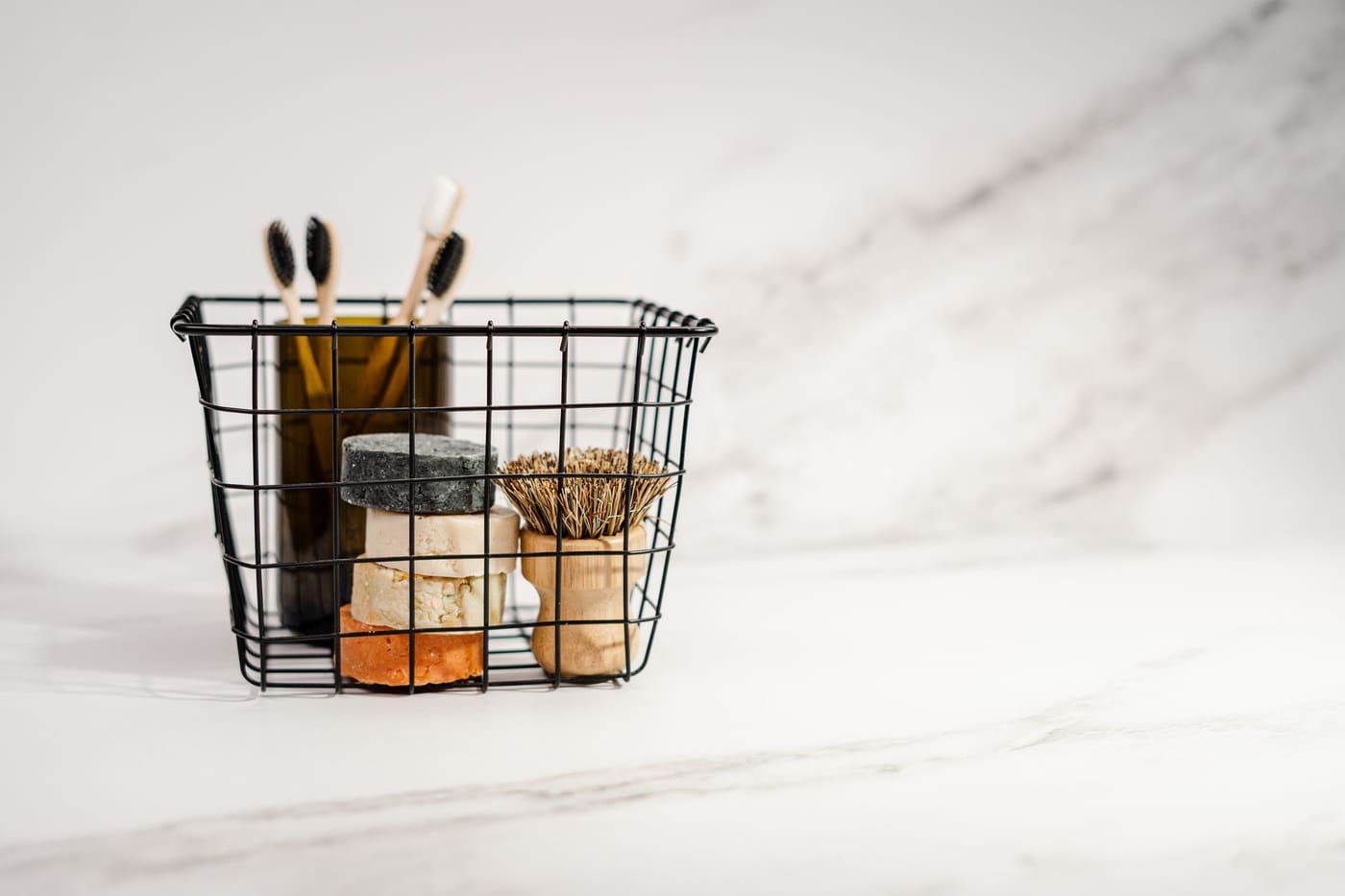
Hair ties, clips, brushes, and detanglers spread across a kids bathroom because they are small and used several times a day. Keep small items such as clips and hair ties out of reach of toddlers, who can choke on them. Give them a shallow tray or a divided drawer organizer rather than a deep bin where they sink out of sight. A magnetic strip mounted on the inside of a cabinet door holds metal bobby pins and clips without taking any counter space, though it needs a mounting method that suits the lease. For long hair, a single small basket by the mirror that holds only brushes and ties keeps the sink area clear, and it can be emptied back into a drawer every few days.
Build a one-minute reset
The system only works if a reset is quick enough that people will do it. A sequence that takes about a minute:
- Toys go into the drain bin.
- Towels go back onto hooks.
- Toothbrushes and cups return to their spot.
- Anything that does not belong in the room goes in a “leave” basket by the door, which one person carries out and empties.
Do it at a fixed point, such as right after the bedtime bath, and ask the child to do the first three steps as a game. A timer for 60 seconds helps younger kids. For a fuller routine you can use after bigger messes, see the five-minute bathroom reset.
Put the products you rarely need somewhere else
Every extra bottle in a kids bathroom is a toy waiting to happen. Keep the shampoo and soap that are in current use, and move backups to a closet or a high shelf. Take the same approach to extras like bubble bath and bath bombs: keep one in the bathroom, and the rest elsewhere. The linen closet and backup toiletry guide covers where that overflow can live without taking over a hall closet.
Water and heat safety in a kids bathroom
Organization is the smaller part of bathroom safety for young children. The US Consumer Product Safety Commission warns that young children can drown in very small amounts of water, and that bathtubs are among the leading places it happens at home. Never leave a young child alone in the tub, even briefly: keep them within arm’s reach, and if you must leave, take the child with you. Empty the tub and any bath-toy buckets after use. A toilet lid lock is worth considering for a toddler who wanders in.
The CPSC also recommends setting a water heater to no higher than 120 degrees Fahrenheit to reduce tap-water scalds, which most often injure young children and older adults. Always test the water with your hand before putting a child in. For storage ideas across the whole room, see bathroom storage ideas by height zone.
Where this comes from
This guide draws on US poison control and children’s health organization guidance on storing medicines and household products out of reach, US Consumer Product Safety Commission guidance on bathtub drowning, tap-water scalds and hair dryers, CDC guidance on not mixing cleaning products, US EPA mold guidance, and the published Eawag, ETH Zurich and University of Illinois study of bath toy biofilms. Hook heights and toy counts are rules of thumb that depend on the child. Prices are typical US ranges that vary by store and region.