Bathroom mold and mildew are much easier to prevent than to remove. Once they settle into grout lines, caulk edges, fabric, or poorly ventilated corners, the cleanup gets more stubborn and the room starts feeling damp even when it looks mostly fine. The biggest prevention win is not stronger bleach. It is reducing how long moisture sits in the room.
Moisture sitting too long is the real problem
Bathrooms naturally get wet. That part is normal. The issue starts when surfaces stay wet for hours, towels never fully dry, and steam lingers in a room with weak airflow. Mold and mildew thrive in repeated dampness, especially in overlooked areas like the bottom of the shower curtain, around the tub edge, and near corners where air movement is weak.
That means prevention is mostly about drying speed.
Improve airflow first
If the bathroom has a fan, use it long enough to matter. Many people run it during the shower but turn it off too soon. If there is no fan, opening a window or the bathroom door after use can still help move moisture out.
Airflow is not glamorous, but it is the part that changes the room fastest. A better-ventilated bathroom usually feels cleaner and less musty even before any deep cleaning happens.
Keep wet surfaces from staying wet
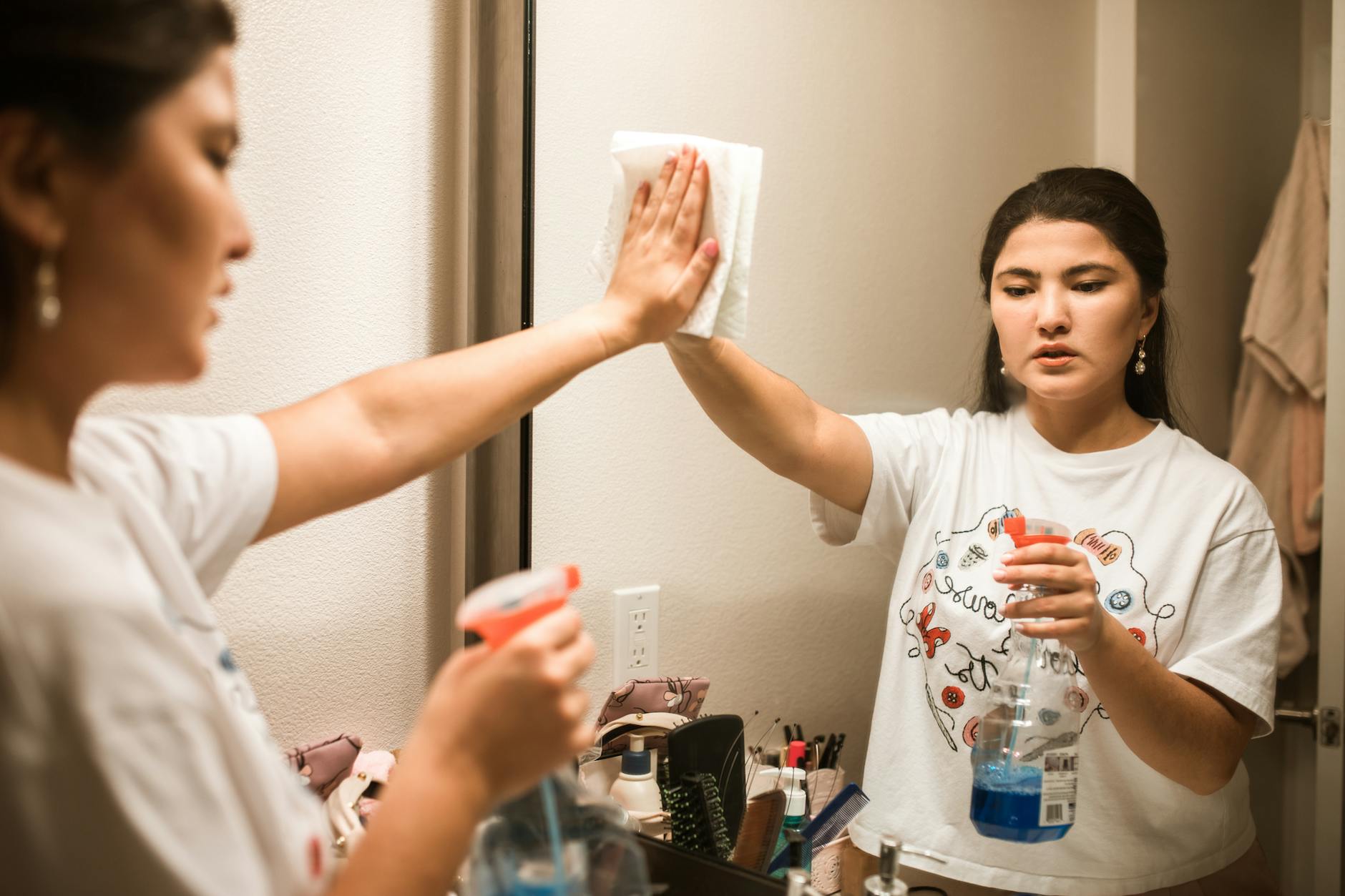
A quick wipe or squeegee pass can prevent a lot of buildup on tile, glass, and shower walls. You do not need to dry every inch obsessively. The goal is just to remove the standing water and heavy surface moisture that would otherwise sit there until the next shower.
This matters especially for:
- shower glass
- tile ledges
- tub rims
- corners where water pools
- chrome fixtures that spot easily
Help fabrics dry properly
Towels, bath mats, and shower curtains often cause more mildew issues than hard surfaces do. If a towel is folded on itself or a bath mat stays bunched on the floor, it stays damp far longer than it should. That creates the stale, slightly sour bathroom feeling people notice before they even see visible mildew.
Hang towels fully open, rotate mats when needed, and make sure the shower curtain can spread out instead of sticking to itself while wet.
Watch the known trouble zones
Certain areas deserve a little extra attention because they tend to trap moisture:
- caulk seams around tubs and sinks
- grout lines in showers
- the underside of product bottles
- corners behind the toilet
- window sills in humid bathrooms
These spots do not need daily scrubbing, but they do need occasional checking so a small problem does not become a full cleanup project.
Bottom line
Mold and mildew prevention is mostly a moisture-management problem, not a chemical problem. If the room dries faster, fabrics get airflow, and standing water gets interrupted early, bathroom mold and mildew become much less likely to take hold in the first place.