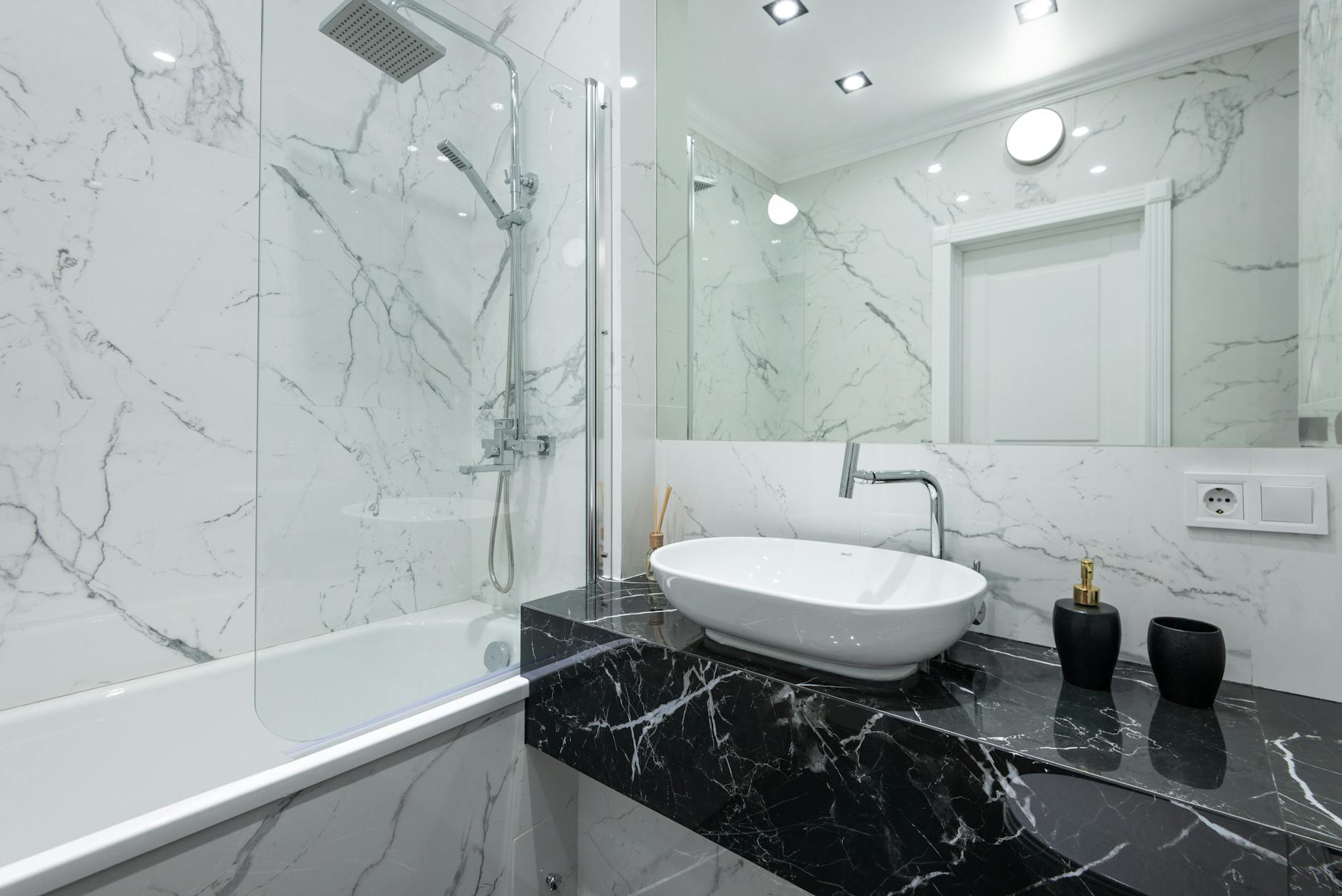
You can update a bathroom in two weekends without touching the tub, tile or layout if you work in order: clear and edit, clean and repair, change the big surfaces, then style lightly. A bathroom also looks more expensive when it looks decided, so the styling stage is mostly about matching: one metal finish, one or two colors, matching dispensers, a large mirror and an almost empty counter. Skipping ahead is how people end up decorating grimy caulk and a crowded counter.
| Stage | What you do | Typical cost | Renter or owner |
|---|---|---|---|
| 1. Edit | Empty the room and put back only what earns its place | $0 | Both |
| 2. Clean and repair | Deep clean, recaulk, descale, new liner and seat | $30 to $100 | Both |
| 3. Paint | Walls, and a vanity if you own the home | $30 to $120 | Owner, or renter with permission |
| 4. Floor or wall covering | Peel-and-stick floor tiles or removable wallpaper | Often $100 to $400 | Owner, or renter with permission |
| 5. Hardware and mirror | One finish throughout and a better mirror | $60 to $300 | Both, keeping originals |
| 6. Textiles and objects | Towels, mat, curtain and a few objects | $60 to $200 | Both |
Stage 1: empty the room and see what is there
Take everything off the counter, tub edge, shower shelves and toilet tank, and set it on a towel in the hallway. After 20 minutes you will see how much of the mess is just stuff. Put items back by three rules: daily items return to a defined spot, occasional items go in a drawer or cabinet, and anything expired, empty or unused for six months leaves. The sorting rules in what to keep on a bathroom counter cover edge cases.
A counter with three to five visible items looks designed, and one with fourteen looks like storage. A small tray holding a soap pump and a cup, with one other item beside it, is a reliable arrangement because the tray makes a group read as one object. Decant what you keep out into matching glass, ceramic or metal pumps instead of five brands of plastic. A refillable pump typically costs $8 to $25.
Stage 2: clean and repair what shows from the doorway
The eye lands on contrast, so the worst offenders are dark lines, spots and mismatches. In the first weekend, wipe the walls near the shower, scrub grout with a soft brush and baking soda paste, polish the faucet and mirror, recaulk any yellowed tub line, swap a cloudy liner and replace a stained toilet seat. Use one cleaner at a time. Never mix bleach with ammonia or any acid-based cleaner, since the fumes are dangerous, and ventilate and wear gloves.
If you find large patches of mold or any sign of water damage behind walls or under the floor, stop and call a professional. Paint and decor will not fix it. The detailed methods for caulk, grout and stains are in making an old bathroom look cleaner without renovating.
Stage 3: paint the biggest surface
Paint is the strongest move per dollar. A gallon typically covers about 350 to 400 square feet per coat, which is enough for two coats in most small bathrooms, and a quart is plenty for an accent wall or a vanity. A bathroom-rated satin or semi-gloss resists moisture better than flat. Wipe the walls, fill holes, tape the trim and apply two thin coats with the fan on or a window open. Test a sample patch beside the vanity, because bathroom light changes how a color reads. Cool gray tile usually looks better with a warm off-white, and beige or almond tile often looks cleaner against a soft gray-white than against yellow cream.
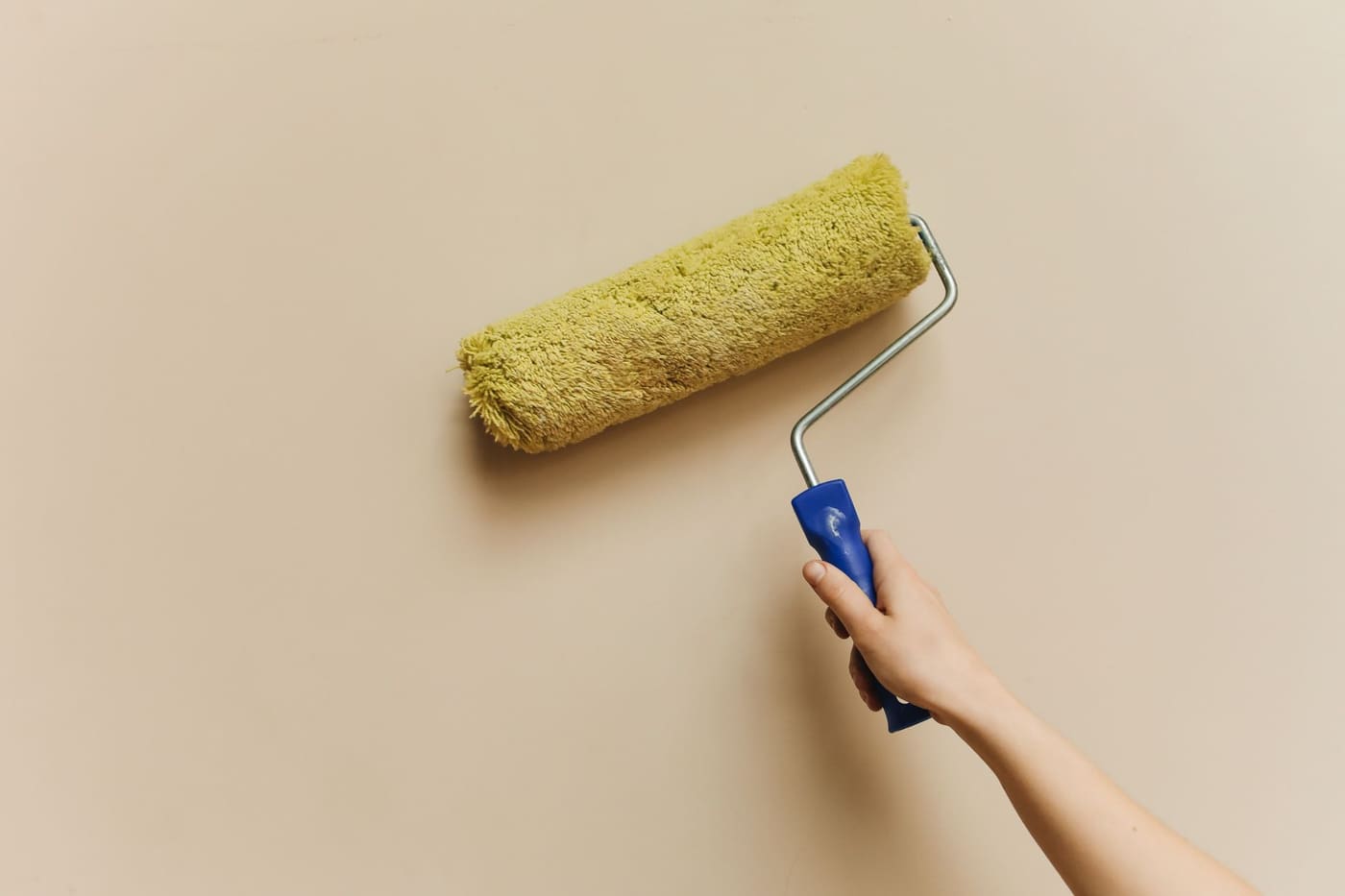
If you own the home and the vanity is solid wood or laminate, you can paint it too. Sand lightly, use a bonding primer and a durable cabinet enamel, and expect a weekend because of the dry time between coats. Follow the label’s cure time before loading it with products. For painting tile itself, see the cautions in the old-bathroom article. Renters should check the lease before painting anything.
Stage 4: peel-and-stick floors and wallpaper
Both products change a bathroom more than most people expect, and both are fussy about the surface. Read the manufacturer’s label first, because many makers say these products are not for inside a shower or for places with standing water.
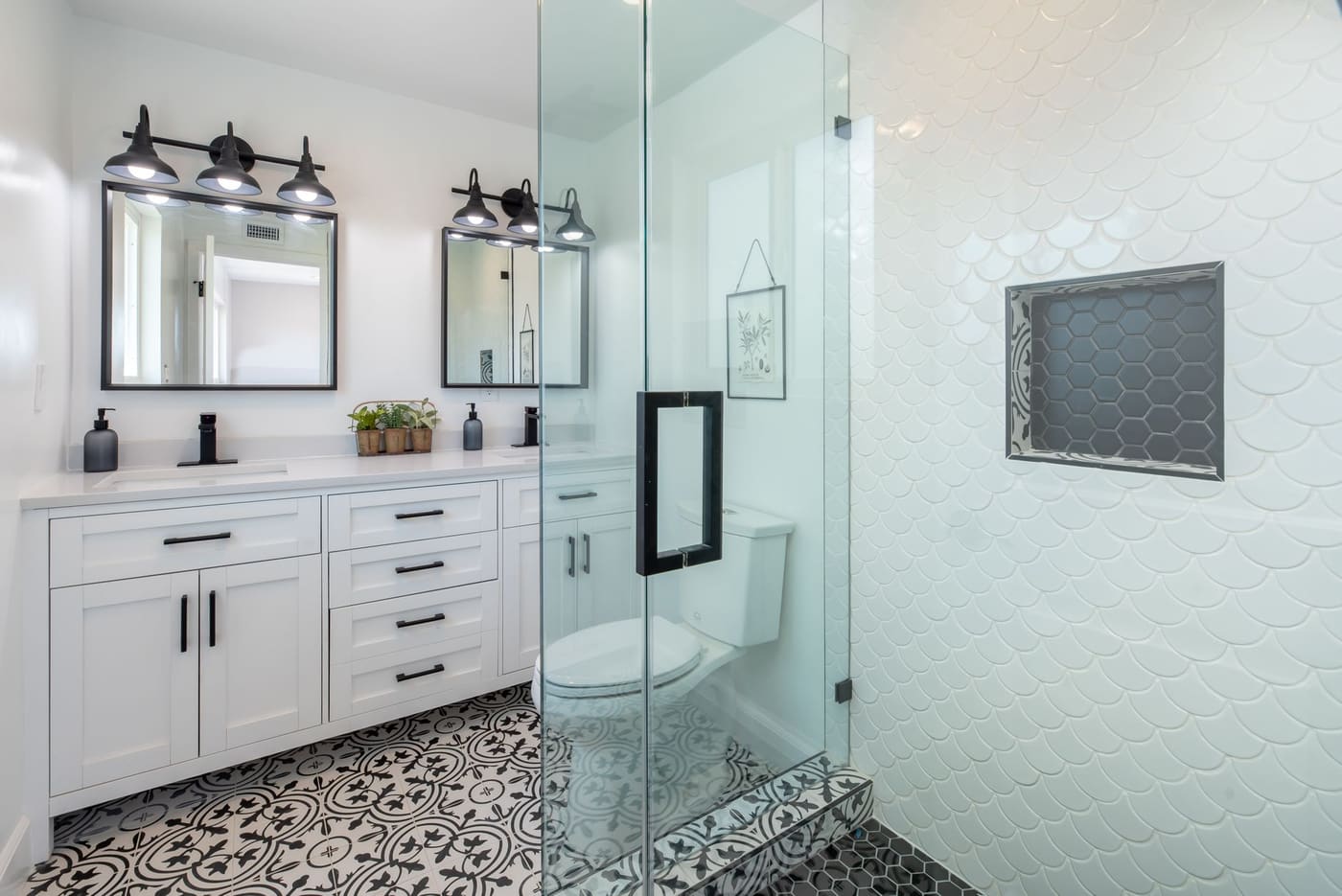
Peel-and-stick floor tiles or planks. Vinyl tiles with adhesive backing go over a clean, dry, flat floor and often cost about $1 to $4 per square foot. Clean and dry the floor, cut around the toilet unless you know how to disconnect and reset it, leave a small gap at the edges and press each tile firmly. Do not cover soft spots, a spongy floor or any sign of a leak, and do not run tile into places where water pools. Seal the edge against the tub with bathroom silicone. The adhesive can be hard to remove, so owners can use it freely, while renters should get written permission.
Peel-and-stick wallpaper. Rolls often run about $30 to $100. It needs smooth, painted, clean walls, and humid rooms can lift edges, so keep it out of the shower spray, run the fan and expect it to last longer on the wall opposite the vanity than beside the tub. Textured or flaking paint will pull off with the paper on removal. One accent wall or the back of an open shelf often looks better than a full room in a small space. In a room with no working fan it will peel, so fix ventilation first with the moisture guide.
Stage 5: one finish for hardware, and a better mirror
The fastest way to tighten a room is to unify the visible metal. Look at the faucet, showerhead, towel bar, paper holder, robe hook, cabinet pulls, mirror frame and light fixture, and match what you can swap to the finish most items already share. You do not have to replace the faucet. Towel bars, hooks, pulls and a paper holder are screwdriver swaps, typically $8 to $30 each. Measure the center-to-center distance between existing screw holes so pulls line up, and keep the originals if you rent.
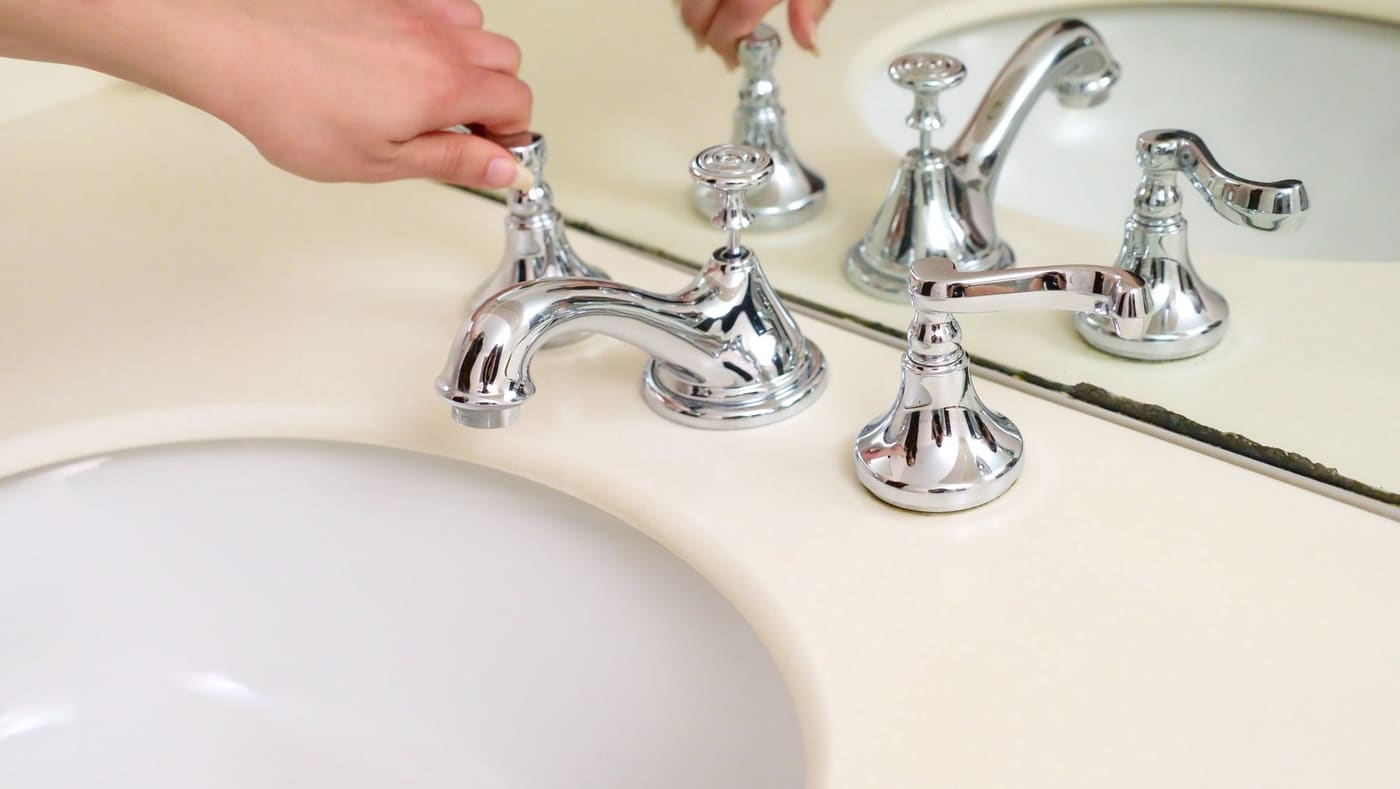
What each finish does in a damp room:
- Chrome: Crisp and bright, and it shows water spots quickly.
- Brushed nickel: Softer, and better at hiding spots and fingerprints.
- Matte black: Graphic and modern, but it shows water spots and soap residue on some finishes.
- Brushed brass or bronze: Warm and classic. Quality varies, and thin plating can wear in humid rooms.
Mixing metals works when deliberate, such as a chrome faucet with a black mirror frame. The mistake is three or more finishes with no pattern. Hold a sample next to the faucet before you commit, since a shiny brass bar beside brushed nickel looks like an accident.
The mirror is the focal point of nearly every bathroom and often the weakest part. A framed mirror about as wide as the vanity, hung with anchors rated for its weight, changes the whole wall, and the sizing rules are in the mirror guide. A mirrored medicine cabinet is the quiet upgrade: it hides razors and toothpaste so the counter stays clear. Measure the wall opening before buying a recessed unit, and ask a professional before cutting into a wall near a sink, since supply lines and wiring can run close to the vanity. If the room is dim, add light before you style, using how to light a bathroom.
Stage 6: textiles, palette and a few objects
Once the surfaces are done, add layers: two or three coordinated towels in one color family, one thick bath mat that fits the floor in front of the vanity or tub, a solid or subtle curtain over a liner and a matched soap pump and cup. Keep the palette to two colors plus one accent, taking the main two from what you cannot change, such as tile and vanity, and repeating the accent two or three times. Several patterns at once, bright primary colors in small items and themed decor such as seashells tend to read as cheap.
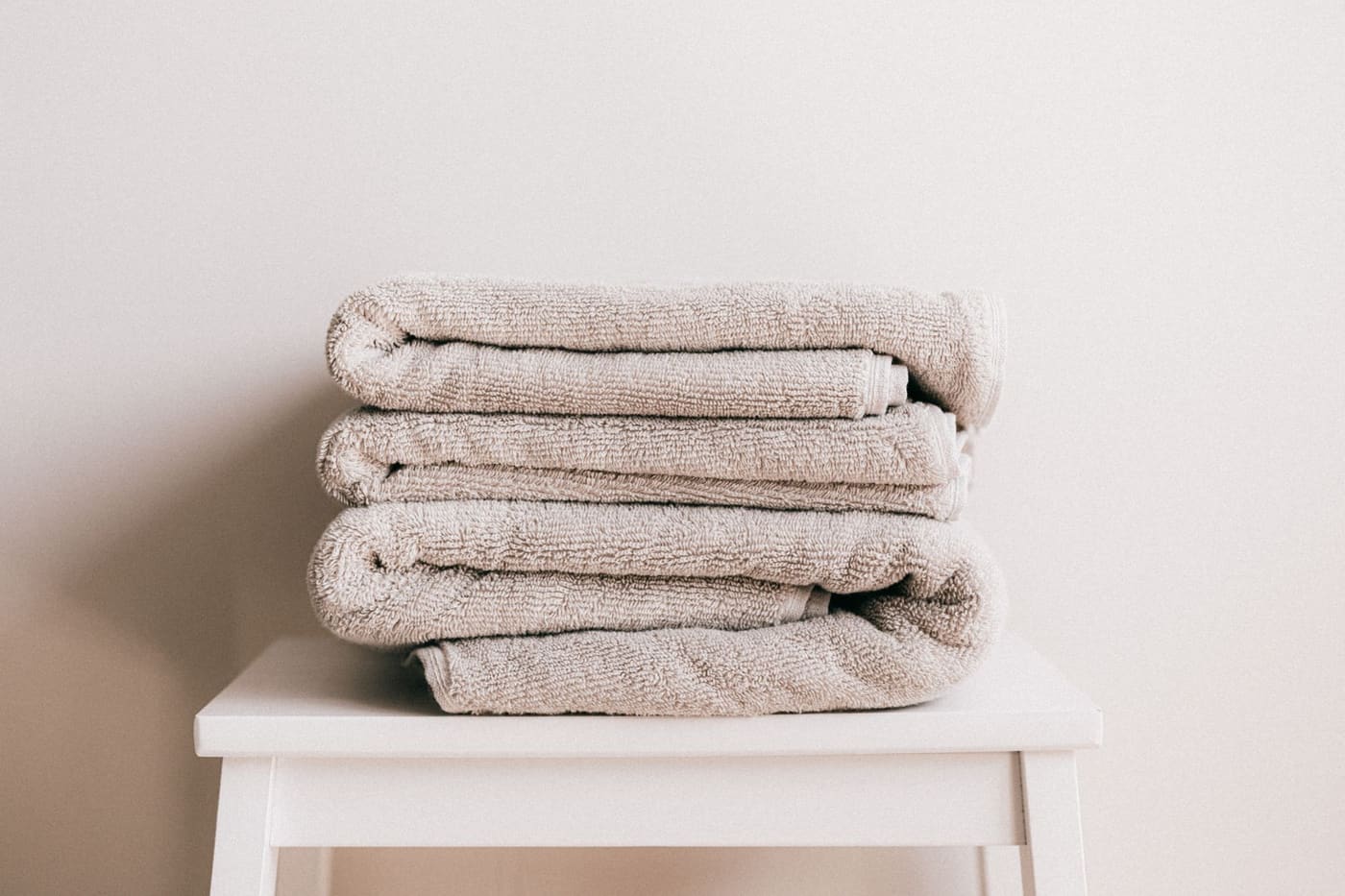
Scale matters too. One large tray beats three small dishes, one 24-inch mirror or print reads as a feature while three tiny ones read as a collection, and a bath mat that is too small looks cheap, so measure before buying. Limit yourself to about three objects, such as a tray, one framed print away from the shower and a small plant. If you have a cat or dog, check any plant against a pet-safety list from your veterinarian first, since several common bathroom plants irritate pets if chewed. If the room feels cold once it is matched, making a bathroom feel warmer covers textures and materials.
The two-weekend plan and when to stop
Weekend one, about 6 to 8 hours and roughly $30 to $100: Edit, deep clean, replace the liner and seat, recaulk and swap hardware.
Weekend two, about 6 to 10 hours and roughly $60 to $250 before any floor or wallpaper: Paint, rework the mirror area, buy textiles and place two or three objects.
Costs vary with region and what you already own, and you can spread the plan over more weekends. Skip new faucets and toilets, which are plumbing jobs that add cost and risk, and tile replacement, which is a renovation. A refresh is done when the room looks calm from the doorway. If you keep looking for more to buy, close the door and look again tomorrow. For a ranking of single changes by cost and impact, use cheap bathroom updates that make the biggest difference, and the bathroom refresh planner can lay the steps out around your budget.
Where this comes from
This plan draws on manufacturer-neutral installation guidance for peel-and-stick flooring and wallpaper, trade guidance on paint coverage, the US CDC’s warnings about mixing bleach with ammonia or acids, and ASPCA plant toxicity listings. The styling advice is design common sense rather than tested results. Prices are typical US ranges that vary by store and region.