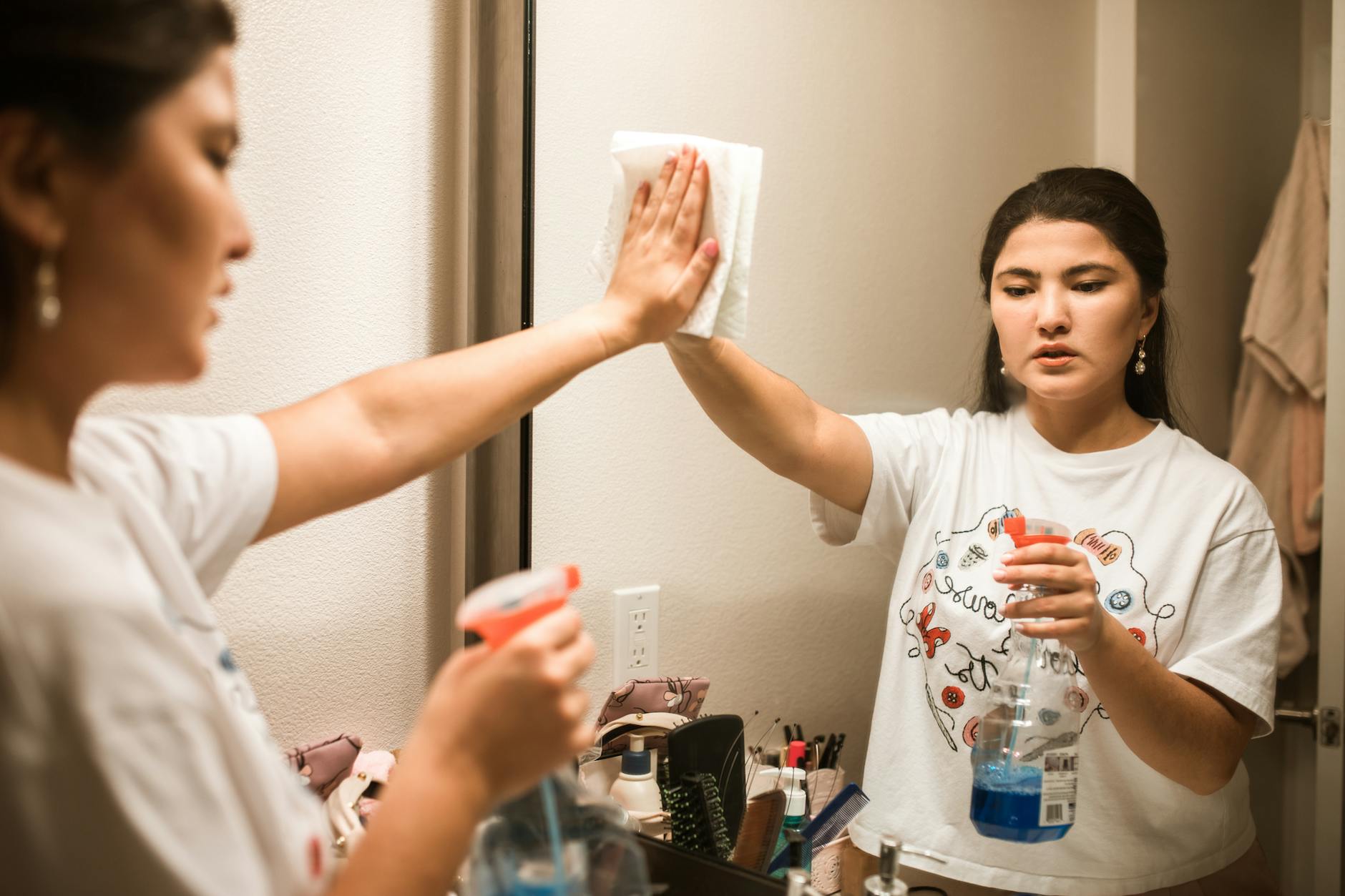
Bathrooms stay cleaner when moisture and residue get interrupted early instead of being left to build up. People often think the answer is stronger cleaners or longer weekly sessions, but the real win is reducing the conditions that make grime stick in the first place. If the room dries faster, surfaces stay clearer, and products have obvious homes, cleaning gets much easier.
Why some bathrooms always feel behind
Most “hard to clean” bathrooms are really “hard to recover” bathrooms. Water spots sit too long, shampoo bottles collect around the tub, damp towels never fully dry, and a few minutes of mess quietly become a weekend reset. Once soap scum, hair, and moisture film are established, every cleaning session feels heavier than it should.
That is why effort-saving bathroom cleaning starts upstream. Preventing buildup matters more than attacking it after the fact.
Focus on moisture first
Moisture is the main thing that turns a normal bathroom into a high-maintenance one. If mirrors stay fogged, grout stays damp, and shower walls stay wet for hours, the room will always feel like it needs more work.
A few habits help a lot:
- run the fan long enough after showers
- hang towels so they can fully dry
- keep a squeegee or microfiber cloth near the shower
- wipe standing water from glass, chrome, and ledges
You do not need a perfect post-shower ritual. Even a 30-second reset can prevent a surprising amount of buildup.
Reduce the number of surfaces that collect clutter
A bathroom feels dirty faster when too many products live out in the open. Toothbrush accessories, skincare bottles, razors, cotton pads, hair tools, and random backups all create visual and literal cleaning friction. Every extra item is something to wipe around.
Try to keep only daily-use essentials visible. Everything else should have a drawer, bin, or cabinet spot. A clear counter is easier to wipe, and a room with fewer visible objects feels cleaner even before you deep clean it.
Build a short repeatable reset
The most sustainable bathroom routine is not intense. It is short enough that you actually repeat it. A useful reset might include:
- wiping the sink and faucet
- clearing the counter
- straightening towels
- checking the toilet exterior and floor around it
- giving the mirror a quick pass if needed
That kind of mini-reset, done a few times per week, prevents the room from slipping into “I need to clean the whole bathroom” territory.
Use the right tools where the friction happens
Bathrooms are easier to maintain when the tools live close to the mess. A microfiber cloth under the sink, a toilet brush that is easy to reach, and a shower squeegee inside the shower are more helpful than a perfect cleaning kit hidden elsewhere. Convenience shapes consistency.
It also helps to match the tool to the problem. For example, a simple dish wand filled with diluted cleaner can make tub touch-ups easier, while a basic microfiber cloth can outperform harsh wipes for mirrors and fixtures.
What usually causes the biggest payoff
If you want the least effort for the most visible improvement, focus on these in order:
- moisture control
- fewer products left out
- faster access to cleaning tools
- a short counter-and-sink reset habit
- occasional deeper attention to grout, drains, and the toilet base
Bottom line
A short repeatable reset routine usually matters more than rare intense cleaning bursts. Keep moisture under control, simplify visible surfaces, and make quick cleanups easy enough to do before the bathroom ever gets overwhelming.